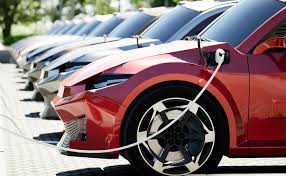
Social media users have long made claims that electric vehicles are not as environmentally friendly as they appear. It is often said that battery production generates more pollution than gasoline cars. Others maintain that electric vehicles just emit emissions to power plants.
The largest-scale research conducted by MIT scientists dispels all such assumptions.
The researchers created one of the most sophisticated models for comparison between electric vehicles and gasoline cars. In contrast to previous studies, which compared emissions from the tailpipe, scientists took into account the complete lifetime cycle of both types of cars, including manufacturing of the vehicle and the battery, production of electricity, fuel production, traffic patterns, climate effects, and even driver behaviour.
The researchers evaluated all ZIP codes in the United States. They aimed to find out whether EVs really reduce greenhouse gas emissions.
EVs Came Out Ahead Everywhere
There was no ZIP code in which the battery electric vehicle would produce more greenhouse gas emissions than a gasoline car over its entire lifetime.
This is significant because it is an answer to one of the biggest arguments against electric vehicles. People claim that battery production and mining mean that electric cars are even more damaging to the planet. The MIT research included all of these factors and found that the EV was still better.
In other words, when the emissions were totaled for manufacturing, energy production, and vehicle use, the electric vehicle was still the better choice.
The Emissions Savings Are Significant
It was determined that the use of EVs leads to greenhouse gas emission reductions ranging between 40 per cent and 60 per cent relative to equivalent gasoline cars.
If an area has clean electricity production and significant driving is done in urban areas, then the reduction is even higher, and it can range from 80 per cent to 82 per cent.
Location affects the results as different places have different sources of electricity. While some regions have renewable sources, others still use coal and natural gas.
However, the emissions advantage still holds true for all of the examined areas.
There were some rare cases discovered where the advantage was minimal. Such areas are those that use electricity with high emissions of carbon and low vehicle miles traveled per year.
Nevertheless, EVs do not emit more than gasoline cars even in such regions.
Why do cities favour EVs?
Driving conditions were also brought to the surface in the research. Electric cars do well in urban environments since they recover energy via regenerative braking in stop-and-go driving conditions. Gasoline-powered cars use fuel both while moving and idling in traffic, making electric cars more efficient and using less energy.
Plug-in hybrid cars (PHEVs) were also considered in the study. Urban driving conditions allowed PHEVs to reduce 80-90% of the carbon footprint compared to battery electric vehicles. In rural conditions, PHEVs did worse than BEVs due to the utilization of the gasoline engine.
What About Battery Manufacturing?
Battery production continues to be one of the biggest environmental challenges related to electric vehicles.
MIT researchers have not overlooked this challenge. They incorporated emissions from battery production and mineral extraction into their model.
Their study showed that manufacturing of an electric vehicle usually releases more emissions compared to manufacturing of a car with a gas engine. This is mainly because of battery production.
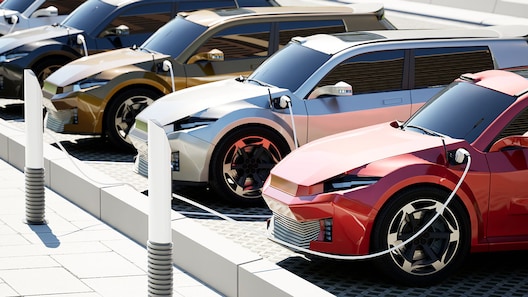
However, things start changing when the vehicle begins working.
Thanks to the much lower emissions produced while using the vehicle, EVs start reducing their disadvantage in terms of emissions. Once they reach the break-even point, they begin to outperform gasoline cars environmentally for the rest of their lives.
In the span of the average lifetime of a vehicle of 200,000 miles, electric vehicles can emit between 50% and 70% fewer greenhouse gas emissions than gas-engine cars.
Cleaner Grids Make EVs Better Over Time
Another critical insight to note is that as the grid becomes greener, so does the electric car.
The more solar and wind energy is used, the fewer emissions an electric car will generate automatically through the electricity used for charging it. There is no way for gasoline cars to gain from the trend. No matter how much better the energy grid becomes, petrol consumption will still generate carbon emissions.
Thus, the ecological difference between an electric car and gasoline-powered cars grows with each passing day.
Cost Matters Too
The team analyzed the cost of ownership as well.
Local gas prices, electricity prices, maintenance expenses, weather conditions, and driving styles were all considered. In numerous areas across the US, electric cars were found to be better than gasoline cars during the life cycle and cost less in total to operate.
No such area was found where gasoline cars are greener and cheaper to own.
This result contradicts yet another misconception spread on social media that electric cars cost more and do nothing for the environment.