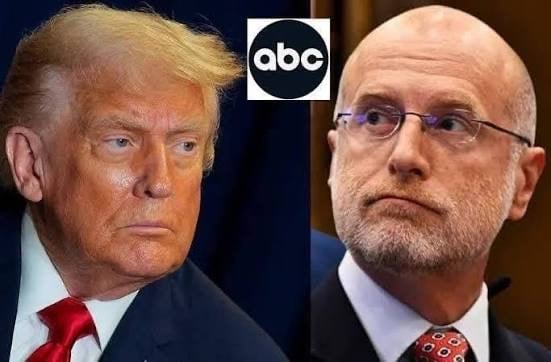
ABC has filed a First Amendment lawsuit against the Federal Communications Commission, escalating an increasingly contentious battle between the television network and the Trump administration over broadcast regulation, editorial independence and press freedom.
The lawsuit, filed Tuesday in federal court in Washington, D.C., seeks to stop the FCC from moving forward with an early review of the broadcast licenses held by eight ABC-owned television stations. ABC and its parent company, The Walt Disney Company, argue that the regulatory action is not simply a routine examination of broadcast operations but part of a broader campaign to punish the network for content that has drawn criticism from President Donald Trump and his administration.
At the heart of the case is the First Amendment’s protection of freedom of speech and freedom of the press. ABC argues that the government cannot use its regulatory authority to pressure a media organization into changing its journalism, programming or editorial decisions.

The lawsuit describes the FCC’s actions as an unprecedented threat to ABC and claims that the administration has targeted the network because of what it broadcasts. ABC is asking the court to intervene immediately and halt the FCC proceedings while its constitutional challenge is considered.
Fight Over ABC’s Broadcast Licenses
ABC operates eight owned-and-operated television stations across major U.S. markets. Because broadcast television stations use public airwaves, they are required to obtain licenses from the FCC, which periodically reviews those licenses to determine whether they should be renewed.
The licenses held by ABC’s stations were not scheduled for renewal for several years. However, the FCC ordered the stations to begin the renewal process much earlier than expected.
ABC argues that the accelerated review is highly unusual and that the timing raises serious questions about the motivation behind the agency’s decision.
The network says it has cooperated extensively with FCC investigations and has responded to hundreds of information requests and produced thousands of pages of documents. Despite that cooperation, ABC claims the agency has continued to expand its scrutiny.
According to the lawsuit, the network believes it has reached a point where judicial intervention is necessary to protect its constitutional rights.
ABC has also requested a temporary restraining order and preliminary injunction to prevent the FCC from advancing the license proceedings while the case moves through the courts.
Trump Criticism Adds to Tensions
The legal dispute comes after months of increasingly hostile exchanges between Trump and ABC.
Trump has repeatedly criticized the network’s coverage and programming and has publicly suggested that broadcasters could face consequences for content he considers unfair or hostile toward his administration.
ABC’s late-night programming has been a particular source of tension. Trump has repeatedly criticized comedian Jimmy Kimmel and his late-night show, while also attacking ABC’s daytime talk program The View and other network programming.
ABC argues that these public attacks are important because they demonstrate a connection between political criticism of the network and the subsequent regulatory pressure.
The company maintains that allowing government officials to threaten broadcast licenses because they dislike particular programs or viewpoints could create a chilling effect across the media industry.
Broadcasters could become reluctant to air controversial political commentary or critical reporting if they believe doing so could result in investigations, regulatory action or threats to their licenses.
FCC Defends Its Actions
The FCC has rejected ABC’s allegations and maintains that it is acting within its legal authority.
FCC Chairman Brendan Carr has argued that broadcasters have a responsibility to operate in the public interest. The agency has said that its examination of ABC is connected to legitimate regulatory concerns, including allegations surrounding Disney’s diversity, equity and inclusion policies.
The FCC insists that no final decision has been made regarding the renewal of ABC’s licenses and argues that the network is attempting to stop the agency’s review before the regulatory process has been completed.
Carr has also defended the agency’s approach by arguing that the FCC must investigate potential violations of federal law regardless of the political influence surrounding a particular company or broadcaster.
The disagreement therefore comes down to a fundamental question: where does legitimate government regulation end and unconstitutional interference with protected speech begin?
Wider Implications for Media Freedom
The ABC lawsuit could have consequences well beyond Disney and its television stations.
If ABC succeeds, the case could establish stronger limits on how federal regulators can use broadcast licensing authority when dealing with media organizations whose coverage is critical of government officials.
The case also comes at a time when relations between the Trump administration and major media organizations have become increasingly confrontational. Several prominent media companies have faced political pressure, lawsuits and regulatory disputes involving the administration.
For ABC, however, the FCC presents a particularly serious challenge because the agency controls the licenses that allow its owned television stations to broadcast over public airwaves.
The network argues that this regulatory power cannot be used as leverage to influence editorial decisions.
The controversy has also attracted attention from former FCC officials, media organizations and free-speech advocates, many of whom have expressed concern about the potential precedent created by an early review of ABC’s licenses.

A Major Constitutional Test
The case is likely to become a significant test of the relationship between government regulators and the American media.
The FCC has broad responsibilities over broadcast television, but the First Amendment places limits on the government’s ability to interfere with protected expression. Courts will ultimately have to determine whether the agency’s actions represent a legitimate regulatory investigation or whether they amount to retaliation for ABC’s journalism and programming.
ABC’s decision to take the dispute to federal court marks a significant escalation in its relationship with the administration. Rather than attempting to resolve the disagreement solely through negotiations with regulators, Disney and ABC are now asking the judiciary to determine whether the FCC has crossed a constitutional line.
The outcome could shape how broadcasters approach political coverage for years to come.
For ABC, the lawsuit is ultimately about more than the renewal of eight television licenses. The company argues that the case concerns whether a government agency can use its regulatory authority to punish a media organization for speech it dislikes.
For the FCC, the dispute is about maintaining regulatory authority and ensuring that broadcasters meet their legal obligations.
As the case moves forward, the courts will be asked to balance those competing interests. The decision could determine not only the future of ABC’s broadcast licenses but also the boundaries of government power over American television and the broader principle of press freedom.