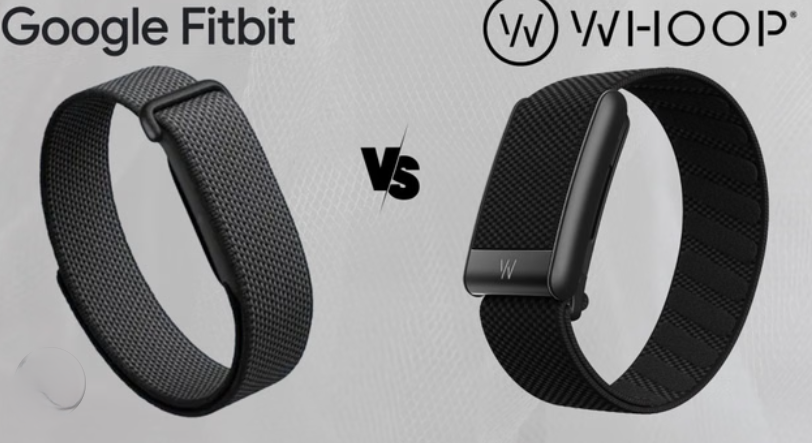
The wearable technology landscape is witnessing a radical architectural purge. For the past decade, smartwatches and fitness trackers consistently relied on bright, power-hungry displays designed to buzz, flash, and demand user attention with notifications, texts, and app alerts. However, as digital fatigue hits an all-time high and a growing demographic of athletic consumers shifts their focus from real-time step counts to deep, background autonomic health profiling, a screen-free revolution has emerged. The global market is now locked in an intense battle between two distinct philosophies. Comparing the Whoop vs Fitbit Air architectures reveals a fundamental dividing line in fitness tech: one approach treats health as an ongoing optimization service, while the other views it as a streamlined piece of hardware.
The arrival of Google’s screen-free wearable has completely disrupted this category, transforming it from a niche playground into a high-stakes ecosystem war. On one side stands Whoop, a platform that has built a cult-like following among elite athletes, military personnel, and biohacking communities by charging an ongoing premium membership fee for intense, hyper-detailed recovery metrics. On the other side sits the freshly launched Google tracker, which brings medical-grade background heart metrics down to an accessible retail tier. By dissecting the underlying sensor physics, subscription mathematics, and artificial intelligence software layers behind both devices, fitness enthusiasts can bypass marketing hype and invest in the exact health ecosystem built for their lifestyle.
1. Physical Footprints: The Zero-Distraction Philosophy
Both wearables start with the exact same design premise: the best health tracker is one you completely forget you are wearing. By removing the display, both brands drastically reduce weight, eliminate the temptation to constantly check notifications, and protect the hardware from cracked screen damage during intense contact sports.
The Whoop Form Factor
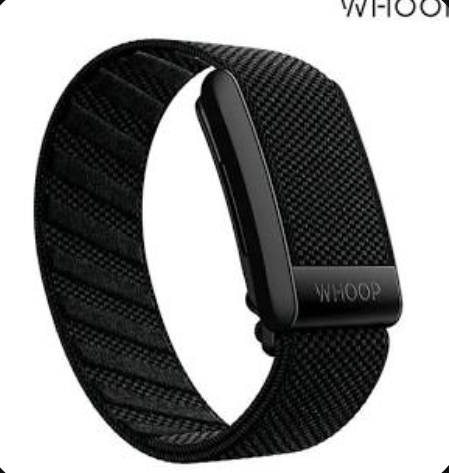
The veteran in this space utilizes a sleek, modular sensor puck tucked inside a wrap-around fabric elastic band. Because it completely lacks an on-device screen, physical buttons, or haptic vibration motors, the device is incredibly light and can be worn comfortably on the wrist, bicep, or inside specialized athletic garments like compression shorts and sports bras. Its most celebrated engineering feat is its unique slide-on battery pack, which clips straight onto the device while you are wearing it. This design enables true 24/7 data continuity because you never have to take the band off your wrist to charge it.
The Fitbit Air Design
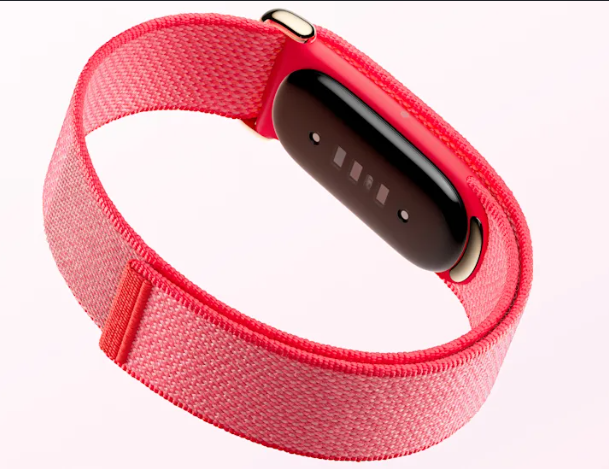
Google’s counter-strategy relies on extreme minimization. The tracker is a tiny, pebble-shaped module that is significantly smaller and lighter than any tracker previously built by the company.
To interact with the hardware, users rely on a double-tap gesture on the outer shell to trigger basic status syncs. While the device must be removed from the wrist to snap onto its bi-directional USB-C magnetic charging cradle, its ultra-light profile makes it highly comfortable for users who typically find bulky smartwatches too disruptive to wear overnight.
2. Sensor Frameworks and Biometric Tracking Purity
Beneath their minimalist bands, both devices pack dense, high-frequency photoplethysmography (PPG) optical sensor arrays designed to monitor blood flow changes hundreds of times per second.
Whoop’s Strain and Recovery Matrix
The tracking system uses a combination of green and infrared LEDs paired with multi-axis accelerometers and a skin temperature sensor to calculate a daily biometrics sheet. The platform gathers resting heart rate, skin temperature variations, respiratory rates, and heart rate variability (HRV) during your deepest stages of sleep. These metrics are compiled into a proprietary algorithm that outputs three simple daily scores: Strain (your cardiovascular exertion from 0 to 21), Recovery (a percentage score indicating how prepared your body is to take on physical stress), and Sleep Performance.
Fitbit Air’s Comprehensive Vitals Suite
The newer tracker brings an incredibly advanced sensor suite to this compact form factor, borrowing engineering elements directly from Google’s flagship smartwatches. Alongside standard resting heart rate and sleep-stage tracking, the device features background atrial fibrillation (AFib) detection that is fully FDA-cleared. The sensor passively monitors your heart rhythm day and night, sending immediate notifications to your phone if it detects an irregular pattern. Additionally, the device tracks blood oxygen saturation (SpO2) levels and compiles data into a weekly cardio load target, rather than forcing users to hit rigid, arbitrary daily step counts.
3. Financial Realities: The Lifetime Cost Blueprint
The most critical divergence when evaluating Whoop vs Fitbit Air platforms is the long-term cost of ownership. The two companies utilize completely opposite monetization frameworks, presenting a distinct financial choice for consumers.
Operational Costs and Purchasing Specifications
| Financial & Support Metric | Whoop Membership Framework | Google Fitbit Air Ecosystem |
| Upfront Hardware Retail Cost | $0.00 (Pkg with active membership) | $99.99 Outright Purchase |
| Mandatory Monthly Subscription | $30.00 / month (or $239 annually) | Optional (Core data access is free) |
| Premium AI Coaching Cost | Included in baseline fee | $9.99 / month (Google Health Premium) |
| Charging Continuity Path | Slide-on battery puck (Never leaves wrist) | Magnetic charging cradle (Requires removal) |
| First-Year Total Cost of Ownership | ~$239.00 to $360.00 | $99.99 (Basic) | $199.99 (Premium) |
| Second-Year Total Cost of Ownership | ~$478.00 to $600.00 | $99.99 (Basic) | $299.98 (Premium) |
4. Software Philosophy: Deep Athletic Strain vs. Mass Wellness Coaching
The data presentation philosophies of the two platforms target completely different audiences. Whoop treats the user like a high-performance machine, organizing its entire interface around the direct relationship between stress and recovery. The app’s primary screen is a massive, color-coded recovery wheel (Red, Yellow, or Green) that tells an athlete exactly how hard they can push their body on a given day. If your HRV drops and your resting heart rate spikes due to poor sleep or alcohol consumption, the app will explicitly warn you to scale back your training strain to prevent overtraining or injury.
Google’s tracker completely untethers itself from the old Fitbit app brand, routing all data through the fully redesigned Google Health app. The user experience is built for holistic, everyday wellness. Instead of throwing hyper-dense scatterplots of raw heart rate deviations at you, the app translates your metrics into clear lifestyle indicators, highlighting trends in your resting vitals and assigning intuitive sleep scores. For users who want basic tracking without a mounting stack of recurring bills, the device allows you to access all your core physiological data, workout tracking history, and heart health metrics completely free of charge, presenting a massive advantage over its subscription-locked rival.
5. The AI Coaching Duel: Whoop Coach vs. Gemini Health Coach
Because screenless wearables lack displays to show information on your wrist, both companies lean heavily on advanced Artificial Intelligence models within their apps to interpret your numbers and answer your wellness questions.
Whoop Coach
This assistant focuses purely on optimizing athletic performance. The custom chat assistant can instantly scan years of your historical training data to answer hyper-specific questions like: “How did my late-night eating affect my deep sleep recovery metrics over the last three months?” It responds with direct data correlations, providing athletes with a highly personalized logbook analysis that explicitly connects daily habits to physical recovery scores.
Gemini Health Coach
Google powers its coaching layer using its advanced Gemini models, available via the Google Health Premium tier. This assistant acts as a holistic wellness partner, showing incredible flexibility when analyzing lifestyle factors. If you ask it to create a workout plan that accounts for a recent minor ankle injury, or ask it to evaluate why your sleep quality improved after a stressful work week, the Gemini-backed coach uses deep conversational reasoning to spot trends.
Summary Decision Guide: Choosing Your Screenless Companion
To bring this comparison of the two leading screenless trackers to a clear conclusion, we can look at how these technical trade-offs align with your personal budget and training priorities.
Choose Whoop If:
- Data Continuity Is Vital: You refuse to have gaps in your heart rate or sleep tracking data, and want to utilize the slide-on charging pack system.
- You Train at an Elite Level: Your primary goal is optimizing the strict balance between cardiovascular strain and autonomic recovery.
- You Value Deep Data Correlation: You want an AI assistant that can instantly cross-reference years of complex sleep and exertion metrics to spot subtle performance patterns.
Choose the Fitbit Air If:
- You Demand a Low Upfront Cost: You want to step into premium, screen-free health tracking for a flat, accessible $99 purchase price.
- You Want Freedom From Subscriptions: You want access to all your primary sleep, activity, and vitals data without being locked into a monthly membership fee.
- Passive Heart Health Is Crucial: You want the security of FDA-cleared background AFib detection and automatic irregular rhythm alerts.