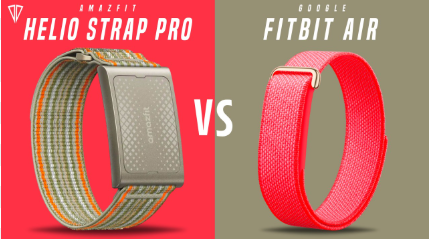
The consumer health technology market has reached a critical architectural turning point. For over a decade, the dominant wearable design paradigm relied on miniature wristbound touchscreens that constantly competed for human attention with an endless stream of digital notifications, buzzes, and metric charts. However, digital fatigue and the demand for absolute data continuity have sparked a hardware transition. Today’s high-performance consumers are aggressively moving toward un-intrusive, screen-free form factors. As this market expands, two opposing engineering philosophies have emerged. The highly anticipated launch of the Fitbit Air vs Amazfit Helio & helio strap pro frameworks marks the definitive split between mainstream consumer health tracking and highly specialized, data-dense athletic performance monitoring.
Google’s rollout of the screenless tracker completely redefines its hardware footprint, shrinking its ecosystem down into an affordable, ultra-light tracking pebble built for passive wellness and medical-grade background monitoring. Simultaneously, Zepp Health has chosen a drastically different path with its Amazfit sub-brand. Rather than relying on a single tracking point, Amazfit has built an interconnected multi-sensor universe. This ecosystem combines the sleek titanium ring design with the newly unveiled high-performance strap systems, targeted at hybrid athletes and functional sports competitors. This deep architectural review breaks down the sensor physics, ecosystem politics, and data layers of both platforms to show which zero-distraction framework fits your health optimization goals.
1. Physical Footprints and Wearable Archetypes
The fundamental structural difference across these devices lies in where—and how—they sit on your body. Google minimizes the traditional wristband, while Amazfit moves tracking entirely away from standard wrist placement.
Google Fitbit Air: The Wrist-Bound Disappearing Pebble
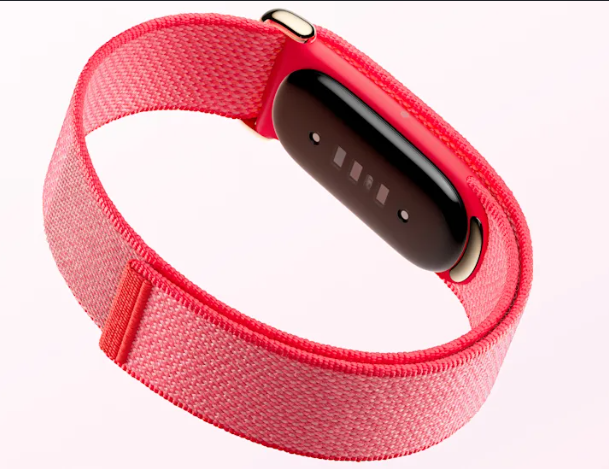
The tracker is constructed as an ultra-compact, 5.2-gram tracking pebble (reaching a minimal 12 grams when clipped into its standard woven Performance Loop Band). Lacking any display, haptic vibration engines, or physical buttons, it uses a simple double-tap interface to wake up an LED status light that communicates battery states and synchronization loops. It is engineered to sit quietly on the wrist or behind the wrist bone, completely disappearing from the user’s conscious awareness during day-to-day operations and overnight sleep tracking.
Amazfit Helio & Helio Strap Pro: The Multi-Node Anatomy
Amazfit splits its screen-free hardware options into two highly distinct architectural footprints:
- The Smart Ring: Constructed from a premium, skin-friendly titanium alloy, the smart ring weighs less than 4 grams with an ultra-slim 2.6mm thickness. It hugs the finger tightly, using inner resin nodes to press its optical sensors firmly against the digital arteries, offering a highly accurate, non-intrusive alternative for sleep tracking and daily readiness indexing.
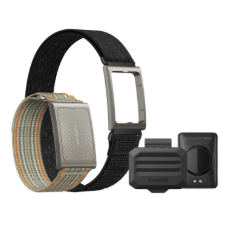
- The Pro Strap System: Shifting from recovery to high-intensity training, the pro-grade multi-sensor kit splits data collection into two separate hardware modules. The Helio Core Motion HR module is worn on the upper arm closer to the heart to bypass wrist-flexion muscle distortion. Simultaneously, a secondary Helio Core Motion Waist sensor clips directly to the athlete’s center of mass to capture torso movement, pelvic symmetry, and multi-axis posture data during functional training.
2. Sensor Frameworks and Biometric Tracking Deep-Dive
Evaluating the underlying sensor hardware of the Fitbit Air vs Amazfit Helio & helio strap pro reveals two completely different technical goals. Google prioritizes passive, medical-grade baseline health oversight, while Amazfit focuses on active, biomechanical movement analytics under intense physical fatigue.
The Passive Clinical Guard: Fitbit Air
Google’s software brain leverages a high-fidelity optical photoplethysmography (PPG) array optimized for background monitoring. Its standout engineering asset is a fully FDA-cleared passive atrial fibrillation (AFib) algorithm. The tracker quietly scans the user’s pulse rhythm around the clock, providing real-time alerts if it flags irregular heart trends.
This data feeds directly into the Google Health app to generate highly accurate sleep-stage metrics, resting heart rate curves, and temperature tracking without requiring any active user configuration.
The Biomechanical Multi-Sensor Engine: Amazfit Pro
The multi-node ecosystem approaches the body as a dynamic mechanical system. While the smart ring utilizes localized heart rate variability (HRV) and an Electrodermal Activity (EDA) sensor to quantify sweat-gland emotional stress responses during sleep, the pro strap system turns into a highly advanced kinetic tracker during workouts.
The waist-mounted module drops basic accelerometers in favor of a specialized 9-axis sensor setup that combines an advanced gyroscope, accelerometer, and digital geomagnetic sensor. This multi-sensor array connects natively via Bluetooth with premium sports watches like the Balance 3 or Balance Ultra to unpack an athlete’s movement quality across structured functional training regimens. Designed in partnership with hybrid fitness organizations, the software tracks performance details across specific movements, analyzing how your posture, lifting stability, and muscle load shift as fatigue builds during high-intensity circuits.
3. Financial Ecosystem Profiles: Subscription vs. Sovereignty
A massive factor separating the Fitbit Air vs Amazfit Helio & helio strap pro platforms is the long-term cost model. The two companies use completely opposite monetization strategies, establishing a clear commercial divide between hardware purchases and ongoing subscription services.
Comprehensive Cost and Operational Blueprint
| System Metric & Financial Layer | Google Fitbit Air Tracker | Amazfit Helio & Pro Strap System |
| Upfront Hardware Retail Price | $99.99 Outright Purchase | $199.99 (Ring) | Pro Strap Kit Varies |
| Mandatory Subscription Fee | No (Core health tracking is free) | No Subscriptions Ever Required |
| Advanced AI Insights Interface | Requires Google Health Premium ($9.99/mo) | Free native integration via Zepp App |
| Data Ecosystem Integration | Google Health App (Android & iOS) | Zepp App & Direct Apple Health Sync |
| Battery Life Performance Span | Up to 7 Days Standard | 4 Days (Ring) | 11 Days (Pro Strap Core) |
| Target User Demographic | Streamlined Wellness & Sleep Trackers | Hybrid Athletes, Lifters, & HYROX Competitors |
4. Software Environments and AI Intelligence Layers
Because screenless health trackers have no way of displaying complex charts on your body, the mobile app and its artificial intelligence engine become the primary way you interact with your data.
Google Health and the Gemini Pro Engine
The tracker channels all its background biometric metrics into the clean, unified Google Health app. If you unlock the premium tier, you gain access to the conversational Google Health Coach.
Powered by Google’s advanced Gemini Pro large language model, this assistant excels at conversational context. Users can take pictures of their gym’s whiteboard workout or snap photos of complex cardio equipment, and the app will instantly interpret the text, map out the exercises, and log the physiological impact against your daily vitals sheet.
Zepp App and the HybridCharge Energy Architecture
Amazfit treats data analysis differently, consolidating its multi-device ecosystem inside the subscription-free Zepp App. The software platform uses a specialized processing engine called HybridCharge Energy Intelligence. Instead of treating workouts and daily activities as isolated events, the system constantly balances three distinct biometric inputs:
HybridCharge Status = f(BioCharge System, Training Load Capacity, Active LifeLoad Daily Stress)
This system combines your overnight recovery values with active training metrics and passive daily stress levels to compute an ongoing, real-time readiness score. For athletes who mix training styles, the software exports raw data and performance trends straight into third-party fitness hubs or Apple Health, ensuring complete ownership over your biometric records without any paywalls.
5. Strategic Architectural Trade-Offs
Choosing between these two advanced ecosystems requires prioritizing either clinical baseline wellness or high-output movement optimization.
The Strengths and Limitations of the Fitbit Air
The primary advantage of Google’s approach is its incredible simplicity and clinical utility. For users who want a lightweight tracker that automatically monitors sleep stages, captures daytime activity, and provides reliable AFib heart health protection for a low, double-digit price, it is an unbeatable choice.
However, its reliance on a single wrist-based node limits its depth during serious strength training or weightlifting, where wrist flexion and firm gripping can temporarily distort optical heart rate readings.
The Strengths and Limitations of the Amazfit Array
The multi-node titanium ring and pro strap system cleanly eliminate tracking gaps by moving sensors to the optimal parts of the anatomy for different activities. The arm strap records pristine heart rate values during heavy lifts, while the waist node captures genuine kinetic stability, and the titanium ring offers highly comfortable sleep tracking.
The main drawback is hardware management friction. Users must manage charging routines for multiple distinct devices and coordinate sync loops across separate tracking nodes to unlock the system’s full potential, creating a more complex workflow than Google’s single-pebble solution.
Direct Comparison Summary
To wrap up this technical deep dive, we can look at how these three screenless tracking configurations match up across everyday lifestyle scenarios.
The Lifestyle and Fitness Mapping Matrix
| Operational Capability Layer | Google Fitbit Air Pebble | Amazfit Titanium Helio Ring | Amazfit Helio Strap Pro System |
| Primary Placement Zone | Lower Wrist / Arm Area | Finger Vascular Grid | Upper Arm Core + Center Waist |
| Passive Cardiac Safety | High (Passively monitors for AFib) | Medium (Tracks basic HRV/RHR) | Low (Optimized for active exercise) |
| Kinetic Motion Tracking | Basic 3-Axis Steps & Steps | Basic Activity Accruals | High (9-Axis Biomechanical Tracking) |
| Sleep Tracking Comfort | High (Ultra-light 12g profile) | Excellent (Under 4g ring body) | Low (Strap is optimized for gym use) |
| Third-Party App Sharing | Locked to Google Health ecosystem | Open Zepp App Export Framework | Open Bluetooth & Apple Health Trunks |
Ultimately, this screenless showdown demonstrates that the wearable tech sector has moved past one-size-fits-all designs. The choice between these systems comes down to your personal health goals and financial preferences. If you want a comfortable, set-and-forget health tracker that delivers crucial cardiac safety alerts and seamless sleep monitoring for an affordable upfront cost, the Fitbit Air is an exceptional consumer device.
However, if you are a dedicated hybrid athlete who demands deep, subscription-free biomechanical data, clean heart rate tracking under heavy fatigue, and open ecosystem connectivity, the interconnected Amazfit Helio and Helio Strap Pro system provides an incredibly powerful, screen-free movement intelligence network built to optimize your training and recovery.