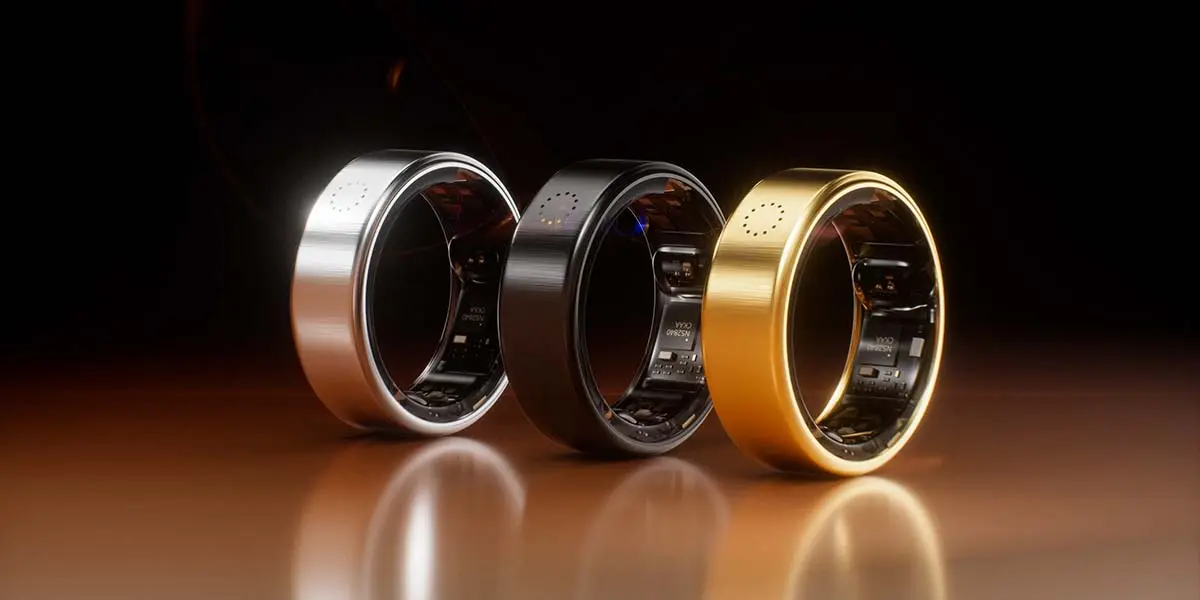
Wearable technology has come a long way from bulky fitness trackers and smartwatches. Today, one of the fastest-growing categories in digital health is the smart ring, a compact device that packs sophisticated sensors into a form factor no larger than a traditional ring. These devices are changing the way people monitor their health by providing continuous insights into sleep, recovery, activity, stress, and overall wellness without requiring constant interaction.
But what exactly is a smart ring, and how does it work? More importantly, why are healthcare providers, wellness companies, and technology brands paying so much attention to this tiny wearable?

Credits: The Indian Express
What Is a Smart Ring?
A smart ring is a wearable electronic device designed in the shape of a conventional ring. Unlike traditional jewelry, it contains miniature sensors, processors, wireless communication modules, and batteries that enable it to collect and analyze health-related information.
Most smart rings focus on wellness and health monitoring rather than communication or entertainment. Instead of displaying notifications on a screen, they work quietly in the background, collecting physiological data around the clock and presenting insights through a connected smartphone application.
Why the Finger Is an Ideal Place for Health Tracking
Compared to the wrist, the finger often provides:
- Better blood flow measurements
- More stable sensor contact
- Reduced motion interference during sleep
- Consistent physiological readings
These advantages allow smart rings to collect high-quality data, especially for metrics such as heart rate and heart rate variability.
The result is a device capable of delivering detailed health insights while remaining discreet enough to wear continuously.
How Smart Rings Work
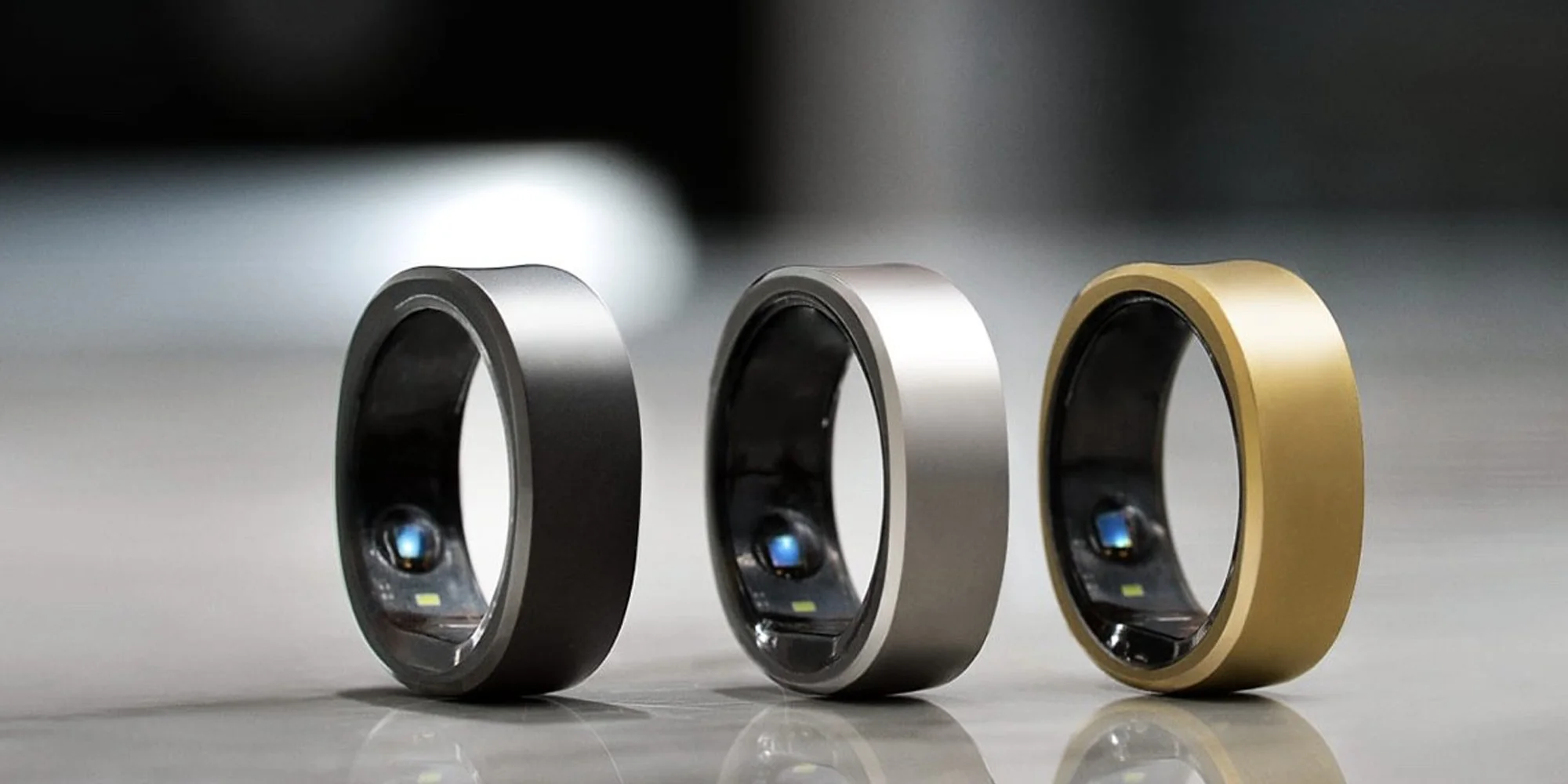
Although they appear simple from the outside, smart rings contain advanced hardware and software systems working together to monitor the body.
The process generally involves three stages:
- Collecting physiological data through sensors
- Processing the information using onboard electronics
- Analyzing the data through smartphone applications and cloud-based algorithms
This combination allows smart rings to transform raw biological signals into actionable health insights.
Credits: Tech Research Online
The Sensors Inside a Smart Ring
The technology packed into a smart ring is surprisingly sophisticated considering its compact size.
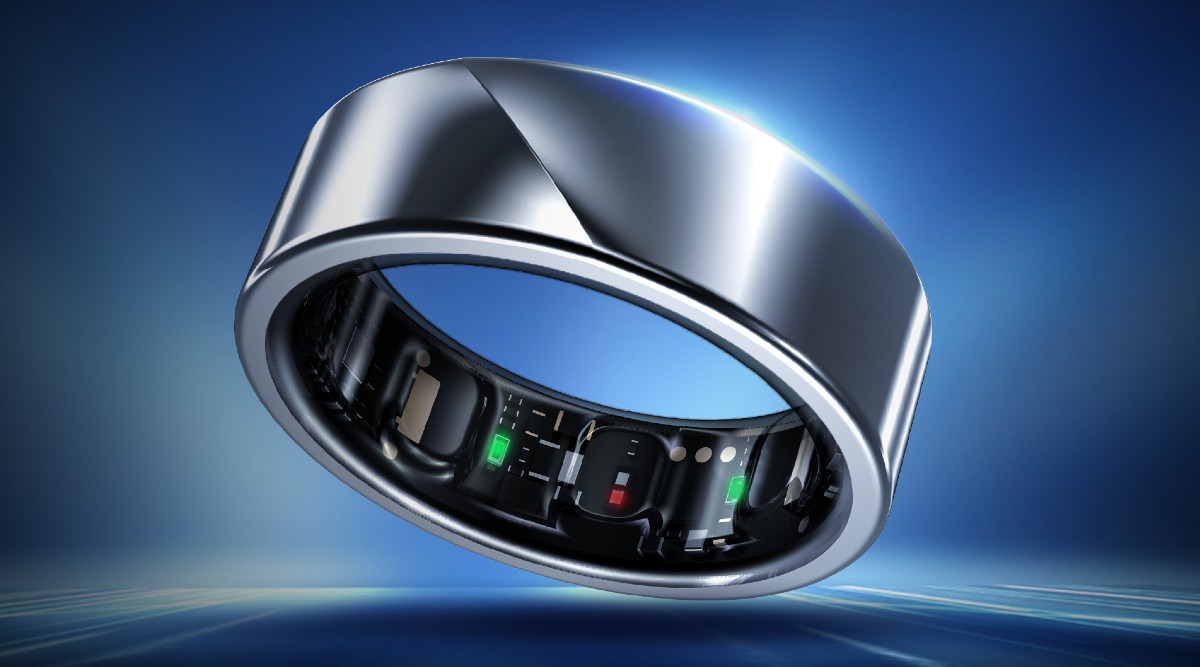
Photoplethysmography (PPG) Sensors
The most important sensor in many smart rings is the PPG sensor.
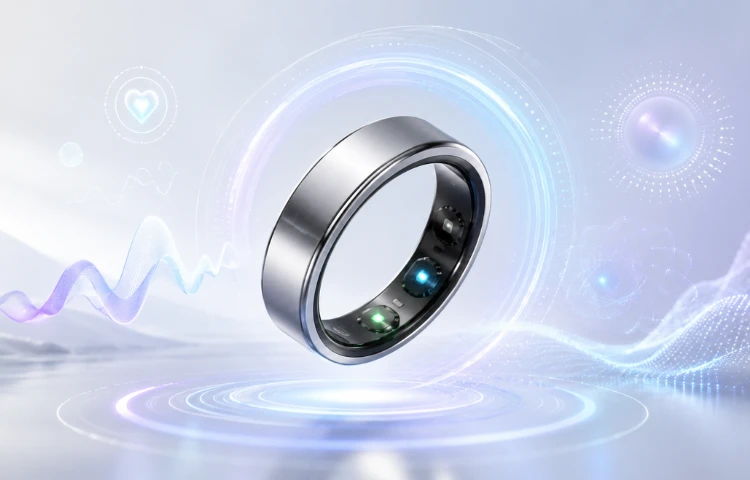
Photoplethysmography uses tiny LEDs that shine light into the skin. As blood flows through the finger, variations in blood volume affect how the light is absorbed and reflected. These changes can be measured and converted into valuable health information.
PPG sensors help track:
- Heart rate
- Resting heart rate
- Heart rate variability (HRV)
- Blood oxygen trends
- Recovery indicators
Because fingers offer strong blood-flow signals, smart rings often achieve highly reliable readings for these metrics.
Temperature Sensors
Many smart rings also include skin temperature sensors.
Rather than measuring body temperature like a thermometer, these sensors monitor changes in skin temperature over time. This information can reveal important physiological trends.
Temperature tracking can support:
- Sleep analysis
- Recovery monitoring
- Stress assessment
- Illness detection trends
- Women’s health tracking
Small shifts in temperature may indicate changes occurring within the body long before symptoms become noticeable.
Accelerometers and Motion Sensors
Motion sensors help smart rings understand how users move throughout the day and night.
These sensors can detect:
- Walking
- Running
- Daily activity
- Sleep movement
- Restlessness during sleep
Combined with heart rate data, motion sensors help distinguish between various activity levels and sleep stages.
Emerging Advanced Sensors
As smart ring technology evolves, manufacturers are experimenting with additional sensing capabilities.
Future devices may incorporate:
- ECG monitoring
- Bioimpedance measurements
- Advanced oxygen sensing
- Hydration tracking
- Blood pressure estimation technologies
These developments could significantly expand the role of smart rings in healthcare and preventive medicine.
How Smart Rings Collect and Process Data
Smart rings continuously gather information while being worn.
The collected sensor data is first processed within the ring itself. Embedded software removes noise, filters inaccurate readings, and prepares the information for transmission.
The processed data is then sent to a smartphone through Bluetooth Low Energy (BLE), a wireless communication technology designed to consume minimal battery power.
Once the data reaches the smartphone application, advanced algorithms analyze patterns and trends. Many platforms also use cloud computing and artificial intelligence to provide deeper insights into the user’s health.
Instead of simply reporting numbers, modern smart rings can explain what those numbers mean and how they relate to overall wellness.
Sleep Tracking: The Killer Feature of Smart Rings
Sleep monitoring is often considered the strongest use case for smart rings.
Many people find watches uncomfortable while sleeping and remove them at night. Rings, however, are lightweight and minimally intrusive, making them easier to wear consistently.
Smart rings can measure:
- Total sleep duration
- Sleep efficiency
- Deep sleep
- Light sleep
- REM sleep
- Sleep interruptions
- Nighttime heart rate
- Recovery indicators
By combining multiple data streams, smart rings provide a comprehensive picture of sleep quality.
Because sleep plays a crucial role in physical recovery, cognitive performance, and mental health, accurate sleep tracking has become one of the most valuable functions of wearable technology.
Heart Rate and Heart Rate Variability Monitoring
Heart rate tracking has become a standard feature across wearable devices, but smart rings take the concept further by emphasizing long-term trends.
Rather than focusing solely on real-time readings, smart rings analyze patterns that develop over days, weeks, and months.
One particularly important metric is Heart Rate Variability (HRV).
HRV measures the variation in time between heartbeats. Contrary to popular belief, a perfectly regular heartbeat is not necessarily ideal. Healthy individuals often exhibit slight variations between beats.
Higher HRV is generally associated with:
- Better recovery
- Lower stress levels
- Improved cardiovascular fitness
- Greater resilience
Lower HRV may indicate:
- Fatigue
- Illness
- Chronic stress
- Overtraining
For athletes, professionals, and health-conscious individuals, HRV has become one of the most valuable indicators of overall well-being.
Activity and Recovery Tracking
Although smart rings are not primarily designed for live workout monitoring, they excel at tracking overall activity and recovery.
They can record:
- Daily movement
- Step counts
- Activity duration
- Energy expenditure estimates
- Sedentary periods
The real strength lies in combining activity information with sleep, heart rate, and HRV data.
For example, a user who exercises intensely but sleeps poorly may receive recovery warnings, helping prevent burnout or overtraining.
This holistic approach provides a more complete understanding of health than activity tracking alone.
Credits: Quantilus Innovation
Women’s Health Applications
Women’s health tracking has become a major area of innovation for smart rings.
By monitoring physiological signals such as temperature fluctuations, sleep patterns, and heart rate changes, smart rings can identify trends associated with menstrual cycles.
Potential applications include:
- Cycle tracking
- Ovulation prediction
- Fertility awareness
- Hormonal trend monitoring
Because these insights are generated passively, users can gain valuable information without manual data entry or frequent measurements.
Smart Rings vs Smartwatches
Smart rings and smartwatches often appear to compete with one another, but they are designed for different purposes.
Smartwatches are optimized for interaction. They offer screens, notifications, apps, calls, and fitness interfaces.
Smart rings focus on passive monitoring.
Advantages of smart rings include:
- Greater comfort
- Better sleep tracking compliance
- Longer battery life
- Discreet appearance
- Continuous wearability
Advantages of smartwatches include:
- Real-time notifications
- Workout displays
- Navigation features
- Communication tools
- Larger app ecosystems
Many users ultimately choose to use both devices together, with the smartwatch serving as an interaction tool and the smart ring acting as a dedicated health monitor.
How Accurate Are Smart Rings?
Accuracy is one of the most common questions surrounding wearable devices.
The performance of a smart ring depends on several factors:
- Sensor quality
- Ring fit
- Algorithm design
- Signal filtering techniques
- Consistency of wear
When properly fitted and designed, modern smart rings can provide highly reliable trend data for sleep, resting heart rate, HRV, and activity monitoring.
It is important to remember that most smart rings are intended for wellness purposes rather than medical diagnosis. Their greatest value lies in tracking trends over time rather than delivering clinical-grade measurements at a single point in time.
The Role of Smart Rings in Healthcare
Healthcare systems worldwide are increasingly moving toward preventive and continuous monitoring models.
This shift creates significant opportunities for smart rings.
Potential healthcare applications include:
- Remote patient monitoring
- Chronic disease management support
- Post-surgery recovery observation
- Preventive health programs
- Population health studies
By collecting data continuously, smart rings can help identify health changes before they become serious problems.
Several healthcare institutions and technology companies are already conducting research into how wearable-generated data can support clinical decision-making.
Battery Life and Design Challenges
Building a smart ring presents unique engineering challenges.
Manufacturers must fit sensors, processors, batteries, antennas, and wireless communication systems into a tiny device while maintaining comfort and durability.
To maximize usability, smart rings are typically designed with:
- Low-power electronics
- Waterproof construction
- Medical-grade materials
- Multiple sizing options
- Durable coatings
Most modern smart rings offer battery life ranging from several days to more than a week, depending on sensor usage and software optimization.
Credits: The Indian Express
The Future of Smart Rings
Future smart rings may provide:
- Early illness detection
- Advanced cardiovascular monitoring
- Continuous metabolic tracking
- Personalized health recommendations
- Integration with telemedicine platforms
- Clinical-grade remote monitoring capabilities
As healthcare becomes increasingly data-driven, smart rings could become an essential bridge between consumers and healthcare providers.