
A world with 100 trillionaires might seem to be something out of science fiction movies right now. Nevertheless, wealth generation over the last few decades has led many people to ask whether this scenario might be achievable in the future. The question, Could There Be 100 Trillionaires by 2100?, has become more common as billionaire fortunes continue to grow. New technologies, expanding markets, and rising global wealth have created fortunes that once seemed impossible.
Predicting the number of trillionaires for the end of the century is not easy at all. Wealth generation does not follow any linear trend; there are many things involved in this process, including economic development, technological advancements, governmental policies, and even inflation.
Current scientific research does not allow to predict the exact figure, but still it gives quite interesting information about potential prerequisites for the appearance of 100 trillionaires.
What Is a Trillionaire?
A person with a trillion dollar net worth would be known as a “trillionaire”.
The net worth of current richest individuals stands at hundreds of billions of dollars, rather than trillions.
Net worth is calculated by adding all assets such as stock, investments, property, and others after deducting liabilities.
Since most huge net worths are directly associated with companies, future trillionaires will arise from industries producing vast amounts of economic value.
Could There Be 100 Trillionaires by 2100? Looking at Global Wealth
To answer the question Could There Be 100 Trillionaires by 2100?, it helps to look at the broader economy rather than individual fortunes.
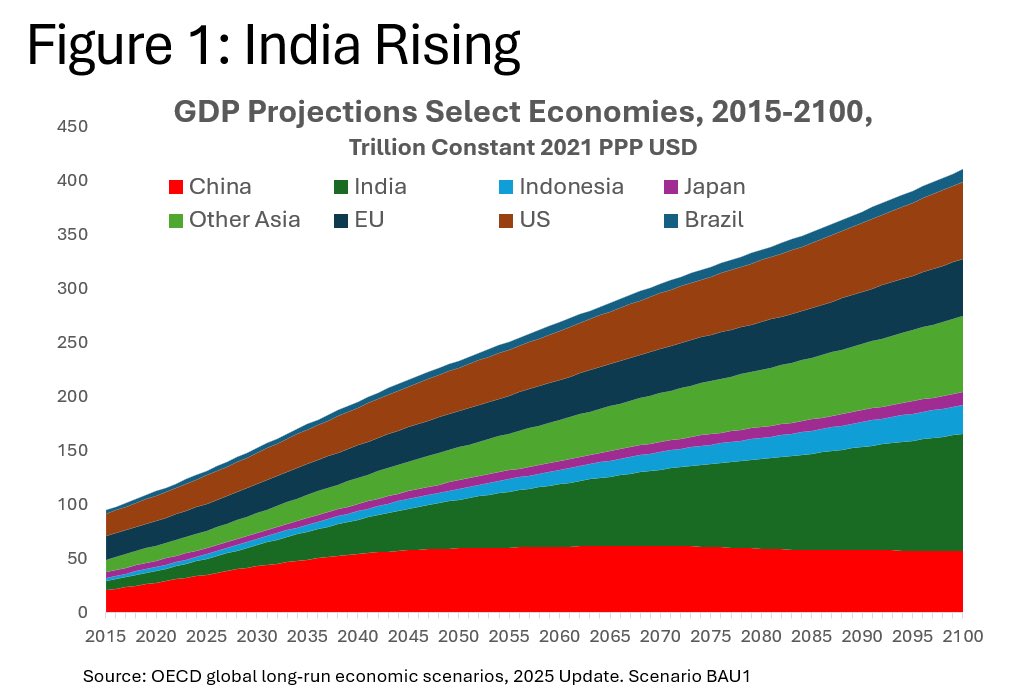
Economic research conducted by entities such as the OECD indicates that the world’s economy will continue to expand throughout the century ahead. Even though expansion might be slower in comparison to the previous decades, the overall economic output will nevertheless rise.
With an increasing economy, the wealth of households increases too. More companies are founded, stock exchanges develop, and investments appreciate in value.
Developing countries in general and specifically Africa and South Asia are also likely to make a more significant contribution to world growth in the future and thus develop industries and entrepreneurs able to create multi-trillion-dollar fortunes.
Clearly, with a greater size of the world economy, creating multi-trillion-dollar fortunes becomes easier.
Technology Could Create New Wealth
Technology has been playing an important part in making huge fortunes.
The internet made billionaires in software, electronic commerce, and online advertising. The artificial intelligence revolution, biotechnology, robotics, quantum computing, alternative sources of energy, and space technology might help make the next generation of fortunes.
If any completely new industries emerge in the next seventy years, their founders would be able to make companies valued at several trillion dollars.
Large technology platforms are also subject to network effects. The more users these companies have, the more valuable they become, making it possible for the founders and the investors to amass enormous wealth.
This is one of the reasons why many economists think that future technological innovations might help create the first trillionaire.
But it is impossible to predict which technologies might become dominant.
Could There Be 100 Trillionaires by 2100? The Role of Wealth Inequality
Economic growth by itself does not lead to more trillionaires.
Distribution of wealth is as important as the creation of wealth.
Wealth is always distributed among only a minority of the population, as seen by research findings. The wealthiest individuals possess considerable wealth in terms of businesses, equities, and property.
Continuation of this trend will ensure that future economic growth will benefit only a few individuals and lead to the creation of trillionaire fortunes.
However, increased taxation on wealth, inheritance laws, or greater business ownership could lessen wealth distribution.
Thus, government policies will have a big part to play in future wealth creation.
Inflation Changes the Picture
Another important factor is inflation.
The value of money will decrease due to increasing prices with time. One trillion dollars in the year 2100 may not buy as much as one trillion dollars will buy now.
Moderate inflation, which compounds over many years, can make the amount of money very different.
This is because future billionaires will become billionaires in dollar terms but not necessarily possess the same purchasing power as they would have now.
This is why economists usually distinguish between nominal wealth and real wealth.
One trillion dollar wealth in future dollars may not be as exceptional as one trillion dollars now.
Could There Be 100 Trillionaires by 2100? Policy Will Matter
The answer to could There Be 100 Trillionaires by 2100? Also depends on public policy.
The state influences wealth creation through taxation, regulation, competition, and financial markets.
Increased taxation of huge amounts of wealth might help avoid increasing inequality of wealth accumulation.
Policies related to competition would limit the power of corporations.
Inheritance law changes might also decrease intergenerational transmission of huge amounts of wealth.
Simultaneously, the promotion of innovation, entrepreneurship, and investments could create a situation where extremely high levels of wealth continue accumulating.
The relationship between wealth creation and wealth redistribution would define the number of future trillionaires.
Risks That Could Slow Wealth Growth
Long-run projections inherently entail some uncertainty.
There are a number of global threats that could slow down economic growth before 2100.
Global warming could harm infrastructure, hurt agriculture, and raise the cost of adaptation to new weather conditions.
Economic crises could wipe out wealth in global markets.
Political tensions could affect trade and investments.
Demographic trends are also relevant here. In many developed economies, population aging and slowing labor force growth could dampen economic growth.
All of these can hinder the rate of extreme wealth accumulation.
Could There Be 100 Trillionaires by 2100? Why Experts Avoid Exact Predictions
People often ask for a specific number of future trillionaires.
The reality is that no reliable economic model can provide one.
Long-term forecasts depend on assumptions about technology, demographics, politics, productivity, inflation, and global stability.
Even small changes in these assumptions produce very different outcomes over several decades.
Most research focuses on estimating future economic growth rather than counting individuals with certain levels of wealth.
As a result, economists can describe possible scenarios but cannot confidently predict whether there will be ten, fifty, or one hundred trillionaires by 2100.
What Is the Most Likely Outlook?
Based on all this information, there are reasons to believe that the accumulation of wealth at the global level will continue in the coming decades.
One can expect further development of technology to be the factor influencing the creation of fortunes. Growing economies in developing countries will also provide chances that are not present right now.
Taxation, regulation, climate risk, inflation, and shifts in political priorities will affect the ability of the wealthiest individuals to concentrate their wealth.
It makes an exact answer to the question Could There Be 100 Trillionaires by 2100? impossible.
The most reasonable conclusion is that this future is possible, but it is not inevitable.
If the global economy keeps growing, innovation leads to creation of entirely new industries and inequality remains high, there can be a world full of many trillionaires.
Otherwise, if growth slows down, governments implement wealth redistribution and any major changes take place at the global scale – there will be fewer people with such fortunes.
What one can say for sure based on the information provided in the paper – currently available scientific research is unable to provide the answer to the question on the number of trillionaires by 2100.