For years, web browsers have been the gateway to the internet. Whether it’s reading articles, shopping online, researching topics, or collaborating with colleagues, browsers have remained the starting point for almost every digital activity. But with the rapid rise of artificial intelligence, the browser itself has become the latest battleground in the AI race.
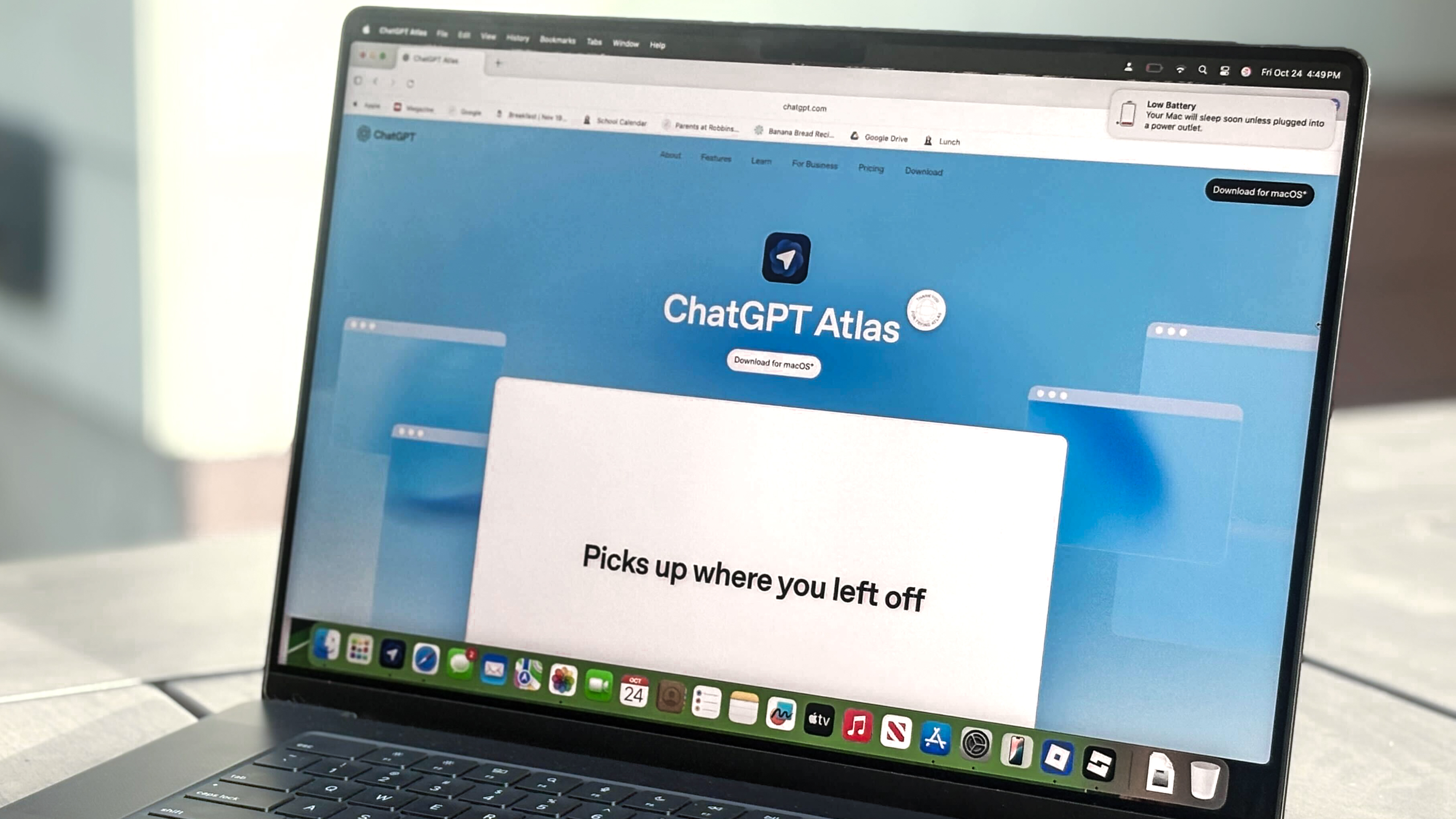
OpenAI was one of several companies attempting to redefine the browser experience when it launched Atlas in October last year. Positioned as an AI-powered browser tightly integrated with ChatGPT, Atlas promised a more conversational, intelligent way to interact with the web.
Less than a year later, however, OpenAI has decided to discontinue Atlas as a standalone product. Rather than viewing this as a retreat, the company is treating it as an evolution. The technologies developed for Atlas are now being integrated directly into ChatGPT, Chrome, and OpenAI’s desktop applications, reflecting a broader vision: AI shouldn’t be another destination—it should be available wherever users already are.

Credits: The Verge
The Rise of AI Browsers
The race to reinvent the browser has intensified dramatically over the past year. Traditional web browsers were originally designed to display websites, but today’s AI models have introduced the possibility of browsers that understand context, summarize information, answer questions, and even perform tasks autonomously.
Several companies have entered this emerging category.
Perplexity launched Comet, an AI-first browser focused on research and conversational search. The Browser Company introduced Dia, aiming to replace traditional tabs and searches with AI-assisted workflows. Meanwhile, Google has steadily expanded Gemini’s integration into Chrome, while Microsoft has embedded Copilot across Edge and Windows.
The underlying idea has been similar across all these products: instead of simply displaying webpages, browsers should understand them.
Atlas was OpenAI’s contribution to this rapidly evolving market.
Why OpenAI Is Retiring Atlas
At first glance, shutting down a product less than a year after launch may seem surprising. But the decision reflects changing user behavior rather than a failure of the underlying technology.
OpenAI appears to have concluded that users don’t necessarily want another browser installed on their computers. Most people are deeply invested in Chrome, Edge, Safari, or Firefox. Their bookmarks, passwords, extensions, browsing history, and workflows are already built around these browsers.
Convincing millions of users to abandon those ecosystems is an enormous challenge.
Instead, OpenAI has recognized that the real value isn’t the browser itself—it’s the AI capabilities behind it.
By integrating Atlas’s features directly into ChatGPT and Chrome, OpenAI can reach users without asking them to change their habits.
It’s a subtle but important shift in philosophy: don’t replace existing tools; enhance them.
ChatGPT Becomes Part of Chrome
One of the biggest announcements accompanying Atlas’s retirement is the launch of a dedicated ChatGPT extension for Google Chrome.
The extension allows ChatGPT to understand the webpage a user is currently viewing. Instead of copying text into a chatbot window or opening a separate tab, users can simply ask questions about the page they’re reading.
Imagine reading a lengthy research paper and asking ChatGPT to summarize the key findings.
Or reviewing legal documentation and requesting a plain-English explanation.
Or shopping online and asking ChatGPT to compare specifications with competing products.
Because the assistant understands the current webpage, conversations become far more contextual and efficient.
This dramatically reduces friction and transforms ChatGPT into a companion that stays alongside the browsing experience instead of interrupting it.
Taking on Google’s Gemini
The Chrome integration also places OpenAI in direct competition with Google’s Gemini Side Panel.
Google has spent months embedding Gemini throughout its ecosystem, allowing users to summarize webpages, draft emails, explain complex concepts, and interact with websites without leaving Chrome.
OpenAI’s new extension offers remarkably similar functionality.
This competitive dynamic highlights a broader trend within the AI industry. Increasingly, companies are no longer competing solely on the intelligence of their models—they’re competing on convenience.
The AI assistant that requires the fewest clicks, integrates with the most applications, and fits naturally into everyday workflows is likely to gain the strongest user adoption.
In many ways, distribution has become just as important as intelligence.
A More Powerful ChatGPT Desktop Experience
OpenAI isn’t limiting these improvements to Chrome.
The ChatGPT desktop application is also receiving significant upgrades that make it function much more like a full-featured browser.
Instead of merely answering questions, ChatGPT can now browse websites, log into accounts when authorized, navigate webpages, interact with online forms, and download files.
This marks another important step toward AI agents capable of carrying out real-world digital tasks.
Previously, users had to manually switch between ChatGPT and their browser to complete workflows.
Now, many of those actions can happen within a single interface.
The result is a smoother, more integrated productivity experience.

Credits: Techlusive
Enter the Cloud Browser
Perhaps the most intriguing announcement is OpenAI’s new remote cloud browser.
Unlike a traditional browser running on a user’s computer, this browser operates entirely on OpenAI’s servers.
Users can assign tasks to ChatGPT, and AI agents perform those tasks remotely in the cloud.
For example, the AI might navigate websites, collect information, complete repetitive online processes, or prepare documents while the user focuses on other work.
This represents a major step toward autonomous AI agents.
Instead of merely assisting users, AI increasingly acts on their behalf.
While users will still maintain oversight and approval for sensitive actions, cloud-based browsing lays the groundwork for more capable digital assistants that can execute multi-step workflows independently.
From Chatbot to Productivity Platform
These updates reinforce a broader transformation already underway at OpenAI.
ChatGPT is gradually evolving beyond its original identity as a conversational chatbot.
Today it can write code, analyze documents, generate images, create presentations, summarize meetings, search the web, and now actively interact with websites.
Rather than building separate products for each capability, OpenAI appears to be consolidating everything inside ChatGPT.
The vision resembles an intelligent operating layer sitting above existing software instead of replacing it.
Whether users are browsing Chrome, working on the desktop, or delegating tasks to AI agents running in the cloud, ChatGPT increasingly becomes the central hub connecting those experiences.
A More Focused OpenAI
The Atlas decision also aligns with reports that OpenAI has recently become more selective about which projects it pursues.
Earlier this year, Applications CEO Fidji Simo reportedly encouraged teams to reduce work on experimental “side quests” and focus resources on products with broader strategic importance.
That shift reportedly contributed to the shutdown of Sora as a standalone offering, while other technologies have similarly been folded into OpenAI’s core platform.
Rather than maintaining numerous independent products, the company appears to be concentrating on making ChatGPT the primary destination for all of its AI innovations.
This strategy simplifies OpenAI’s product portfolio while ensuring that improvements reach the largest possible audience.
Credits: Tom’s Guide
What This Means for the AI Browser Race
Atlas’s disappearance does not signal the end of AI browsers.
Instead, it may redefine what an AI browser actually is.
Rather than existing as standalone applications, AI browsing capabilities are increasingly becoming features embedded inside existing browsers.
This mirrors the evolution of many digital technologies. Voice assistants, password managers, translation tools, and spell checkers all began as separate applications before eventually becoming integrated features.
AI browsing may follow the same path.
Users generally don’t care whether intelligence comes from a dedicated browser or an extension—as long as it makes their work easier.
That realization could reshape the competitive landscape.
Companies that seamlessly integrate AI into familiar software may ultimately outperform those trying to replace the software entirely.
The Bigger Picture
Atlas may be disappearing, but its technology is becoming more influential than ever.
By integrating AI-powered browsing directly into Chrome, enhancing the ChatGPT desktop application, and introducing cloud-based browser agents, OpenAI is betting that the future isn’t about building another browser.
It’s about making artificial intelligence available everywhere people already work.
The strategy also reflects a growing maturity within the AI industry. Rather than launching separate products for every innovation, companies are increasingly focusing on integration, convenience, and everyday usability.
If successful, users may not even notice where the browser ends and the AI begins.
Instead of opening a special AI browser, they’ll simply browse the web as they always have—with an intelligent assistant quietly working alongside them, answering questions, summarizing information, navigating websites, and completing tasks in the background.
In that sense, Atlas isn’t really disappearing. It’s becoming invisible—and perhaps that’s exactly what OpenAI intended all along.