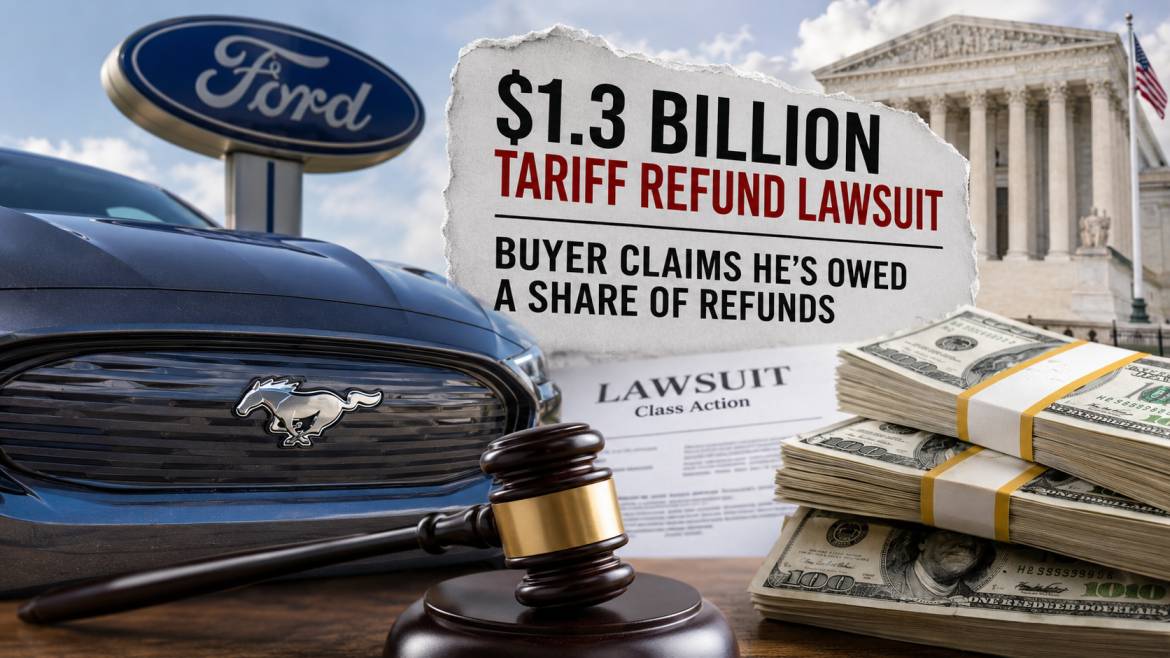
A California vehicle buyer has filed a proposed class action lawsuit against Ford, arguing that customers deserve a share of the automaker’s expected tariff refunds after paying inflated prices during the height of U.S. import duties.
The lawsuit, filed in federal court in Michigan, centers on a Ford Mustang Mach-E purchased earlier this year. According to the complaint, buyer Jason Bullock paid a higher sticker price because tariffs imposed on imported vehicles and components had been factored into the vehicle’s cost. Now that those tariffs are being refunded, he argues that the financial benefit should not remain solely with Ford.
The case raises broader questions about whether automakers that passed tariff costs on to customers should also pass along the benefits when those duties are later returned.
Why the Tariff Refund Is Under Scrutiny
The legal dispute stems from a recent U.S. Supreme Court ruling that struck down tariffs imposed under the International Emergency Economic Powers Act (IEEPA). As a result, companies that previously paid those duties are expected to receive substantial reimbursements from the federal government.
Ford has already informed investors that it expects to recover approximately $1.3 billion in tariffs paid between March 2025 and February 2026. While the company views the reimbursement as a one-time financial benefit, the lawsuit argues that consumers effectively funded those payments through higher vehicle prices.
According to the complaint, allowing Ford to retain both the higher revenues collected during the tariff period and the refunded duties would result in an unfair financial gain.
Lawsuit Alleges “Double Recovery”
At the heart of the lawsuit is what attorneys describe as a “double recovery.” The complaint claims Ford increased vehicle prices to offset tariff expenses, meaning buyers absorbed the additional costs at the time of purchase.
Now that those same tariffs are expected to be refunded, the plaintiff argues that Ford should not receive the money twice—once from consumers and again from the government.
The lawsuit seeks class action status, potentially allowing other customers who purchased affected Ford vehicles during the tariff period to join the case if the court approves.
Ford Responds Cautiously
Ford has not commented on the legal merits of the lawsuit but confirmed that it is reviewing the complaint.
In a brief statement, the automaker reiterated its commitment to offering affordable vehicles and said it would continue making decisions that benefit both customers and dealers. The company has not indicated whether it believes customers are entitled to any portion of the expected tariff recovery.
Wider Impact on the Auto Industry
The outcome of the case could extend well beyond Ford.
Other major automakers, including General Motors and Stellantis, have also indicated they expect refunds tied to previously paid tariffs. If the lawsuit succeeds, it could encourage similar legal actions against manufacturers across the automotive industry.
Legal experts say the case may establish an important precedent on how companies should handle government reimbursements when earlier regulatory costs were passed directly to consumers.
For buyers, the lawsuit is about more than a single electric SUV. It raises a fundamental question of fairness: if consumers paid more because of tariffs that are no longer valid, should they also benefit when those costs are returned?
The answer could reshape how automakers manage pricing and refunds whenever government trade policies change.