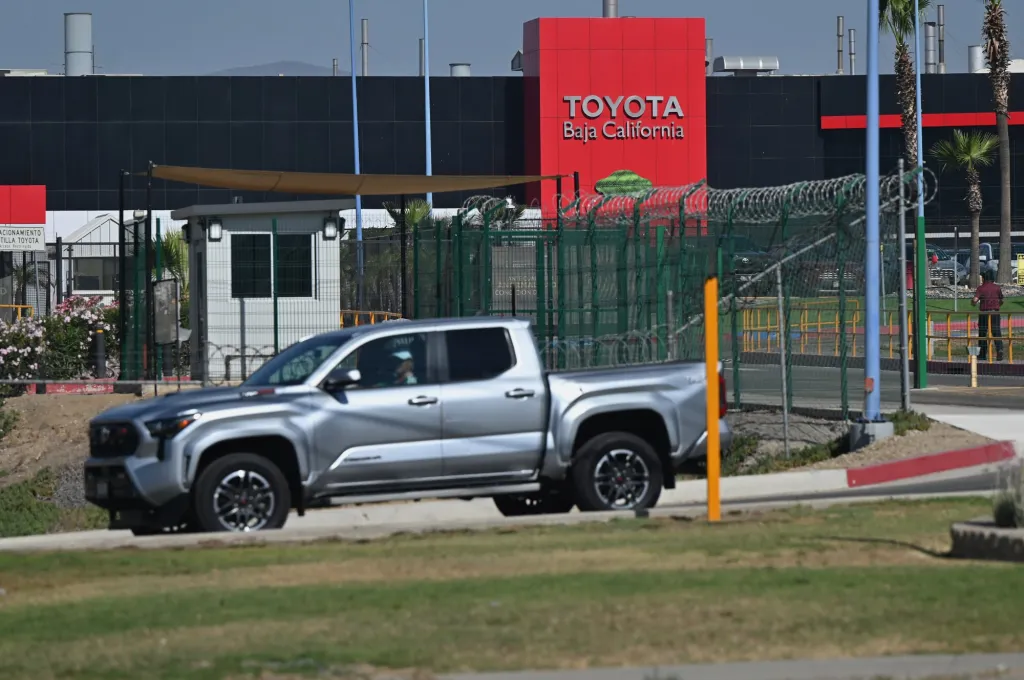
Toyota is increasing production of its popular Tacoma pickup truck in Texas, making it one of the few global automakers to expand manufacturing in the United States at a time when tariffs continue to reshape the automotive industry. However, the move also highlights a larger reality: most manufacturers still see building new US factories as a costly and uncertain investment.
The Japanese automaker recently confirmed that about half of all Tacoma pickups sold in North America will soon be assembled at its San Antonio, Texas, plant. The facility already produces the Tundra pickup and Sequoia SUV, while Tacoma production will continue alongside existing operations in Mexico.
Toyota Says Strategy Goes Beyond Tariffs
The announcement quickly drew political attention, with President Donald Trump pointing to the investment as evidence that tariffs are encouraging manufacturers to bring jobs back to the United States.
Toyota, however, presented a different explanation.
The company said its manufacturing decisions are based on long-term business strategy rather than short-term trade policies. According to Toyota, investments in production facilities are planned years in advance and are influenced by customer demand, supply chain efficiency, and future growth opportunities.
Expanding Tacoma production in Texas also allows Toyota to strengthen its already successful truck business in the US while making better use of its existing manufacturing network.
Automakers Remain Cautious
Despite the financial burden created by import tariffs, most automakers are not rushing to relocate production.
Building a new assembly plant requires billions of dollars and several years before vehicles begin rolling off production lines. With trade policies capable of changing after future elections, manufacturers are reluctant to commit to large-scale investments based on temporary political conditions.
Instead, many companies are choosing a more practical approach by continuing to import vehicles while absorbing higher tariff costs.
Industry analysts say this cautious strategy reflects the significant risks associated with restructuring global production networks that have taken decades to establish.
Existing US Plants Become the Preferred Option
Where production shifts are happening, they are largely being directed toward factories that already exist.
General Motors, for example, has announced plans to move production of selected SUV models from Mexico to facilities in Kansas and Tennessee rather than constructing entirely new plants. The company has additional manufacturing capacity available after scaling back several electric vehicle expansion projects.
Toyota’s decision follows a similar pattern. Rather than building a new factory, the company is expanding operations at a facility that already produces several of its most profitable truck models.
Analysts believe this approach offers lower costs, reduced risk, and faster implementation compared to developing new manufacturing sites from scratch.
Supply Chains Still Depend on North America
Another challenge facing the industry is the uncertainty surrounding the future of the United States-Mexico-Canada Agreement (USMCA). The agreement has allowed vehicle parts to move efficiently across North American borders, helping manufacturers reduce costs and maintain integrated supply chains.
Automakers warn that any major changes to the agreement could disrupt production, increase expenses, and complicate long-term investment planning.
Many vehicle components cross the US, Canadian, and Mexican borders multiple times before reaching final assembly plants, making regional cooperation critical for efficient manufacturing.
Higher Costs, Limited Factory Moves
Tariffs have undoubtedly increased costs across the industry. Toyota, General Motors, and Ford have each reported billions of dollars in additional tariff-related expenses over the past year.
Even so, consumer demand remains relatively strong, encouraging manufacturers to continue importing vehicles instead of making immediate changes to production strategies.
Toyota’s expansion in Texas stands out as one of the few notable manufacturing shifts toward the United States. While tariffs may influence future investment decisions, the broader industry continues to prioritise flexibility, existing facilities, and stable supply chains over expensive new factory projects. For now, gradual adjustments appear far more likely than a widespread return of vehicle production to American soil.