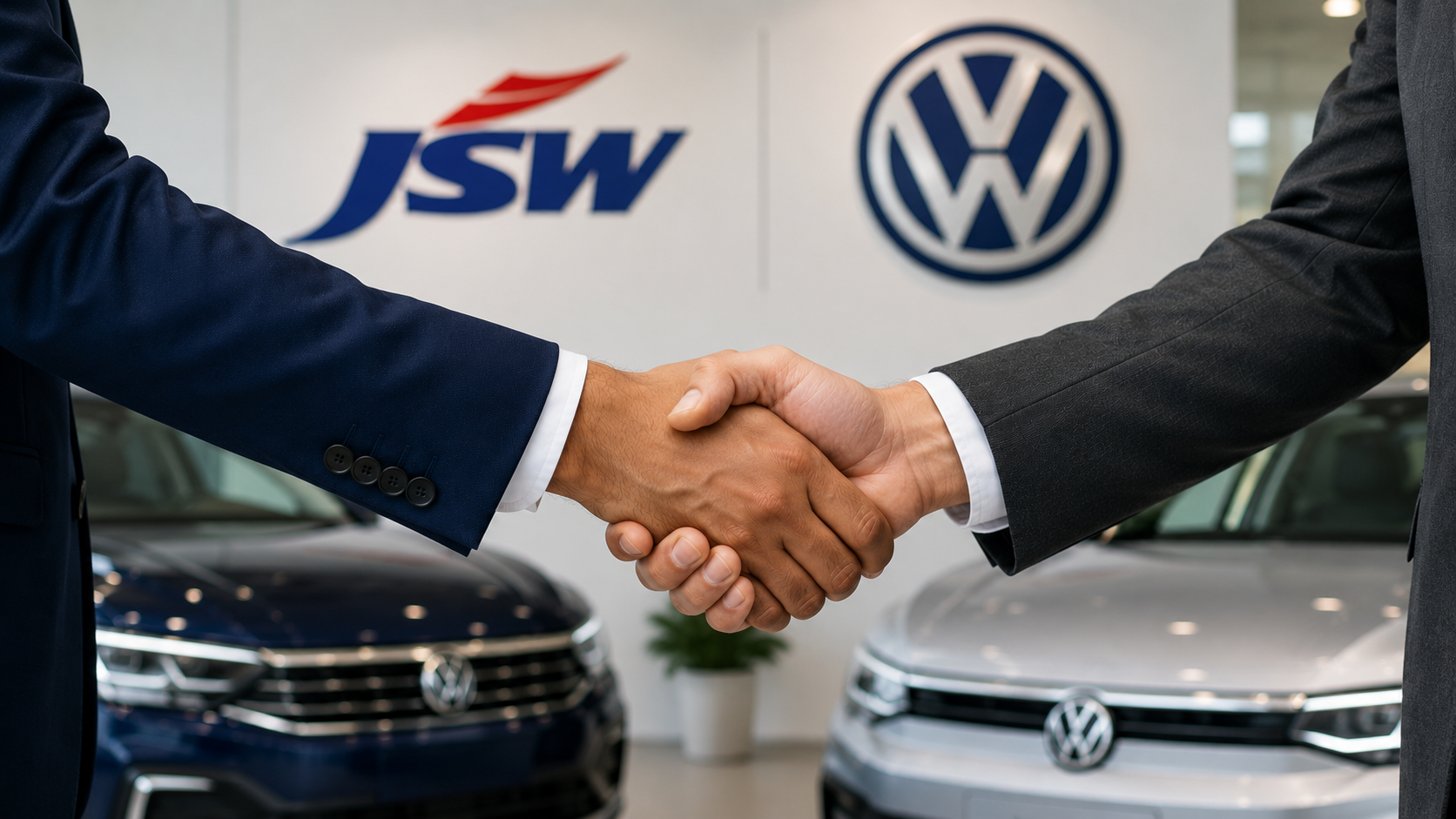
Volkswagen is moving closer to finding a long-term strategic partner in India, with reports suggesting the German automaker is in advanced discussions with the JSW Group over a potential investment in its Indian business. While negotiations are still underway and no agreement has been signed, the proposed partnership could mark one of the biggest shifts in Volkswagen’s India strategy in recent years.
The discussions reportedly involve JSW Group investing in Skoda Auto Volkswagen India, the company’s privately held Indian subsidiary. Sources indicate the Sajjan Jindal-led conglomerate is interested in acquiring a majority stake, although key aspects of the deal, including valuation and capital commitments from both sides, remain under negotiation.
A New Chapter for Volkswagen in India
Volkswagen has been present in India for over two decades but has struggled to achieve the market share enjoyed by rivals such as Maruti Suzuki, Hyundai, Tata Motors and Mahindra. Despite launching India-focused products like the Skoda Kylaq and strengthening its SUV lineup, the group’s combined brands, including Volkswagen, Skoda and Audi, continue to account for only a small portion of the country’s passenger vehicle sales.
Finding a local partner could help Volkswagen accelerate expansion while reducing the financial burden of investing independently in one of the world’s fastest-growing automobile markets. Industry analysts believe the move reflects a broader shift in strategy, where global automakers increasingly rely on regional partners to improve competitiveness and manage costs.
What JSW Could Gain
For JSW Group, the potential deal represents far more than a financial investment. A partnership with Volkswagen would provide access to globally proven vehicle platforms, engineering expertise and manufacturing technologies.
The conglomerate has steadily expanded beyond its traditional steel business into mobility. It already operates a joint venture with SAIC Motor, selling MG-branded vehicles in India, and has also expressed ambitions to develop its own automotive brand.
Adding Volkswagen’s technology and manufacturing capabilities could significantly strengthen JSW’s position as competition intensifies in both the conventional and electric vehicle segments.
Talks Years in the Making
The two companies have reportedly been in discussions for nearly three years. Earlier conversations were centred around manufacturing collaboration, including the possible use of Volkswagen’s production facilities in Maharashtra.
Recent negotiations, however, appear to have evolved into a broader investment proposal. Although both companies have maintained a cautious public stance, Volkswagen has acknowledged that it continues to evaluate business opportunities in India as part of its long-term growth strategy.
The automaker has also been reducing capital expenditure globally as it focuses on improving profitability. Reports suggest Volkswagen previously lowered its planned investment in an India-focused electric vehicle platform, highlighting its increasingly disciplined approach to spending.
Why the Partnership Matters
If completed, the partnership could reshape the competitive dynamics of India’s passenger vehicle industry.
For Volkswagen, local capital and a strong domestic partner could help scale operations faster while improving cost efficiency. For JSW, the alliance offers immediate access to internationally recognised automotive technology and manufacturing expertise.
The deal would also reflect a growing trend among global automakers to collaborate with Indian companies to navigate the country’s unique market conditions, where pricing, localisation and scale play a decisive role in long-term success.
Although negotiations are still ongoing and several hurdles remain before a final agreement is reached, the proposed partnership signals that both companies see significant opportunities in India’s evolving automotive landscape. If the deal goes through, it could become a defining moment for Volkswagen’s future in one of the world’s most important car markets.