AI depends on many mathematical operations. But it’s not about performing some routine calculations like balancing your budget or calculating a tax rate. It means using massive amounts of mathematics, working with huge stacks of millions and even billions of data.
This is how GPUs play their critical role. These processors allow computations to be performed quickly enough to make them useful in training models, making predictions and responding in real-time.
But AI may also be calculated using the CPU. Nevertheless, this processor has been built to perform various tasks. The GPU, on the other hand, was created in order to perform several similar tasks at once. That is the solution to the question posed above.
What a GPU is?
The letters GPU represent Graphics Processing Unit. Initially, it gained popularity in gaming and video due to its ability to process visual tasks efficiently. Later on, it was discovered that this architecture was also suitable for AI. A GPU can conduct multiple operations simultaneously, which is important if the algorithm has to process huge chunks of information.
The CPU (Central Processing Unit) is a generic chip that processes the operating system, applications, browsing tabs, files, and logical algorithms. The GPU performs other functions. It breaks a big operation into small ones, processing them simultaneously. This feature of GPUs is the primary reason for their use in AI.
Why AI is math-heavy?
Most modern AI, particularly machine learning and deep learning, relies on matrix algebra, vector algebra, and weight updates through multiple iterations. In training, the model analyzes the input data, generates an output result, evaluates how accurate the output is, and updates its parameters. This process is iterated multiple times until improvements are achieved.
Such an approach involves a vast number of computations. A model that operates with images should analyze many millions of pixels in many thousand or even millions of images. Language models will have to operate with big text data and update billions of parameters. Such computations should be performed not once, but multiple times, which means that performance is critical here.
This is what makes GPUs a good choice for AI computations since they can perform many small computations simultaneously.
Parallel processing matters
Parallel processing is the most common reason for using GPUs in AI. As mentioned above, a GPU is a computer component that has multiple cores. Therefore, it can perform multiple calculations simultaneously in many AI algorithms.
It is necessary to imagine it this way: if only one person has to organize and put in order some huge amount of paper, then the process will take a lot of time. But if 1,000 people do the same things at once, then the process will be completed faster. A GPU is a computer component that operates almost in such a way as 1,000 people, while a CPU operates as a few people who can perform different tasks.
This is because the algorithm of AI involves multiple repeated calculations, and not one single calculation.
Training needs a lot of power
Training is the period when AI trains from data. Training is the most computationally expensive stage of this procedure. The algorithm makes predictions, compares them to the ground truth and modifies itself accordingly. Training can take hours, days, or even weeks of computing time.
Slow hardware results in longer training times, hence slowing down the research and development process, including testing and production launch. GPUs make the training process quicker, which allows for training bigger models in less time and testing various hypotheses without long breaks between training sessions.
This is important for practical purposes, as it allows one to compare different iterations of the same model and refine it quickly. For example, when the team wishes to refine their image classifier, chatbot or recommendation system.
Inference also needs speed
AI does not stop after training. It also needs to run in the real world. This stage is called inference. Inference happens when an AI model answers a prompt, labels an image, translates text, or predicts the next move in a game.
Inference often needs low latency. Users expect quick results. If a chatbot takes too long to answer, the experience feels broken. GPUs help here too because they can process the model’s math quickly enough to keep responses fast.
Not every inference task needs a GPU, but when models are large or when many requests arrive at once, GPUs offer a clear advantage. That is why data centers use them so widely.
Why CPUs are not enough
CPUs are excellent at general computing. They are flexible, reliable, and good at tasks that involve many branches, rules, and different kinds of logic. But AI workloads often rely on the same kind of math repeated across large data blocks. CPUs can do it, but they are not built to do it at the same scale or speed as GPUs.
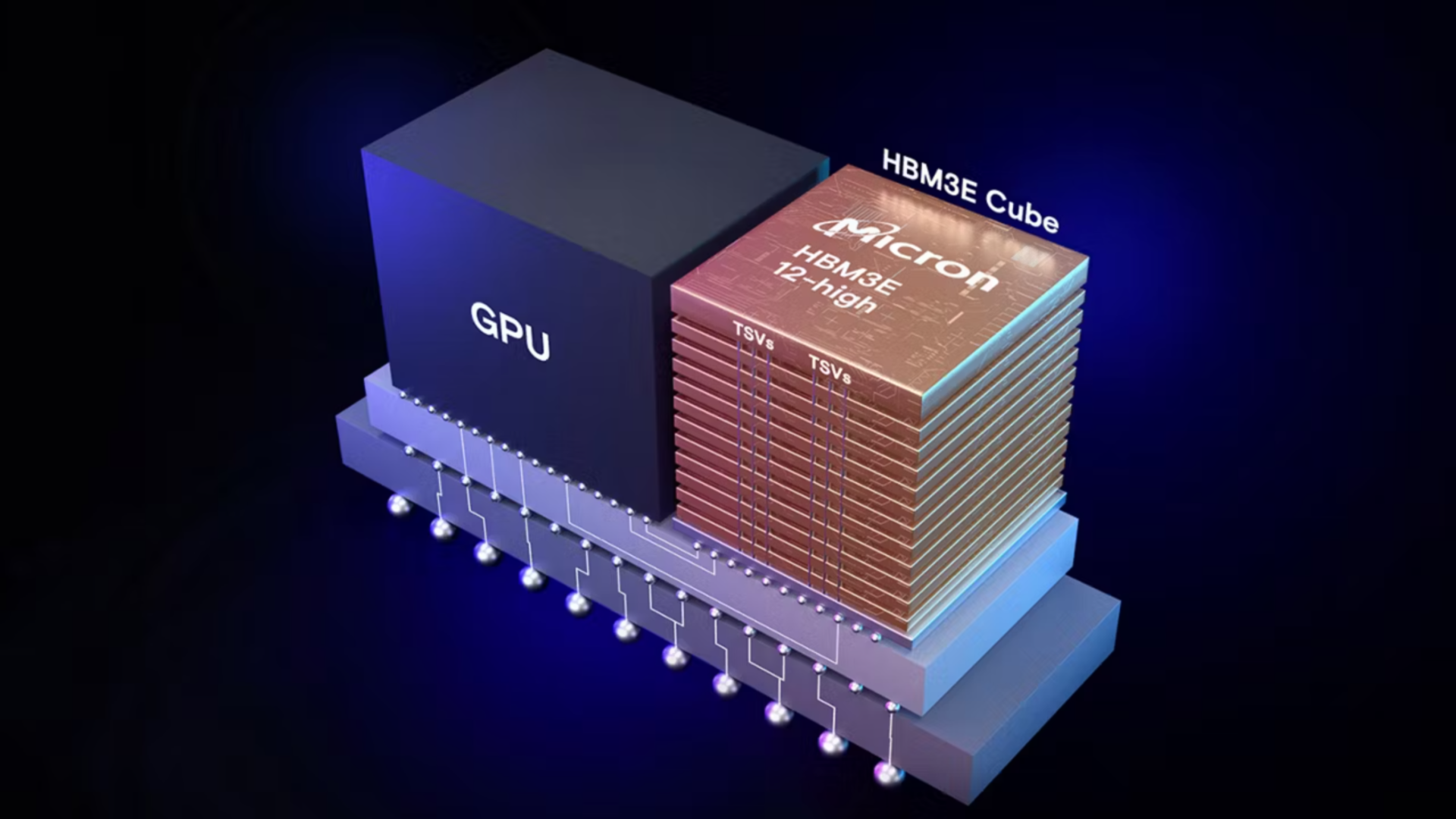
This is also a memory issue. AI models move large amounts of data around during training and inference. GPUs usually have high memory bandwidth, which helps them move that data fast. That makes a big difference when the model is large and the calculations never stop.
So the answer is not that CPUs are weak. It is that AI asks for a different kind of hardware shape. CPUs handle general work well. GPUs handle massive parallel math well. AI leans heavily toward the second kind of work.
The role of software
Just having hardware alone will not be sufficient for any kind of AI development. There has to be software as well that is able to make use of the capabilities of GPU in an effective manner. Systems that have been developed in order to assist in machine learning leverage the potential that lies in GPU architecture, including those which are used for assisting developers to handle deep learning tasks and tensors, among other things.
The importance of such software support comes in the form of reduced friction as developers prefer systems that make use of GPU in a seamless fashion, and not ones where they have to write the code by themselves.
Why large models depend on GPUs
Language and image generation models require significant compute power. They deal with sequences, tensors, and lots of repetitive operations. The bigger the model is, the more significant the hardware is.
The absence of GPUs would make the training of these models significantly longer. In certain cases, it may even be impractical. It is for that reason that today’s AI data centers operate on GPU clusters. They allow to train big models and serve lots of users without slowing down.
It does not mean that GPUs are somehow magical. They are just the right hardware for the tasks that modern AI requires.
Real-world examples
Image recognition is one clear example. An AI model that learns to detect cats, cars, or faces has to examine many images and compare many features. That means lots of repeated math. GPUs handle that pattern well.
Language models are another example. When a chatbot generates a reply, it must process a sequence of words or tokens and decide what comes next. That involves many calculations that benefit from fast GPU execution.
Self-driving systems, video analysis, medical imaging, recommendation engines, and scientific simulation also rely on similar kinds of work. In each case, the system must process large data and produce a result quickly. GPUs help make that possible.
Do all AI systems need GPUs?
No. Smaller models can run on CPUs, and some AI tasks work fine without a GPU. For example, lightweight classification tools, simple automation, or edge devices may not need one. Some systems also use specialized chips that are designed for a narrow AI task.
But for most modern deep learning, GPUs are still the default choice. They give a strong mix of speed, flexibility, and software support. That is why they show up in training labs, cloud platforms, and large AI data centers.
So the better question is not “Does AI always need GPUs?” It is “When does AI need the speed and scale that GPUs provide?” For large models, the answer is usually yes.
Why this matters
GPU power has helped make modern AI practical. Without it, training would take longer, inference would feel slower, and many model sizes would be harder to manage. GPUs changed AI from a research topic into a tool used in products, search systems, chat apps, cameras, phones, and cloud platforms.
That is why GPUs are not just a nice upgrade. For a lot of AI work, they are the core engine behind the system. They let AI learn faster, respond faster, and scale to more users.
AI needs GPUs because AI runs on large amounts of repeated math, and GPUs are built for that kind of work. CPUs are still important, but they are better for general computing. When the job is massive parallel calculation, GPUs are the better fit