Smart home adoption has outpaced smart home simplicity. 85% of U.S. homeowners now own at least one connected device, according to Vivint’s 2026 How We Home report, which surveyed 5,000 homeowners on their relationship with the category. Adoption has moved faster than the tools to manage it all in one place.
CE Pro’s coverage of that report breaks out the barriers homeowners cite when asked what’s holding smart home adoption back. Cost tops the list at 53%. Functionality issues follow at 23%, an overabundance of apps at 20%, and a general lack of compatibility between devices at 18%. CE Pro’s own read on the data groups those last three under a single label: app fatigue.
A Problem With a Name
Separately, Horowitz Research puts a number on the confusion. Among smart home owners, 32% say their devices are confusing to set up or use. Two-thirds say the devices make life easier overall, but the same research notes that homeowners typically juggle multiple products across different categories, brands, and platforms.
That’s the pattern underneath both surveys. A homeowner ends up with one app for the lights, another for the thermostat, one for the doorbell, one for the cameras. Each has its own login, its own notification style, its own quirks. None of them were built to talk to each other.
Why the Apps Never Learn to Talk
Each single-purpose app is built by a company selling one category of device. A lighting company has no reason to make its app understand a thermostat, and a doorbell company has no reason to build compatibility with a lock from a different manufacturer. Every app optimizes for its own device, not for the house as a whole.
Five or ten companies each build for their own product.
None of them build for the whole home.
Why a Better App Isn’t the Fix
The obvious response is to build a better single-purpose app: a sleeker lighting app, a smarter thermostat app, a doorbell app with fewer bugs. That response misses the actual problem. The frustration comes from needing five or ten apps just to run one house.
Solving that requires fewer apps, not better ones. A single login that covers the cameras, the locks, the thermostat, and the security panel removes the fragmentation at its source, instead of polishing each fragment individually.
One Login, One Platform
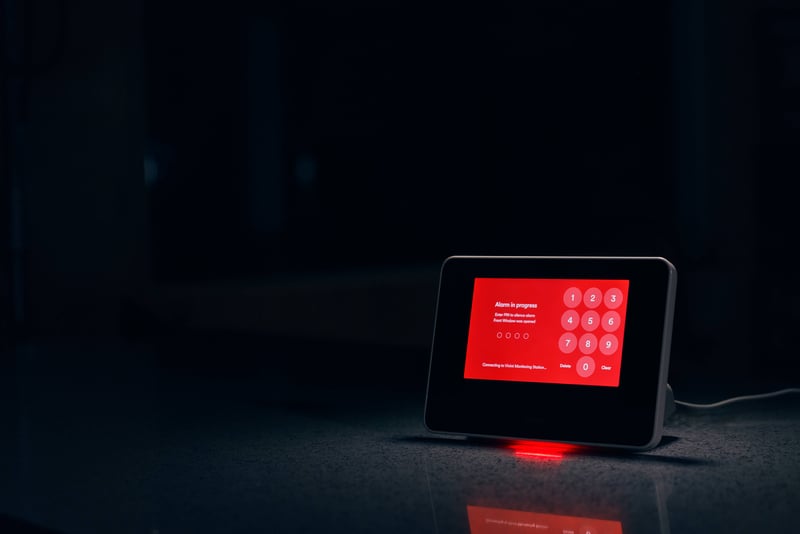
Vivint’s system runs on a single app.
Cameras, locks, thermostat, and the security panel all sit inside the same login, viewed from the same interface, without a separate download for each device category. That structure extends the same logic behind Vivint’s professionally installed systems. Those systems already integrate security, automation, and energy management on one platform, rather than as separate add-ons stitched together after the fact.
Custom Actions is where that integration shines. Third-party bridges typically connect devices that were never designed to work together, and the connection can break whenever one manufacturer changes its software. Custom Actions skips that bridge entirely. Automations span device categories directly inside the same platform, without routing through an external service that might drop the connection or stop supporting one side of it.
HomeView, the most recent update to the Vivint app, extends that same single-interface approach to how homeowners see their system day to day. Homeowners get one screen for the entire system, not another app layered on top of the pile.
The Real Fix Is Subtraction
Fixing app fatigue by improving individual apps treats the symptom. Each fix still leaves a homeowner managing several separate logins, several separate notification streams, and several companies that have no reason to make their software work with a competitor’s.
Removing the need for five apps solves the problem a better version of any one of them cannot. A homeowner checking a single app to see whether the door is locked, the thermostat is set, and the cameras are recording isn’t dealing with a smarter version of app fatigue.
They aren’t dealing with it at all.
Who is Vivint?
Vivint’s system runs cameras, locks, the thermostat, and the security panel on a single login. Company technicians install each system, backed by a monitoring team available around the clock, a service the company has run for 27 years.