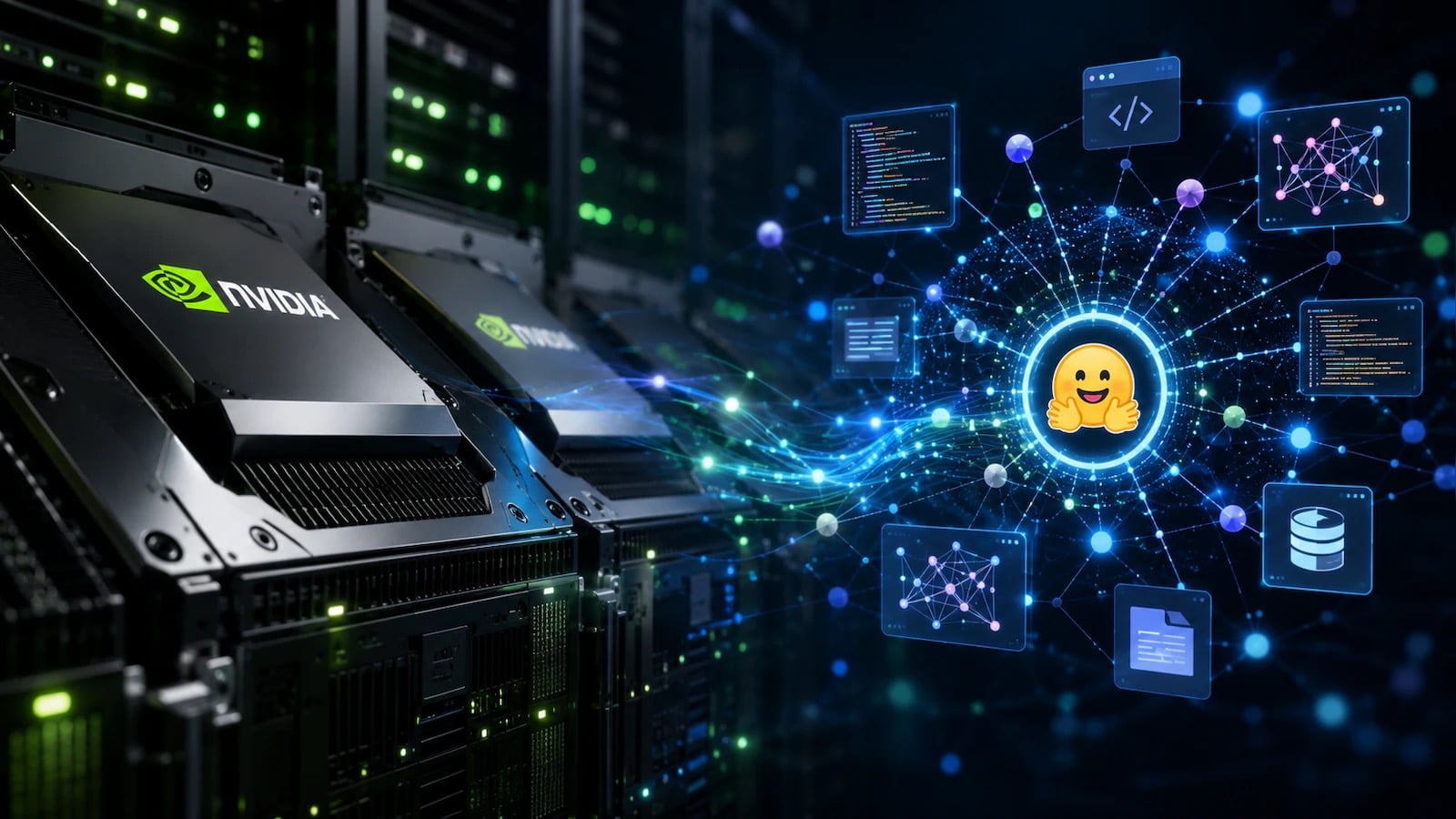
Nvidia has agreed to acquire Hugging Face, one of the world’s most widely used platforms for open-source artificial intelligence, in a deal valued at $12.9 billion. The proposed acquisition would mark a major expansion of Nvidia’s influence in AI, taking the company further beyond its dominant position in chips and into the software, models and developer infrastructure powering the industry.
Hugging Face has become a central destination for AI researchers, developers and businesses looking to access machine-learning models, datasets and development tools. Its platform hosts hundreds of thousands of models and has helped make open-source AI more accessible to developers around the world.
For Nvidia, bringing Hugging Face into its growing AI ecosystem could provide access to a massive developer community while strengthening its position as competition intensifies across the artificial intelligence industry.
From AI chips to AI infrastructure
Nvidia has become one of the biggest beneficiaries of the generative AI boom. Its graphics processing units, or GPUs, are widely used to train and run advanced AI models.
However, the AI industry is increasingly moving beyond chips.
Companies are competing to develop models, cloud platforms, software frameworks and specialised computing systems. Nvidia has recognised that controlling the broader AI infrastructure could be just as important as maintaining its leadership in processors.
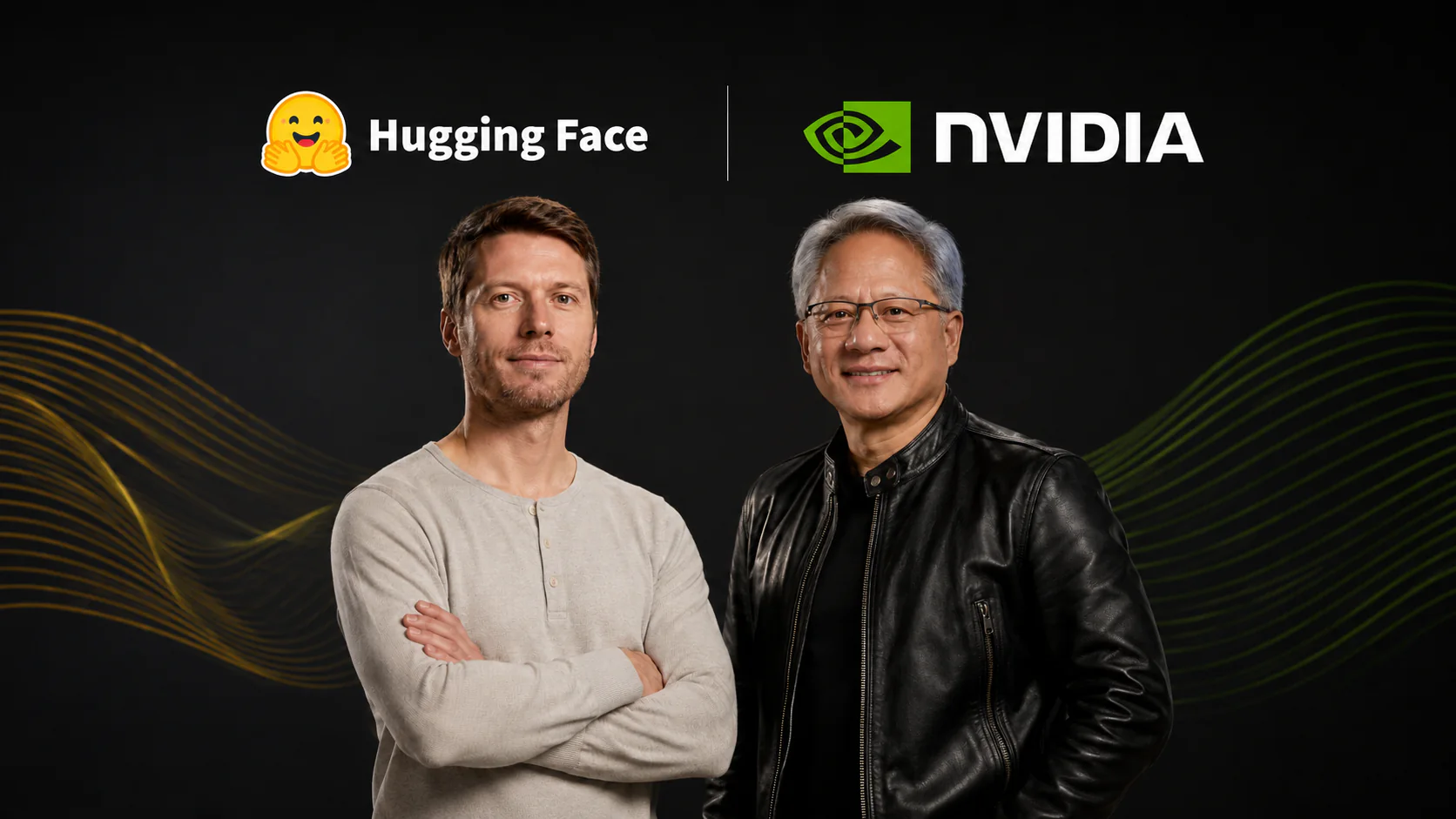
The potential acquisition of Hugging Face fits directly into that strategy.
Rather than being another chip company or AI model developer, Hugging Face operates as an ecosystem connecting developers with models, datasets and tools. Its platform has become an important part of the workflow used to develop and deploy AI applications.
Acquiring that ecosystem would give Nvidia a direct relationship with a huge community of AI developers.
Why Hugging Face matters
Hugging Face was founded in 2016 and initially became known for its work in natural-language processing. It later evolved into a much broader AI platform.
Today, developers can use Hugging Face to find and share machine-learning models, datasets and applications. Researchers can publish their work, while businesses can use existing models as the foundation for their own AI products.
The platform has often been described as the GitHub of AI because of its emphasis on collaboration and open development.
That community is particularly valuable at a time when open-source and open-weight AI models are becoming increasingly competitive with proprietary systems.
Instead of relying entirely on models controlled by a small number of technology companies, developers can access models that can be downloaded, modified and deployed according to their licensing conditions.
Hugging Face has become one of the primary hubs for this movement.
A strategic advantage for Nvidia
Nvidia’s proposed acquisition would give the company an opportunity to strengthen its software ecosystem.
The company’s GPUs are extremely powerful, but hardware alone does not determine which computing platform developers choose. Software compatibility, development tools and ease of deployment increasingly influence those decisions.
Hugging Face sits directly in this software layer.
By combining Hugging Face’s developer platform with Nvidia’s hardware and AI software technologies, the company could potentially make it easier for developers to build and deploy models using Nvidia infrastructure.
That could create a powerful cycle.
More developers using Hugging Face could mean more applications built around Nvidia’s technology. More applications could generate greater demand for Nvidia’s computing hardware and cloud infrastructure.
The deal could therefore help Nvidia defend its position as competitors attempt to challenge its dominance.
The rise of open AI
The acquisition also highlights the growing importance of open AI.
The first phase of the generative AI boom was largely dominated by proprietary models. Companies developed powerful systems behind closed doors and offered access through applications or APIs.
Open models have increasingly challenged that approach.
Developers and businesses are attracted to open models because they can provide greater control over deployment, customisation and data. Organisations can potentially run models on their own infrastructure rather than sending sensitive information to an external AI service.
As these models become more capable, platforms that distribute them are becoming increasingly valuable.
Hugging Face is at the centre of this ecosystem.
For Nvidia, acquiring the platform would mean gaining a position at the intersection of open-source AI, enterprise software and computing infrastructure.
Concerns over independence
The acquisition could also raise concerns within the open-source AI community.
Hugging Face’s success has partly depended on being perceived as a neutral platform where developers and organisations can share AI models regardless of the hardware they use.
Nvidia, meanwhile, has a clear commercial interest in promoting its own computing technology.
That could create tension.
Hugging Face currently supports technologies that run across a variety of hardware platforms. Developers could worry that Nvidia ownership might eventually influence which models, tools or hardware receive greater prominence.
Maintaining the platform’s openness and developer trust would therefore be crucial.
If Nvidia allows Hugging Face to continue operating as an independent and broadly accessible ecosystem, the acquisition could strengthen both companies. If developers perceive the platform as becoming primarily an Nvidia channel, some could look for alternatives.
Nvidia’s bigger AI ambitions
The potential acquisition is part of a much broader transformation at Nvidia.
The company was once primarily known for graphics processors used in gaming and professional computing. The explosion of artificial intelligence has transformed it into one of the world’s most valuable technology companies.
Nvidia is now involved in nearly every layer of AI infrastructure, from processors and networking equipment to software and cloud computing.
Hugging Face would add another important piece: the developer community and model ecosystem.
At $12.9 billion, the proposed purchase would represent a substantial investment in that future.
The price suggests Nvidia sees Hugging Face as more than a software company. It sees the platform as strategic infrastructure for the next phase of artificial intelligence.
What the deal could mean
If completed, the acquisition could reshape the relationship between AI hardware and open-source software.
Nvidia would gain one of the world’s most important AI developer communities, while Hugging Face would gain access to Nvidia’s enormous financial and technological resources.
The biggest question will be whether Nvidia can preserve Hugging Face’s open and collaborative identity while integrating it into its wider AI strategy.
The deal ultimately reflects a fundamental change in the AI industry. The competition is no longer only about who can build the smartest model. It is increasingly about who controls the infrastructure, software, developers and tools that allow those models to reach the world.
With Hugging Face potentially joining its portfolio, Nvidia would take another major step toward becoming not just the company that powers artificial intelligence, but one of the companies helping shape how the entire AI ecosystem is built.