Law enforcement agencies across the United States are raising concerns about Meta’s camera-equipped smart glasses, warning that the devices could be used to secretly record police officers, document sensitive facilities or potentially assist criminal and terrorist activities.
Documents obtained by a government-transparency organization and reviewed in connection with the concerns show that agencies from Maine to California have been examining the risks posed by smart glasses that look much like ordinary eyewear but contain cameras, microphones, speakers and artificial intelligence features.
The concerns have placed Meta’s Ray-Ban smart glasses at the center of a growing debate over privacy, surveillance and the security risks created by wearable technology.
NYPD flags smart glasses as security threat
In January, the New York Police Department’s counterterrorism unit issued a warning about Ray-Ban Meta glasses, describing them as a potential security and counterintelligence concern.
The memo instructed officers to conduct thorough inspections of eyewear permitted inside inmate cells. Officials were particularly concerned that people being held in custody could use the glasses to record inside police and detention facilities.
Unlike smartphones or traditional cameras, smart glasses can be difficult to identify as recording devices. A person wearing them may appear to be using an ordinary pair of sunglasses while simultaneously capturing video and audio.
According to the concerns raised by police, unauthorized recordings could reveal sensitive information about detention facilities, including cell layouts, security-camera positions and officer patrol patterns.
The NYPD’s warning reportedly referred to examples of videos appearing on social media that had been recorded inside detention facilities, demonstrating how wearable cameras could potentially bypass conventional restrictions on recording devices.

Concerns spread across the country
The NYPD is not the only agency examining the technology.
Documents circulated among law enforcement agencies and intelligence organizations show that officials in several states have expressed concerns about smart glasses being used for unauthorized surveillance.
A June 2026 memo distributed by Maine’s fusion center warned that smart glasses could introduce additional security risks in correctional and law enforcement facilities.
Officials have also considered the possibility that such devices could be used for reconnaissance before criminal or terrorist activity. The concern is that a person could discreetly collect visual information about a location without attracting the attention that would normally come with using a handheld camera.
The issue has become more significant as wearable technology becomes smaller, more sophisticated and increasingly difficult to distinguish from conventional products.
Why Meta’s glasses are different
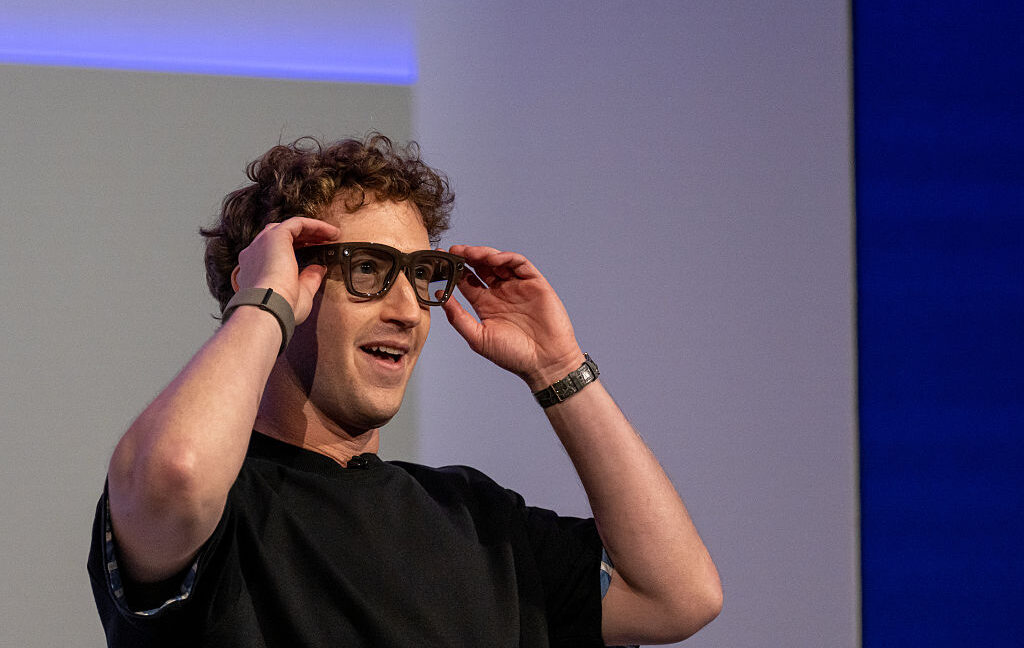
Meta’s smart glasses are designed in partnership with eyewear company Ray-Ban. They resemble traditional sunglasses and can be used to take photographs, record video, make calls, listen to audio and interact with AI-powered features.
A small indicator light is intended to signal when the glasses are recording. Meta has also introduced measures designed to prevent users from disabling the recording indicator.
However, law enforcement officials remain concerned that the indicator may not always be visible to people around the wearer, particularly in crowded environments or when the person is standing some distance away.
That creates a unique challenge for police and other security-sensitive organizations. A smartphone can generally be spotted immediately when someone raises it to record. Smart glasses, by contrast, allow the camera to remain at eye level while the wearer behaves normally.
From privacy concern to security issue
The concerns are not limited to police facilities.
Privacy advocates have been warning for years that wearable cameras could make it easier to record people without their knowledge. The growing popularity of smart glasses has intensified that debate.
For law enforcement, however, the issue takes on another dimension when the devices are brought into secure facilities.
Police departments and correctional institutions typically restrict cameras and recording equipment because footage can reveal security procedures or expose people inside the facilities. Smart glasses complicate those rules because they combine everyday functionality with recording capabilities.
The technology also raises questions about how authorities should distinguish between legitimate use and potential misuse.
A person wearing smart glasses in a public place may simply be using them to take photographs or access an AI assistant. The same device inside a police station, detention center or other restricted location could potentially capture information that authorities consider sensitive.
Federal agencies also respond
Concerns about smart glasses have also reached federal agencies.
US Immigration and Customs Enforcement has reportedly restricted employees from wearing Meta smart glasses in federal workplaces. The devices have been treated as a form of body-worn camera because their cameras and microphones could unintentionally capture and transmit sensitive information.
The restrictions demonstrate that the issue is not simply about civilians recording law enforcement. Government agencies themselves are also concerned about the privacy and security implications of wearable devices.
The development creates an unusual situation in which agencies that routinely use surveillance cameras and body-worn cameras are increasingly considering how they should respond when similar technology is placed in the hands of members of the public.
A new challenge for law enforcement
The debate surrounding Meta’s smart glasses reflects a much larger shift in technology.
Cameras are no longer limited to phones, security systems and dedicated recording equipment. They are increasingly being incorporated into everyday objects such as glasses, watches and other wearable devices.
As these products become more common, governments and private organizations may have to rethink rules governing cameras and recording equipment.
For police agencies, the immediate concern is security. They want to prevent unauthorized recordings of sensitive facilities and ensure that technology cannot be easily used to gather information that could facilitate criminal activity.
For privacy advocates, the issue is broader. They argue that the same technology that allows authorities to monitor citizens can also allow citizens to document authorities.
The controversy surrounding Meta’s smart glasses therefore goes beyond one particular product. It raises a fundamental question about surveillance in an increasingly connected world: when cameras become nearly invisible, who gets to decide when recording is acceptable?
As smart glasses continue to evolve, law enforcement agencies, technology companies and the public will likely face increasingly difficult questions about privacy, security and the boundaries of surveillance.