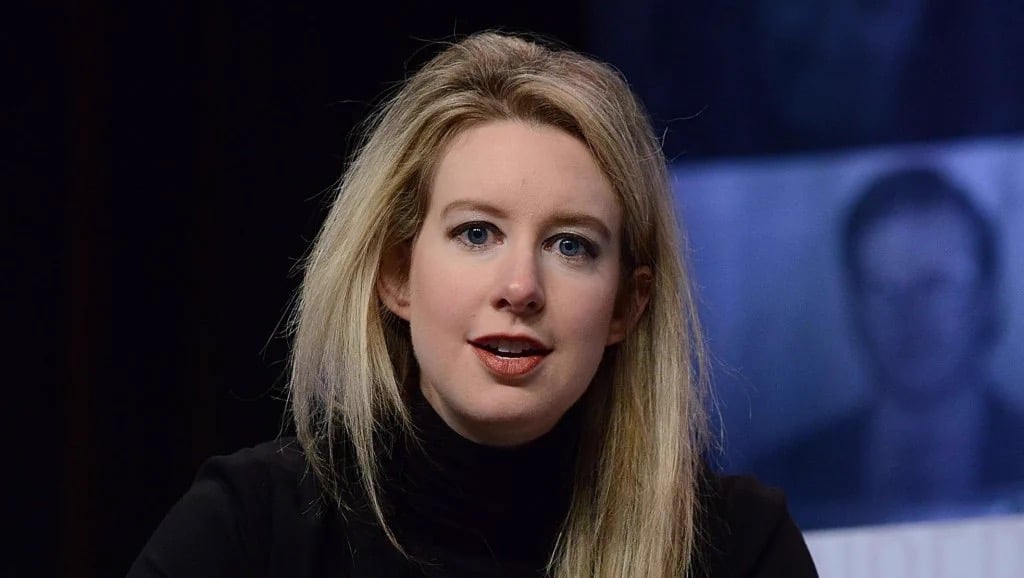
Telluride pulled off one of its biggest surprises in years when a secret documentary about former Theranos founder Elizabeth Holmes was unexpectedly screened at the film festival, leaving audiences stunned by both its subject and its unconventional approach.
On Sunday night, festivalgoers entered a 650-seat theater knowing almost nothing about the film they were about to watch. Their phones were locked away before the screening, and organizers revealed only a few details: the movie would run for nearly three hours, had never been publicly screened before, and its principal filmmakers would be present in the theater.
What followed was the surprise premiere of a new documentary about Holmes, directed by Nathan Fielder and Lance Oppenheim.
The film, titled You Can See Everything, reportedly spent years in development and was kept remarkably secret. Rather than offering another conventional retelling of the Theranos scandal, the documentary takes viewers directly into Holmes’ life during the period surrounding her conviction and imprisonment.
A closely guarded project
The secrecy surrounding the documentary was particularly notable even by Telluride standards.
The festival has a long history of surprising audiences with unannounced films and unexpected premieres. However, the lack of information surrounding this project meant that even many festival attendees had no idea they were about to watch a documentary centered on one of the most controversial figures in modern Silicon Valley history.
The filmmakers reportedly spent around three years working on the project, allowing them to capture a period of Holmes’ life that had received relatively little attention.
The documentary begins shortly before Holmes was due to report to federal prison following her conviction for fraud-related charges connected to Theranos.

Instead of focusing exclusively on the rise and collapse of her company, Fielder and Oppenheim turned their cameras toward Holmes herself, her family and the life she was attempting to build after the collapse of her public image.
Holmes allows filmmakers into her world
Holmes gave the filmmakers unusually extensive access to her personal life.
Cameras followed her at home and captured moments involving her husband, Billy Evans, and their children. The filmmakers were able to observe Holmes during an intensely transitional period as she prepared to begin her prison sentence.
That access became the foundation of the documentary.
Holmes reportedly viewed the project as an opportunity for what she and Evans considered a form of radical transparency. By allowing cameras into their lives, they appeared to hope that audiences might see a side of Holmes that had been largely absent from previous coverage of the Theranos scandal.
But rather than producing a straightforward portrait sympathetic to Holmes, the filmmakers found themselves navigating an increasingly complicated relationship with their subject.
The resulting documentary reportedly explores the tension between what Holmes says about herself, how she behaves in front of the camera and how others perceive her.
A different approach to the Theranos story
The story of Theranos has already been extensively documented.
Holmes founded the company in 2003 with the promise of transforming medical testing. Theranos claimed its technology could perform numerous blood tests using only a small amount of blood, a proposition that attracted enormous attention from investors, business leaders and the media.
Holmes became one of Silicon Valley’s most recognizable entrepreneurs and was frequently portrayed as a visionary young business leader.
The company’s claims eventually came under intense scrutiny. Investigations raised serious questions about the technology and the company’s operations, ultimately leading to Theranos’ collapse.
Holmes was later convicted of multiple fraud-related offenses and sentenced to more than 11 years in federal prison.
Because the basic story is already familiar to millions of people, the filmmakers chose not to simply reconstruct the events that brought Theranos down.
Instead, the documentary examines what Holmes’ life looked like after the scandal had already transformed her from celebrated entrepreneur into convicted criminal.
Nathan Fielder brings an unusual perspective
Fielder’s involvement gives the documentary an especially distinctive character.
Known for projects that blur the boundaries between reality, performance and carefully constructed situations, Fielder approaches documentary filmmaking differently from traditional journalists or filmmakers.
That perspective reportedly shapes the entire project.
The documentary incorporates observational footage, unusual sequences and moments in which it becomes difficult to determine exactly where reality ends and performance begins.
That ambiguity is particularly striking given that Holmes herself became famous for creating a carefully controlled public persona.
The filmmakers reportedly found themselves questioning their own interpretation of what they witnessed while filming. Rather than pretending they had complete answers about Holmes, the documentary embraces that uncertainty.
Tensions behind the camera
The relationship between the filmmakers and Holmes’ family also reportedly became increasingly complicated during production.
After Holmes entered prison, her husband became an important connection between the filmmakers and Holmes. As filming continued, however, tensions reportedly developed over the direction of the documentary and how the family would ultimately be portrayed.
Those disagreements appear to have become part of the story itself.
Rather than being hidden from audiences, some of the tensions surrounding the making of the documentary are reportedly incorporated into the finished film.
That gives You Can See Everything another layer, turning the process of making a documentary about Holmes into part of the documentary itself.
Telluride audience reacts
The surprise screening generated significant discussion among festival attendees.
The film’s nearly three-hour runtime and unusual structure could have made it a difficult proposition for a festival audience, but the secrecy surrounding the screening helped create a sense of anticipation and discovery.
Early reactions have described the documentary as gripping, uncomfortable and deeply unconventional.
For many viewers, its greatest strength appears to be its refusal to provide an easy conclusion about Holmes.
Rather than simply labeling her as a villain or attempting to rehabilitate her image, the film leaves audiences to grapple with the contradictions surrounding her personality, ambition and version of events.
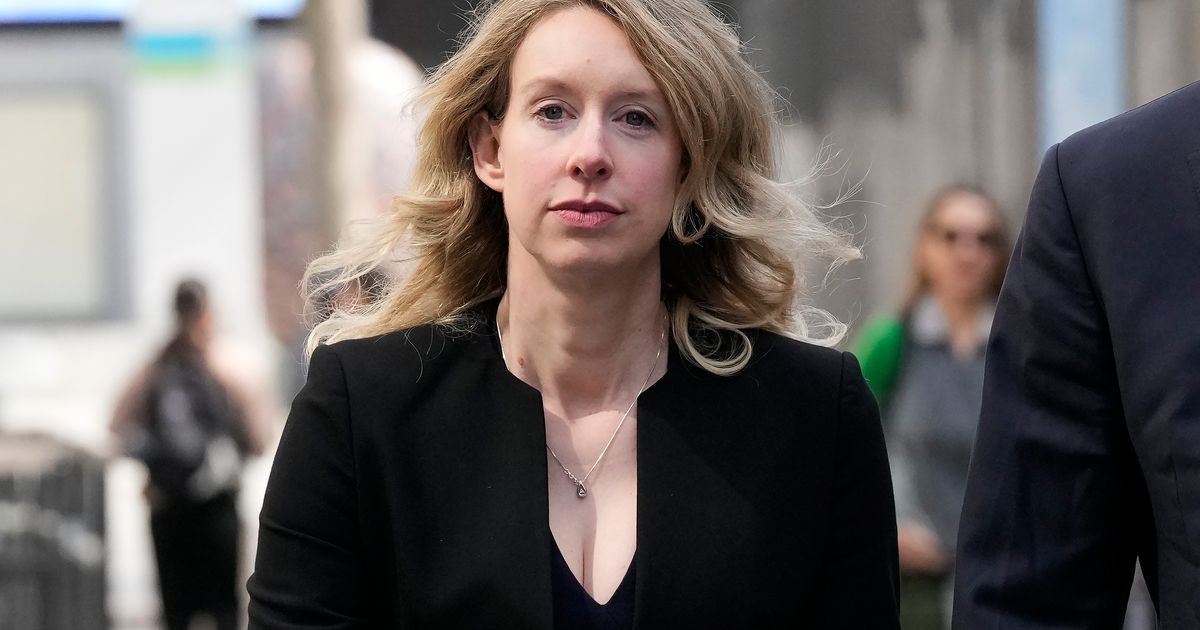
A new chapter in the Holmes story
The documentary is expected to receive a wider theatrical release in October, giving audiences outside Telluride their first opportunity to see the film.
Its surprise premiere has already made it one of the most talked-about revelations of the festival.
More importantly, the project demonstrates that the Elizabeth Holmes story still has new territory to explore. Years after Theranos collapsed, public fascination with Holmes remains strong, partly because her story sits at the intersection of technology, ambition, deception, celebrity and the culture of Silicon Valley.
Fielder and Oppenheim have approached that familiar story from an unexpected direction: by giving Holmes unprecedented access to the camera and allowing her to exist within the documentary on her own terms.
The result is a film that appears less interested in simply asking what happened at Theranos and more interested in examining how people construct their own realities — and what happens when someone known for controlling her image finally allows the cameras to follow her everywhere.
Telluride may have succeeded in keeping the project secret until the moment it screened. Now, the mystery surrounding the film is likely to become one of the biggest documentary stories of the year.