
The Bengaluru bench of the National Company Law Tribunal (NCLT) has directed the Resolution Professional of Think and Learn, the parent company of edtech firm Byju’s, and auction bidder Comprint Tech Solutions to maintain the status quo on assets sold through an auction notice issued on August 2.
The tribunal’s direction comes amid a dispute over the ownership and transfer of the assets, with the NCLT observing that the ownership position remained unclear. The order requires the parties to preserve the assets while the tribunal considers the matter further as part of the ongoing insolvency proceedings involving Think and Learn.
The latest development adds another complication to the long-running insolvency case surrounding Byju’s, once one of India’s most valuable and prominent technology startups.
Dispute over auctioned assets
The matter centres on assets of Think and Learn that were put up for auction during the company’s insolvency process.
Comprint Tech Solutions emerged as the successful bidder in the auction. However, questions were subsequently raised over the ownership of the assets and the validity of their transfer following the auction process.
The NCLT, while hearing the matter, found that ownership was not sufficiently clear to allow the assets to be dealt with as though the dispute had already been resolved.
As a result, the tribunal directed the Resolution Professional and Comprint Tech Solutions to maintain the status quo.
The order effectively prevents either party from taking steps that could materially change the condition, possession or ownership position of the disputed assets until further orders.
The direction is intended to preserve the assets and prevent any irreversible action while the ownership dispute is being examined.
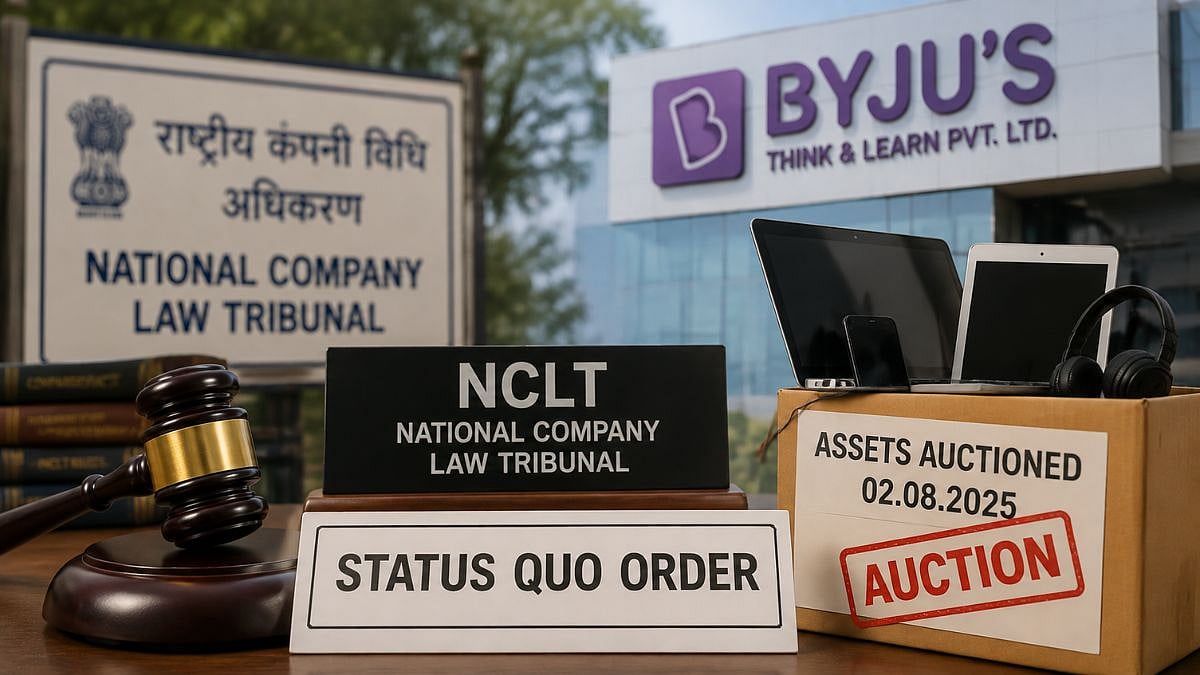
What the NCLT order means
The status quo direction does not determine the final ownership of the assets.
Instead, it keeps the existing position unchanged while the tribunal examines the competing claims and determines how the assets should be treated under the insolvency proceedings.
For Comprint Tech Solutions, the order means that its successful bid does not automatically allow it to proceed without restrictions over the disputed assets while the ownership question remains before the tribunal.
For the Resolution Professional, the direction requires the assets to be preserved until the NCLT provides further instructions.
Such a measure can become important in insolvency proceedings where disputed assets could otherwise be transferred, altered or disposed of before the legal questions surrounding them are resolved.
The tribunal’s eventual decision could determine whether the auction and any subsequent transfer of the assets can proceed.
Byju’s insolvency case
The dispute forms part of the broader insolvency proceedings involving Think and Learn, which have become one of the most closely watched corporate insolvency cases in India.
Byju’s experienced a rapid rise during the technology and startup funding boom. The company expanded aggressively, acquired several businesses and raised substantial amounts of capital as it built an extensive global education platform.
However, the company’s financial position deteriorated as funding conditions tightened and it faced mounting obligations to creditors.
Disputes with lenders eventually escalated into legal proceedings, ultimately resulting in insolvency proceedings against Think and Learn.
Since then, the case has involved several legal challenges and competing claims from creditors, investors, shareholders and the company’s management.
The asset auction is part of the effort to deal with Think and Learn’s assets and generate value for creditors during the insolvency process.
Role of the Resolution Professional
Once a company enters the insolvency resolution process, the Resolution Professional plays a central role in managing its affairs and assets.
The objective is to preserve the value of the company while attempting to find a resolution that provides the best possible outcome for creditors under the insolvency framework.
Asset sales can therefore be an important component of the process, particularly when a company has significant physical and intangible assets that can be monetised.
However, questions about ownership can complicate such transactions.
If an asset is claimed by multiple parties or its ownership is disputed, transferring it before the dispute is settled could create further legal complications.
The NCLT’s status quo order seeks to avoid that situation by keeping the assets preserved until the tribunal has greater clarity.
Implications for creditors
The latest development could also have implications for creditors of Think and Learn.
Creditors are waiting for recoveries from the company’s insolvency process, and the value realised from its assets can directly influence the eventual amount available for distribution.
Any dispute that delays the sale or transfer of assets can potentially extend the resolution process.
At the same time, allowing a disputed asset to be transferred without resolving ownership questions could create greater uncertainty and potentially affect its value.
By ordering the parties to maintain the status quo, the tribunal has prioritised preservation of the assets while the legal questions are considered.
The outcome of the proceedings will determine how those assets can ultimately be dealt with and whether the auction process can result in a completed transfer.

Another challenge for Byju’s
The latest NCLT order highlights the continuing complexity of Byju’s financial and legal troubles.
What began as a rapidly expanding edtech success story has turned into a prolonged corporate restructuring involving insolvency proceedings, creditor disputes, asset sales and multiple legal challenges.
The company’s financial difficulties have already led to significant uncertainty around its future, while stakeholders continue to seek clarity over its assets and liabilities.
The dispute involving Comprint Tech Solutions adds another issue that needs to be resolved before parts of the asset-sale process can move forward.
For now, the tribunal has ensured that the disputed assets remain protected.
The Resolution Professional and Comprint Tech Solutions will have to maintain the existing position until the NCLT issues further directions. The tribunal will subsequently examine the ownership dispute and determine how the assets should be treated within the insolvency proceedings.
The order does not bring the broader Byju’s insolvency case to an end, but it provides a temporary safeguard while the dispute over the auctioned assets continues.
As proceedings move forward, the key question will be whether the ownership concerns can be resolved and whether the auction can ultimately be completed without further legal challenges. For creditors and other stakeholders, that decision could have an important bearing on the eventual resolution of Think and Learn’s insolvency case.