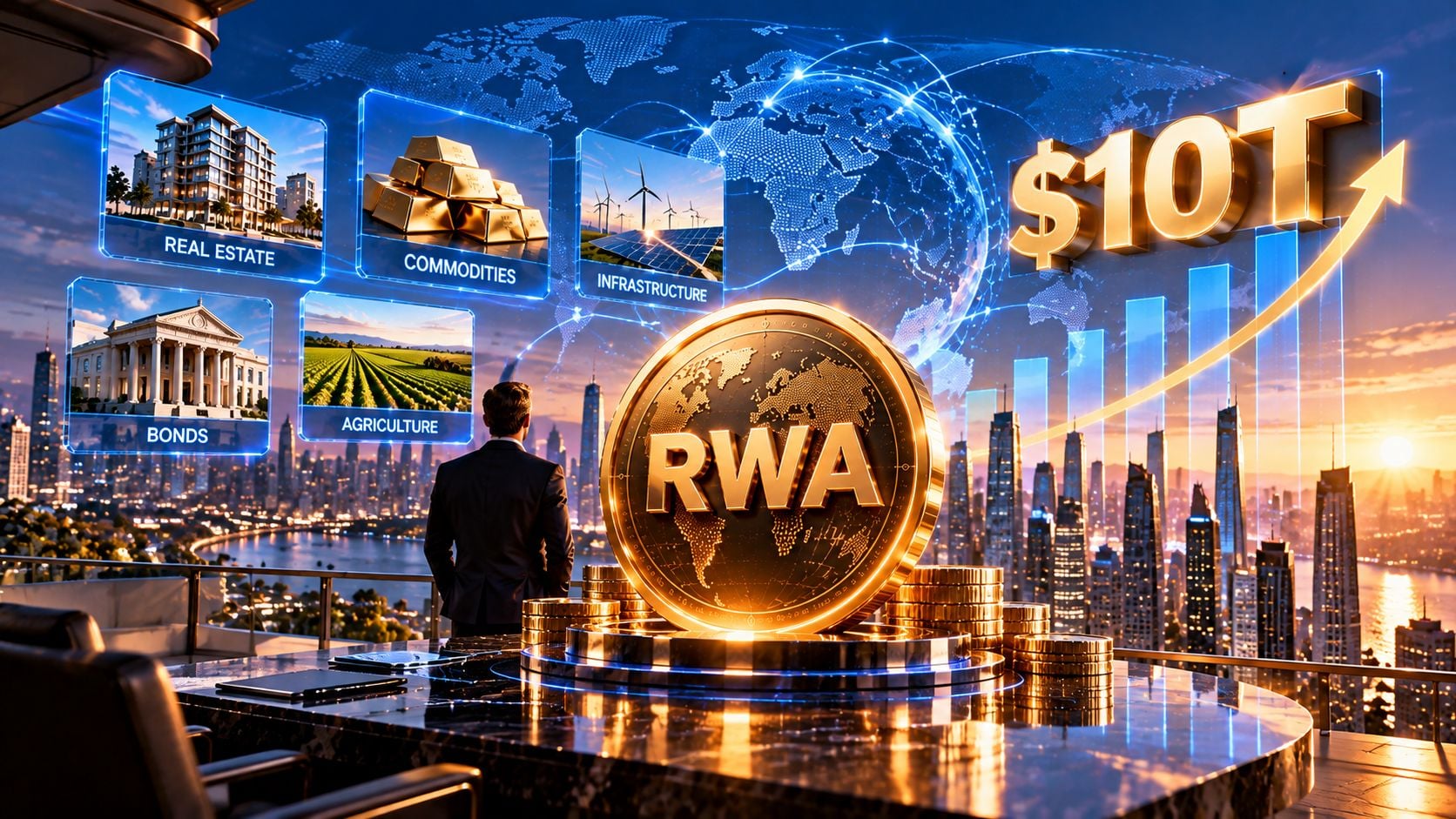
A historic shift in global investment is unfolding, and some of the world’s largest financial institutions are positioning themselves for opportunities that could reshape entire industries before 2030. Artificial intelligence, energy infrastructure, advanced manufacturing, and digital technology are attracting enormous amounts of capital as governments and corporations prepare for a more automated economy. While individual cryptocurrency traders continue searching for market opportunities, Coinspot reviewed 60+ crypto providers to help readers compare Bitcoin trading signal services, highlighting the importance of evaluating information before making financial decisions. Institutional investors, meanwhile, are increasingly examining a much broader opportunity: the multitrillion-dollar investment cycle required to power the next generation of global economic growth.
The scale of this transformation is difficult to overstate. McKinsey has estimated that global data center development could require nearly $7 trillion in capital expenditure by 2030, including infrastructure for artificial intelligence and traditional computing. Additional investment will be necessary across electricity generation, transmission networks, industrial equipment, and related technologies. These estimates do not establish a single $10 trillion market, but they illustrate why investors are beginning to view the coming years as a period of extraordinary capital formation. The central question is no longer whether technological change will require enormous spending. It is which industries and businesses will convert that spending into sustainable profits.
The Investment Boom That Extends Beyond Silicon Valley
For much of the past decade, technology investing was dominated by companies developing software, cloud services, and digital platforms.
Their business models often depended on relatively modest physical infrastructure compared with traditional industrial sectors.
Artificial intelligence is changing that relationship.
Advanced AI systems require specialized processors, enormous computing facilities, sophisticated cooling equipment, and reliable electricity supplies.
Building these capabilities involves substantial physical investment.
A company developing AI applications may depend on data centers located thousands of miles away, connected through fiber-optic networks and powered by regional electricity systems.
Consequently, the economic impact of AI expansion extends far beyond technology companies.
Construction firms, equipment manufacturers, utilities, and infrastructure operators are becoming important participants in the digital economy.
This creates a different investment environment from earlier technology booms.
Instead of focusing exclusively on software companies with rapid revenue growth, institutional investors are examining the businesses that provide the physical foundations for technological expansion.
Why the Smart Money Is Following Capital Expenditure
Professional investors often analyze corporate spending plans to identify industries that could experience sustained demand.
When major companies commit substantial resources to long-term projects, those decisions can create opportunities throughout their supply chains.
The current AI investment cycle provides a clear example.
Large technology companies are expanding computing capacity to support increasingly sophisticated models and commercial applications.
Their spending supports demand for semiconductors, networking equipment, electrical components, and data center construction.
It can also encourage investment in supporting infrastructure that may remain useful for many years.
BlackRock’s 2026 thematic investment research highlights how AI-related opportunities are expanding beyond the largest technology companies into infrastructure, energy, and industrial supply chains.
This broadening matters because investment returns may eventually depend on more than the performance of a small group of dominant technology stocks.
Companies supplying essential equipment or services could benefit from growing demand even if competition among AI software developers intensifies.
However, investors must distinguish between rising industry spending and profitable business opportunities.
A company can experience strong sales growth while struggling with high costs, excessive debt, or aggressive competition.
The Hidden Cost of Building an AI Economy
Artificial intelligence may appear to operate entirely in the digital world, but its infrastructure is expensive and resource-intensive.
Modern data centers require specialized buildings, advanced cooling systems, backup power, and high-capacity network connections.
AI workloads can also demand greater power density than conventional computing operations.
This creates challenges for developers attempting to expand capacity quickly.
Suitable locations must offer reliable electricity, sufficient land, access to communications networks, and favorable construction conditions.
In some regions, electricity availability has become one of the most important constraints on new development.
McKinsey’s analysis suggests that the investment required to support global computing demand through 2030 could approach $7 trillion.
A substantial portion of this spending is associated with AI-related infrastructure.
For investors, the opportunity extends beyond the companies operating data centers.
Businesses manufacturing electrical equipment, cooling technology, and specialized construction materials may also benefit.
Yet the sector is exposed to considerable uncertainty.
If AI adoption develops more slowly than expected, some facilities could struggle to generate sufficient revenue to justify their construction costs.
Electricity Could Become the Most Valuable Resource of the AI Era
The expansion of computing infrastructure is increasing attention on global electricity markets.
Data centers require reliable power throughout the day, and interruptions can create serious operational problems.
The International Energy Agency’s 2026 outlook projects that worldwide data center electricity consumption could approximately double between 2025 and 2030.
This demand is emerging alongside broader electrification trends involving transportation, manufacturing, and other industries.
The result is growing pressure on electricity generation and transmission infrastructure.
Some technology companies are exploring long-term power purchase agreements to secure energy supplies.
Others are considering dedicated generation facilities or combinations of conventional and renewable energy technologies.
For institutional investors, electricity infrastructure offers exposure to a trend that extends beyond any single AI company.
Utilities, power equipment manufacturers, and selected energy developers could benefit from sustained investment requirements.
However, the relationship between electricity demand and investment returns is not straightforward.
Regulated utilities may face limits on profitability, while energy producers remain exposed to fuel prices, construction costs, and changing government policies.
The strongest opportunities may emerge among businesses capable of expanding capacity efficiently while maintaining reliable financial performance.
The Power Grid Is Becoming an Investment Battleground
Electricity generation receives considerable attention, but transmitting power to customers is equally important.
Many electricity networks were developed decades ago and require modernization.
New data centers, industrial facilities, and renewable energy projects can place additional demands on transmission and distribution systems.
Even when sufficient electricity generation exists, grid constraints can delay new construction projects.
This creates demand for transformers, high-voltage equipment, transmission lines, and advanced grid management technology.
Macquarie Asset Management’s 2026 research identifies electricity networks as a major area of investment because aging infrastructure and growing demand are creating long-term capacity challenges.
For investors, grid modernization offers a different type of exposure from speculative technology stocks.
Companies involved in electrical infrastructure may benefit from long project pipelines and established commercial relationships.
However, project approvals, supply chain limitations, and regulatory decisions can affect the timing of revenue.
The industry may experience substantial growth without delivering uniformly attractive returns across every company.
Why Semiconductor Demand May Be Only the Beginning
Semiconductors remain central to the artificial intelligence investment story.
Advanced processors enable the calculations required for training and operating AI models.
Demand for these components has supported substantial investment in chip design, manufacturing equipment, and production capacity.
However, the semiconductor industry includes many different business models.
Some companies design processors, while others manufacture chips or provide the specialized equipment required for production.
Additional businesses supply materials, testing services, and advanced packaging technology.
As AI systems become more complex, the importance of these supporting activities may increase.
The opportunity also extends into networking.
Large computing facilities require high-speed connections that allow thousands of processors to exchange information efficiently.
This creates demand for networking chips, optical components, and related infrastructure.
Nevertheless, semiconductor markets have historically experienced significant cycles.
Periods of strong demand can encourage excessive investment, eventually creating oversupply or pricing pressure.
Investors should therefore evaluate competitive advantages, production economics, and customer concentration rather than assuming that all semiconductor companies will benefit equally.
The Industrial Companies That Could Surprise Wall Street
One of the less obvious consequences of AI expansion is the potential revival of selected industrial businesses.
Building data centers and electricity infrastructure requires physical equipment that cannot be replaced by software.
Industrial manufacturers produce the machinery, electrical systems, cooling equipment, and construction components necessary for these projects.
Some operate in markets with demanding technical requirements and relatively limited numbers of qualified suppliers.
This can create favorable conditions when demand increases faster than production capacity.
Companies with established manufacturing expertise and reliable delivery capabilities may benefit from long-term customer relationships.
However, industrial businesses also face challenges involving raw material costs, labor availability, and capital-intensive production.
Strong order books do not automatically translate into high profit margins.
The most attractive companies may be those capable of increasing output without allowing operating costs to rise at the same pace.
For investors accustomed to focusing primarily on technology stocks, this industrial dimension of the AI economy represents an important change in perspective.
Critical Minerals Are Entering a New Strategic Era
The growth of digital infrastructure is increasing attention on the materials required for electricity systems and advanced manufacturing.
Copper is particularly important because it is widely used in electrical wiring, power equipment, and transmission infrastructure.
Other materials play essential roles in batteries, semiconductor manufacturing, and specialized industrial applications.
Rising demand can encourage mining investment, but expanding supply is often difficult.
New mining projects may require lengthy permitting processes, substantial financing, and years of development before production begins.
Geopolitical considerations also influence the market.
Governments are increasingly concerned about dependence on concentrated supply chains for strategically important materials.
This can encourage investment in domestic production, processing facilities, and recycling technology.
However, commodity investing remains highly cyclical.
Prices can fluctuate because of economic growth, changes in supply, currency movements, and geopolitical developments.
A material may be strategically important without providing consistently attractive returns to investors.
Successful investment decisions require understanding production costs, supply conditions, and valuations.
Private Capital Is Financing the Next Generation of Infrastructure
The scale of upcoming infrastructure investment is creating opportunities for private equity firms, infrastructure funds, and institutional lenders.
Large projects often require financing arrangements that extend beyond conventional corporate spending.
Data center developers may use combinations of equity investment, bank loans, private credit, and long-term customer contracts.
Energy infrastructure projects can involve similarly complex financial structures.
Pension funds and insurance companies may find certain infrastructure investments attractive because they can potentially generate long-duration cash flows.
However, the financial characteristics vary considerably between projects.
A completed facility with a financially strong long-term tenant may have a different risk profile from a speculative development that has not secured customers or electricity connections.
Private credit can also provide financing opportunities, but lenders must evaluate borrower quality and collateral carefully.
As more capital enters the sector, competition could reduce expected returns.
Institutional investors therefore need to balance the appeal of long-term demand with the price they pay for access to individual projects.
The Digital Economy Is Creating New Real Estate Markets
Real estate investors are increasingly examining properties connected to digital infrastructure.
Traditional commercial real estate has long focused on offices, shopping centers, warehouses, and residential buildings.
Data centers introduce a specialized category with different operating requirements.
The value of a suitable data center site depends on factors such as electricity access, network connectivity, cooling requirements, and development permissions.
A location that appears ordinary from a traditional property perspective may become strategically valuable if it can support large-scale computing infrastructure.
However, data center real estate is not necessarily a simple investment.
Facilities require specialized equipment, substantial maintenance, and careful management of technological changes.
Long-term demand may be strong, but individual properties can become less competitive if computing requirements evolve.
Financing costs and tenant concentration also influence investment performance.
For investors, the sector illustrates how technological change can create new sources of demand within established asset classes.
Could Emerging Markets Capture Part of the Opportunity?
The infrastructure investment cycle is global rather than exclusively American.
Different regions are attempting to attract technology investment through energy availability, industrial capacity, and government incentives.
Some countries offer manufacturing expertise, while others possess important mineral resources or expanding electricity markets.
Emerging economies may benefit from increased demand for industrial materials, construction services, and infrastructure development.
However, opportunities vary significantly.
Political stability, currency movements, legal protections, and access to financing can influence investment outcomes.
A country with abundant natural resources may struggle to attract capital if infrastructure is inadequate or regulations remain unpredictable.
Conversely, economies that develop reliable energy systems and favorable business conditions may attract new industrial activity.
International investors must therefore examine local fundamentals rather than assuming that all emerging markets will benefit from the same global trends.
The geographical distribution of investment could become one of the defining economic questions of the decade.
The Risk That Everyone Is Investing in the Same Future
The rapid expansion of AI-related investment has created concerns about market concentration.
Many technology companies, infrastructure developers, and financial institutions are making decisions based on expectations of substantial future demand.
If those expectations prove accurate, the investments could support a new period of productivity growth.
If adoption develops more slowly, some projects may struggle to earn adequate returns.
The risk is particularly important when companies commit large amounts of capital before the profitability of new services becomes clear.
Infrastructure projects can involve long construction periods and substantial financing obligations.
Once completed, their economic performance depends on customer demand, operating expenses, and technological competitiveness.
Investors must also consider valuation risk.
A company operating in an attractive industry can still become a disappointing investment if its shares already reflect excessively optimistic expectations.
This is why the next investment cycle may reward careful financial analysis rather than simply identifying popular themes.
What Could Change the Investment Story Before 2030?
Several developments could alter the outlook for global infrastructure investment.
Advances in computing efficiency may reduce the energy required for certain AI workloads.
New semiconductor designs could change the competitive position of established suppliers.
Energy prices, interest rates, and government policies may influence the economics of major construction projects.
Geopolitical tensions could disrupt access to important materials or manufacturing capacity.
The pace of enterprise AI adoption is another critical variable.
If businesses generate substantial productivity improvements and new revenue through AI, demand for computing infrastructure could remain strong.
If commercial returns disappoint, technology companies may reconsider the pace of capital expenditure.
These uncertainties make it difficult to identify a single investment strategy that will perform well under every scenario.
The most resilient businesses may be those with diversified customers, manageable debt, and the ability to adapt as market conditions change.
Why the Biggest Winners May Not Be Household Names
Investment attention often concentrates on companies with recognizable brands and rapidly rising stock prices.
However, major economic transformations can create opportunities among businesses that receive relatively little public attention.
Specialized suppliers may provide essential equipment that larger companies cannot easily replace.
Infrastructure operators may control assets with valuable locations or established customer relationships.
Industrial businesses may benefit from growing demand without needing to develop revolutionary consumer products.
The financial characteristics of these companies can differ substantially from those of high-growth technology firms.
Some may generate stable cash flows, while others require continuous investment to expand production.
Investors seeking opportunities beyond the most popular stocks should examine business fundamentals rather than relying exclusively on market narratives.
The key is identifying where demand is likely to persist and which companies possess the ability to convert that demand into profits.
The Next Decade Will Be About More Than Artificial Intelligence
Artificial intelligence is currently the most visible catalyst for the emerging investment cycle.
Yet the broader transformation involves changes in energy systems, industrial capacity, communications networks, and financial infrastructure.
Many of these investments may remain economically useful even if individual AI companies fail to meet expectations.
Electricity networks support households and businesses beyond data centers.
Modern communications infrastructure enables a wide range of digital services.
Industrial equipment can serve multiple sectors of the economy.
This creates opportunities for investors to examine the wider economic consequences of technological development.
It also highlights the importance of distinguishing between temporary market excitement and long-term structural demand.
The most durable investment themes may be those supported by several independent sources of economic activity.
Where Smart Money Could Find Lasting Value
The next multitrillion-dollar investment cycle is unlikely to produce a single winner.
Instead, capital will flow through interconnected industries, each with different financial characteristics and risks.
Technology companies will continue developing AI systems, while infrastructure operators provide the computing capacity required to run them.
Utilities and energy developers will work to meet electricity demand.
Industrial manufacturers will supply essential equipment, and financial institutions will help fund construction and expansion.
The investment opportunity lies in understanding how these industries interact.
A company may experience strong demand because it solves a specific bottleneck, but its long-term success will still depend on profitability, competition, and financial discipline.
The most attractive opportunities may not be the businesses making the boldest predictions.
They may be those delivering essential services at sustainable costs.
The $10 Trillion Question Investors Should Be Asking
The global economy is entering a period of substantial investment in digital and physical infrastructure.
Artificial intelligence is accelerating demand for computing capacity, while electricity systems and industrial supply chains must adapt to support new technologies.
The scale of projected spending explains why major financial institutions are examining opportunities far beyond conventional technology stocks.
Yet a market requiring trillions of dollars in investment does not guarantee trillions of dollars in profits.
Some companies will generate attractive returns, while others may suffer from excessive construction costs, weak demand, or unfavorable valuations.
The distinction between economic growth and investment performance will become increasingly important as the decade progresses.
By 2030, the companies that benefit most may include familiar technology leaders, specialized industrial suppliers, infrastructure operators, and businesses that have not yet attracted widespread investor attention.
The next great investment opportunity may not be a single cryptocurrency, stock, or emerging technology. It may be the enormous network of industries required to build and power the future global economy.
For investors willing to look beyond short-term market excitement, understanding that network could be one of the most valuable research priorities of the coming years.