

• Send Us A Tip
  • Calling all Tech Writers
  • Advertise
Saturday, October 24, 2026
  • Login
TechStory
  • News
  • Crypto
  • Gadgets
  • Memes
  • Gaming
  • Cars
  • AI
  • Startups
  • Markets
  • How to
No Result
View All Result
  • News
  • Crypto
  • Gadgets
  • Memes
  • Gaming
  • Cars
  • AI
  • Startups
  • Markets
  • How to
No Result
View All Result
TechStory
No Result
View All Result
Home Future Tech AI

Multiple Reports Allege Nvidia Fueled Gaming GPU Crisis by Encouraging Big Tech to Stockpile AI Hardware

The central allegation is that major technology companies may be acquiring Nvidia's AI hardware faster than they can deploy it, potentially contributing to supply constraints across the semiconductor industry.

by Shailja Jha
October 24, 2026
in AI, Tech
Reading Time: 4 mins read
0
Nvidia in Talks to Invest in Athropic’s Mega IPO, Sources Say

PHOTO CREDITS : Business Today Malaysia

TwitterWhatsappLinkedin

You might also like

How Accurate Captions Make Short Mobile Videos More Accessible and Easier to Understand

Google Employees Resign Amid Backlash Over AI Contracts With Military

Greece Bans Social Media for Children Under 15, New Law to Take Effect in January 2027

Nvidia is facing growing scrutiny over allegations that its artificial intelligence hardware business may be contributing to shortages and rising prices in the gaming graphics card market. Multiple reports have raised concerns that major technology companies are stockpiling AI processors, potentially tying up semiconductor resources while gamers struggle with the availability and affordability of consumer graphics processing units (GPUs).

The allegations highlight a growing conflict between the demand for AI computing infrastructure and the consumer gaming market. Nvidia has become one of the biggest beneficiaries of the AI boom, supplying advanced processors to technology companies building massive data centers. However, the company’s expanding focus on AI has raised questions about production priorities and the availability of hardware for traditional gaming customers.

Although the claims suggest that Nvidia may have helped create artificial scarcity, the extent of its involvement remains unclear. Hardware stockpiling can result from legitimate procurement strategies, and the allegations do not independently establish that Nvidia deliberately engineered a gaming GPU shortage.

AI Boom Changes Nvidia’s Business Priorities

Nvidia’s transformation from a graphics card manufacturer into a major supplier of AI computing hardware has reshaped the semiconductor industry. Its GPUs are widely used to train and operate advanced AI models, including generative AI systems that require enormous computing resources.

Major technology companies have invested heavily in AI infrastructure, purchasing processors to support cloud computing, machine learning and enterprise applications. These investments have created substantial demand for Nvidia’s data center products, making AI computing a central part of its business.

The financial incentives are significant. Large enterprise customers frequently purchase hardware in bulk, while demand for AI infrastructure continues to expand across the technology sector. Consequently, Nvidia faces strong commercial incentives to prioritize the needs of these customers.

Multiple Reports Say Nvidia Manufactured the Gaming GPU Crisis by Forcing Big  Tech to Stockpile Unused AI Hardware : r/gamingnews

Gaming, meanwhile, remains an important part of the company’s operations. Its GeForce graphics cards serve PC gamers, content creators and enthusiasts seeking improved graphics performance. However, the enormous growth of the AI market has changed the relative importance of these customer segments.

Hardware Stockpiling Raises Questions

The central allegation is that major technology companies may be acquiring Nvidia’s AI hardware faster than they can deploy it, potentially contributing to supply constraints across the semiconductor industry.

Companies building AI data centers often purchase processors well before their facilities become fully operational. These projects require extensive preparation, including securing electricity, installing cooling systems, establishing networking infrastructure and preparing suitable buildings.

As a result, purchased processors may remain in inventory while companies complete their infrastructure projects. Such equipment is not necessarily unnecessary, as it may be reserved for future computing capacity.

However, concerns emerge when companies accumulate hardware beyond their immediate operational requirements. Excessive purchasing could tie up capital, create inventory imbalances and complicate efforts to allocate manufacturing resources efficiently.

The allegations raise questions about whether Nvidia has encouraged purchasing practices that contribute to unnecessary accumulation. Establishing that would require evidence about customer agreements, inventory levels and the company’s sales strategies.

Why Gaming GPUs Could Be Affected

The gaming GPU market operates within a semiconductor ecosystem that also serves AI and enterprise computing. Although gaming graphics cards and AI accelerators are different products, they can depend on overlapping manufacturing capabilities, advanced packaging technologies and other specialized components.

When demand for AI hardware rises sharply, semiconductor manufacturers may face pressure to expand production while managing competing requirements. Increasing manufacturing capacity takes time, meaning supply may not immediately respond to higher demand.

These pressures can affect consumer hardware availability and pricing, although the extent varies by product and manufacturing process.

For gamers, the consequences can be frustrating. Modern graphics cards are already expensive, and limited availability can make upgrading a gaming PC more difficult. Consumers may also face uncertainty about when newer models will become widely available at competitive prices.

Nevertheless, AI hardware demand is not the only factor influencing gaming GPU prices. Manufacturing costs, memory prices, product launches, distribution strategies and consumer demand also play important roles.

Big Tech’s Growing Appetite for AI Computing

Technology companies are racing to develop increasingly capable AI systems, creating incentives to secure computing hardware before competitors do. Businesses may place large orders to protect themselves against future shortages or ensure that planned data centers can operate on schedule.

This purchasing behavior can create a cycle in which expectations of future demand encourage additional orders, even when deployment timelines remain uncertain.

If companies acquire more processors than they can effectively use, the industry could experience a mismatch between installed computing capacity and actual demand. Such a situation could eventually affect investment decisions and hardware purchasing strategies.

However, distinguishing between strategic stockpiling and genuinely unnecessary purchases requires detailed information about deployment plans and processor utilization.

Nvidia Faces Questions About Market Priorities

The allegations could intensify scrutiny of Nvidia’s role in balancing demand from AI companies with the needs of gaming customers. As its influence over the semiconductor industry grows, investors and consumers may increasingly examine how the company manages production commitments and customer relationships.

For Nvidia, AI represents a major commercial opportunity, but maintaining a competitive gaming business remains important. Gaming customers have supported the company’s graphics technology for decades, and consumer demand continues to influence its broader product ecosystem.

The company must navigate a market in which enterprise customers can make enormous purchases while individual gamers remain sensitive to price increases.
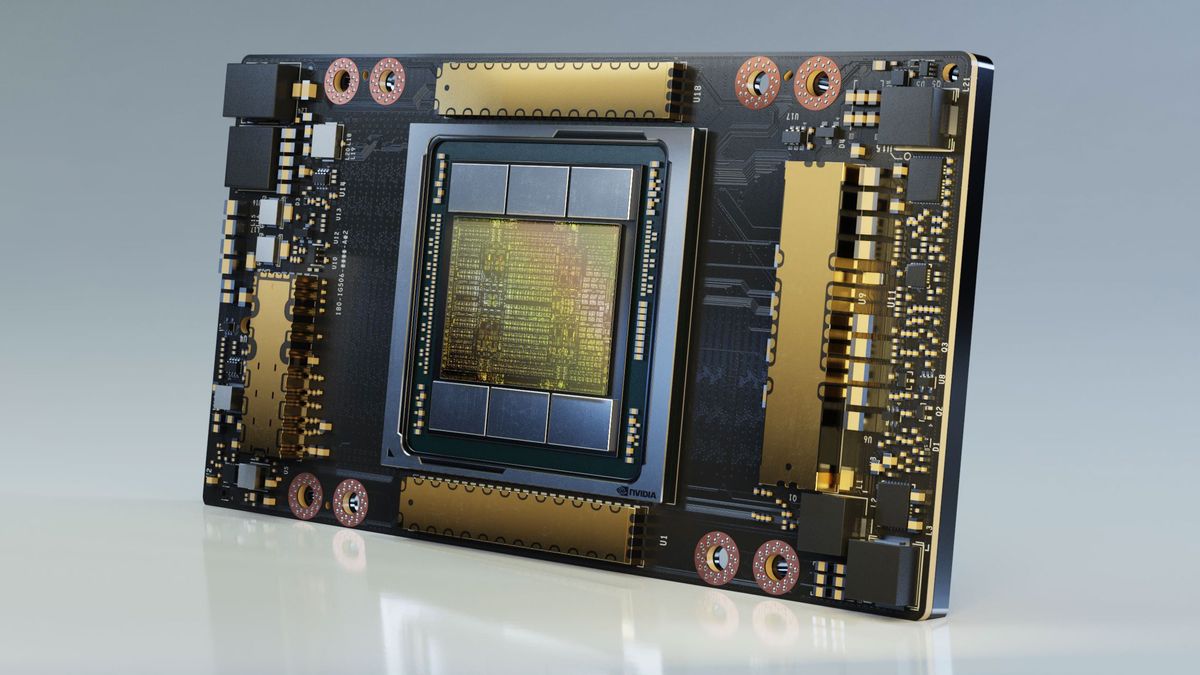
Four Americans charged with smuggling Nvidia GPUs and HPE supercomputers to  China face up to 200 years in prison —$3.89 million worth of gear smuggled  in operation | Tom's Hardware

Conclusion

The allegations that Nvidia contributed to the gaming GPU crisis by encouraging major technology companies to stockpile AI hardware highlight the growing tension between AI infrastructure spending and consumer graphics card availability.

While AI demand has transformed Nvidia’s business, claims that the company deliberately manufactured a shortage remain unproven. Hardware accumulation may reflect legitimate infrastructure planning, although excessive stockpiling could create inefficiencies across the semiconductor supply chain.

Ultimately, the impact on gamers will depend on manufacturing capacity, component availability, pricing strategies and the sustainability of AI hardware demand. Greater transparency around inventory levels and purchasing practices could help clarify whether the current pressures reflect temporary supply constraints or deeper structural problems in the GPU market.


Tags: Multiple Reports Allege Nvidia Fueled Gaming GPU Crisis by Encouraging Big Tech to Stockpile AI HardwareNvidiaNvidia newsNvidia updatespotentially contributing to supply constraints across the semiconductor industry.semiconductor industrySemiconductor industry newssemiconductor industry updatesTech newsTechstoryThe central allegation is that major technology companies may be acquiring Nvidia's AI hardware faster than they can deploy it
Tweet54SendShare15
Previous Post

Greece Bans Social Media for Children Under 15, New Law to Take Effect in January 2027

Next Post

Google Employees Resign Amid Backlash Over AI Contracts With Military

Shailja Jha

Recommended For You

How Accurate Captions Make Short Mobile Videos More Accessible and Easier to Understand

by Rohan Mathawan
October 24, 2026
0
Short videos have become a daily habit for mobile users. People watch clips on buses, in waiting rooms, during breaks, and late at night with the volume turned down. Gaming highlights, creator tutorials, reaction clips, and quick product reviews all compete for a few seconds of attention. In that setting, captions are no longer a bonus feature. They are a core part of how a video communicates. When captions are accurate, they help more people follow along, understand the message, and enjoy the content as the creator intended. When they are careless, they can confuse viewers or leave them out entirely. Why Captions Matter for Mobile Viewers Many creators now rely on a caption generator to turn spoken audio into on screen text quickly, which saves time when they publish several clips each week. The real value of that text, however, depends on how closely it matches what is actually said and heard. For viewers who are deaf or hard of hearing, captions are the main way to access speech, tone, and important sound cues. For other viewers, captions support situations where audio is not practical, such as noisy streets, shared spaces, or quiet environments. A clip with clear and correct text works for all of these people without requiring any extra effort from them. Accessibility Starts with Accuracy Accessibility is about giving every viewer a fair chance to understand the content. Captions that skip words, change meanings, or misspell names can make that difficult. A viewer who relies on text cannot compare it against the audio, so any error becomes part of the message they receive. Accurate captions should include the spoken words, the speaker when it is not obvious, and meaningful sounds such as music cues, laughter, or alerts. For example, in a cooking clip, a caption that reads "add two teaspoons of salt" instead of "add two tablespoons of salt" changes the result of the recipe. Accuracy protects the viewer from small mistakes with real consequences. Comprehension in Fast Moving Gaming Clips Gaming clips move quickly. Players speak fast, use abbreviations, call out locations, and react to events that happen in a split second. Team callouts such as map positions, weapon names, and character abilities often sound similar when heard quickly, which makes accurate text especially useful. A viewer who is new to a game may not recognize a term by ear, but seeing it written correctly helps them learn it. Captions also help when the in game audio, music, and voice chat overlap. Clear text separates the commentary from the background noise, so the viewer can follow what the player is saying without replaying the clip several times. Creator Clips and Clear Communication Creators share advice, tutorials, opinions, and stories in short formats where every second counts. Captions give them a way to reinforce key points without adding extra length. A beauty creator can display product names exactly as spoken, a fitness creator can show the number of repetitions, and a tech reviewer can spell out model names that are easy to mishear. Captions also help viewers whose first language is not the language of the video. Reading along while listening can make unfamiliar accents or fast speech easier to follow. This does not replace translation, but it supports comprehension for people who are still building their listening skills. Common Caption Errors and Their Effects Some caption mistakes appear again and again in short videos. Understanding them helps creators know what to check before publishing. Homophones, such as "their" and "there," or "to" and "two," can change the meaning of a sentence. Proper nouns, including usernames, game titles, brand names, and place names, are often misspelled. Missing punctuation can make a sentence read as a different statement or question. Lines that appear too early or too late can confuse the viewer about who is speaking. Technical terms and slang may be replaced with common words that sound similar but mean something else. Each of these errors is small on its own, but in a clip that lasts under a minute, even a few of them can reduce clarity. Reviewing the text once before posting is a simple habit that keeps these problems from reaching the audience. Practical Tips for Better Captions Creators do not need advanced skills to improve caption quality. A few steady habits can make a visible difference. Record audio as clearly as possible, because clean speech gives any captioning method a better starting point. Read through the full text while listening to the clip, and correct names, numbers, and terms that are specific to the topic. Keep each line short, so viewers can read it comfortably without missing the picture. Add brief descriptions for important sounds, such as "applause" or "game alert," when they affect understanding. Watch the final video on a phone, since that is where most viewers will see it. These steps are practical rather than technical. They focus on the viewer experience and not on any promise of a specific result. Timing, Placement, and Design on Small Screens On a small mobile screen, the look of captions matters almost as much as their wording. Text should appear at a size that is easy to read, with enough contrast against the background. White text with a dark outline or a soft background box is a common choice because it stays readable over changing scenes. Captions should also avoid covering important parts of the video, such as the game interface, a product being demonstrated, or a speaker's face. Timing is equally important. Text that appears just as the words are spoken feels natural, while text that lags behind can make the video feel out of sync. Careful placement and timing help viewers read and watch at the same time without effort. Conclusion Accurate captions make short mobile videos more accessible, easier to follow, and more useful to a wider audience. They support viewers who cannot rely on sound, help new players understand fast gaming clips, and give creators a reliable way to share clear messages in a few seconds. A caption generator can speed up the first step by producing text from speech, but the best results come when creators review the output, correct names and terms, and check timing and readability on a phone. By treating captions as a real part of the video and not an afterthought, creators can make their content welcoming and understandable for more people, one short clip at a time.

Short videos have become a daily habit for mobile users. People watch clips on buses, in waiting rooms, during breaks, and late at night with the volume turned...

Read more

Google Employees Resign Amid Backlash Over AI Contracts With Military

by Shailja Jha
October 24, 2026
0
Google Employees Resign Amid Backlash Over AI Contracts With Military

Google is facing renewed internal criticism over its artificial intelligence contracts with military organizations, with reports of employees resigning in protest against the company's involvement in defense-related projects....

Read more

Greece Bans Social Media for Children Under 15, New Law to Take Effect in January 2027

by Ishaan Negi
October 23, 2026
0
Greece Bans Social Media for Children Under 15, New Law to Take Effect in January 2027

Greece has approved a law banning children under the age of 15 from using social media platforms, joining a growing international effort to restrict minors' access to online...

Read more
Next Post
Google Employees Resign Amid Backlash Over AI Contracts With Military

Google Employees Resign Amid Backlash Over AI Contracts With Military

Please login to join discussion

Techstory

Tech and Business News from around the world. Follow along for latest in the world of Tech, AI, Crypto, EVs, Business Personalities and more.
reach us at info@techstory.in

Advertise With Us

Reach out at - info@techstory.in

Aviator Game India 2026

BROWSE BY TAG

#Crypto #howto 2024 acquisition AI amazon Apple Artificial Intelligence bitcoin Business China cryptocurrency e-commerce electric vehicles Elon Musk Ethereum facebook funding Gaming Google India Instagram Investment iPhone IPO Market Markets Meta Microsoft News OpenAI samsung Social Media SpaceX startup startups tech Tech news technology Tesla TikTok trend trending twitter US

© 2025 Techstory.in

No Result
View All Result
  • News
  • Crypto
  • Gadgets
  • Memes
  • Gaming
  • Cars
  • AI
  • Startups
  • Markets
  • How to

© 2025 Techstory.in

Welcome Back!

Login to your account below

Forgotten Password?

Retrieve your password

Please enter your username or email address to reset your password.

Log In
Are you sure want to unlock this post?
Unlock left : 0
Are you sure want to cancel subscription?