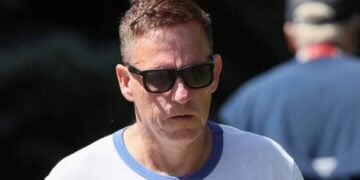
A celebrated musician in Cape Breton, Ashley MacIsaac, found himself at the center of a worrying incident of AI-driven misinformation with major repercussions for how technology companies deal with artificial intelligence.
The Juno Award-winning fiddler recently discovered that Google’s AI had made a summary stating that he was a convicted sex offender. This forged information resulted in the cancellation of a performance he had set for a concert on the 19th of December.
MacIssac discovered the inaccuracies in the claims after he was to have performed in front of the Sipekne’katik First Nation, a tribe that is based north of the city of Halifax, and was presented with the summary by the tribe after cancelling his event.
The summary was erroneous in that it stated MacIssac was convicted of several serious crimes, including sexual assault, internet luring of children, assault of a female, and an attempt to assault a minor.
“You’re placing someone in a less secure position because of a media outlet – that’s what defamation is,” MacIsaac explained in a telephone interview with The Canadian Press. The 50-year-old virtuoso was particularly worried about what might have happened if any of this information had come up when attempting to cross an international border.
‘I could have been at the border and in jail,’ he said. ‘So something has to be figured out in terms of what the AI companies are responsible for and what they could prevent.’
How an AI Identity Crisis Nearly Ruined a Career?
MacIsaac later found out that the erroneous news came from articles written online about a man in Atlantic Canada who shares the same last name. This man was mistakenly identified by Google’s AI as MacIsaac’s own identity, nearly ruining his career.
MacIsaac had already received inquiries from law firms across Canada about representing him pro bono on Christmas Eve. Though he doesn’t have the resources for a prolonged fight against the legal system, he is pondering his course of action to stop others from falling prey to the situation he’s in.
“I would stand up if any lawyer wants to take up this matter for free. Why? Because I am not the only one and definitely not the last,” he said.
Google Canada spokesperson Wendy Manton was quoted as follows in response to the issue:
“The AI overviews are in a constant state of development as they seek to provide the viewer with what the company believes is the most important information. It is when things go wrong, features misunderstanding the web pages they scan or providing too little context, that Google uses those flaws to help improve their algorithms.” However, the damage was done to MacIsaac’s reputation and career.
Sipekne’katik First Nation Issues Public Apology to Ashley MacIsaac Over AI-Linked Misinformation
The Sipekne’katik First Nation offered a public apology to MacIsaac for the cancellation of the concert based on misinformation.
“We are sorry for the harm this has caused to your reputation and your means of living,” their message read. “Chief and Council appreciate your talent, your contribution to the cultural scene of the Maritimes, and your commitment to reconciliation.”

“I’m looking forward to rescheduling this concert,” MacIsaac continued, “but I thought I should wait until things have settled down a bit. “I don’t feel comfortable going there right now because I don’t think the proper information can be disseminated in a week. It’s seen so many shares,” he explained. “I didn’t want to bring any negative attention to this community.”
This event is one of many that have brought to light concerns over AI summaries being used for misinformation. MacIsaac went so far as to hypothesize that an AI summary might have ruined plans he had for a concert appearance in Mexico earlier this year.
The Real-World Impact of Artificial Intelligence-Generated Falsehoods
When speaking with CBC News on Christmas Eve, MacIsaac showed his feelings about the current situation. “I’m telling you, this is not a nice place to be,” MacIsaac said. “I’m sitting outside my grandmother’s, going into Christmas. This is not a conversation I want to have today, ‘Oh, yeah, somebody called me a sex offender.'”
For the record, other than the absolute discharge with no fine for having marijuana in Saskatchewan in 2001, MacIsaac has no record with the police, as the charge was so insignificant that the judge asked for an autograph for his wife when he was granted an absolute discharge.
This case presents pressing questions of accountability in the age of artificial intelligence with respect to responsibility when artificial intelligence systems produce false information about actual individuals that may have a life-altering impact.