Internet’s most reliable name, Wikipedia, is experiencing what its officials term a “dangerous decline” among human users.
Wikimedia Foundation, the organization behind the free encyclopedia, has witnessed an 8% decline between March and August 2025 compared to the previous year. And the culprit is the way individuals increasingly search for information and the way artificial intelligence alters the pattern.
Wikimedia Senior Director of Product Marshall Miller interpreted the decline not as diminishing interest in information but as shifting consumption.
Along with the soaring size and availability of the generative AI programs such as ChatGPT and Google’s AI Overviews and other large language model–driven systems, the user doesn’t necessarily need to follow links to receive answers.
They are offered instant, condensed versions of information almost uniformly sourced from Wikipedia and other places.
Wikipedia Faces Traffic Crisis as AI-Generated Summaries Lead to Zero Clicks
This trend has now come to shape the manner individuals search on the Net. In a survey conducted by the Pew Research Center last July 2025, more than half the search sessions on summaries prepared by artificial intelligence held zero clicks to other pages.
In other words, people are already obtaining the information they seek directly from AI interfaces without necessarily viewing the original content.
For one of the oldest and most trafficked websites on the internet Wikipedia this change is an existential challenge. Traffic is not just a vanity metric it is what keeps the website’s active volunteer corps of editors, contributors, and donors engaged.
Some the declines that occurred recently also became more apparent following an upgrade to Wikimedia’s bot-detection infrastructure.
The site also realized how much of what once counted as human traffic especially from Brazil consisted of automated bots. With this subsequently fixed, the true image became apparent: an abrupt decline in real human visitation, especially since May 2025.
Why Declining Human Input Imperils Wikipedia’s Future
As far as bots can augment the numbers, they do not support the mission of Wikipedia, the generation, curation, and verification of knowledge through human labor. The new data thus revealed an uncomfortable fact: real humans are visiting and editing less.
This decline might prove permanent. Fewer users often mean fewer volunteer editors to help preserve and expand the encyclopedia’s tens of millions of articles.
Wikipedia’s not-for-profit business also depends on small contributions by citizens worldwide. Less activity might complicate fundraising.
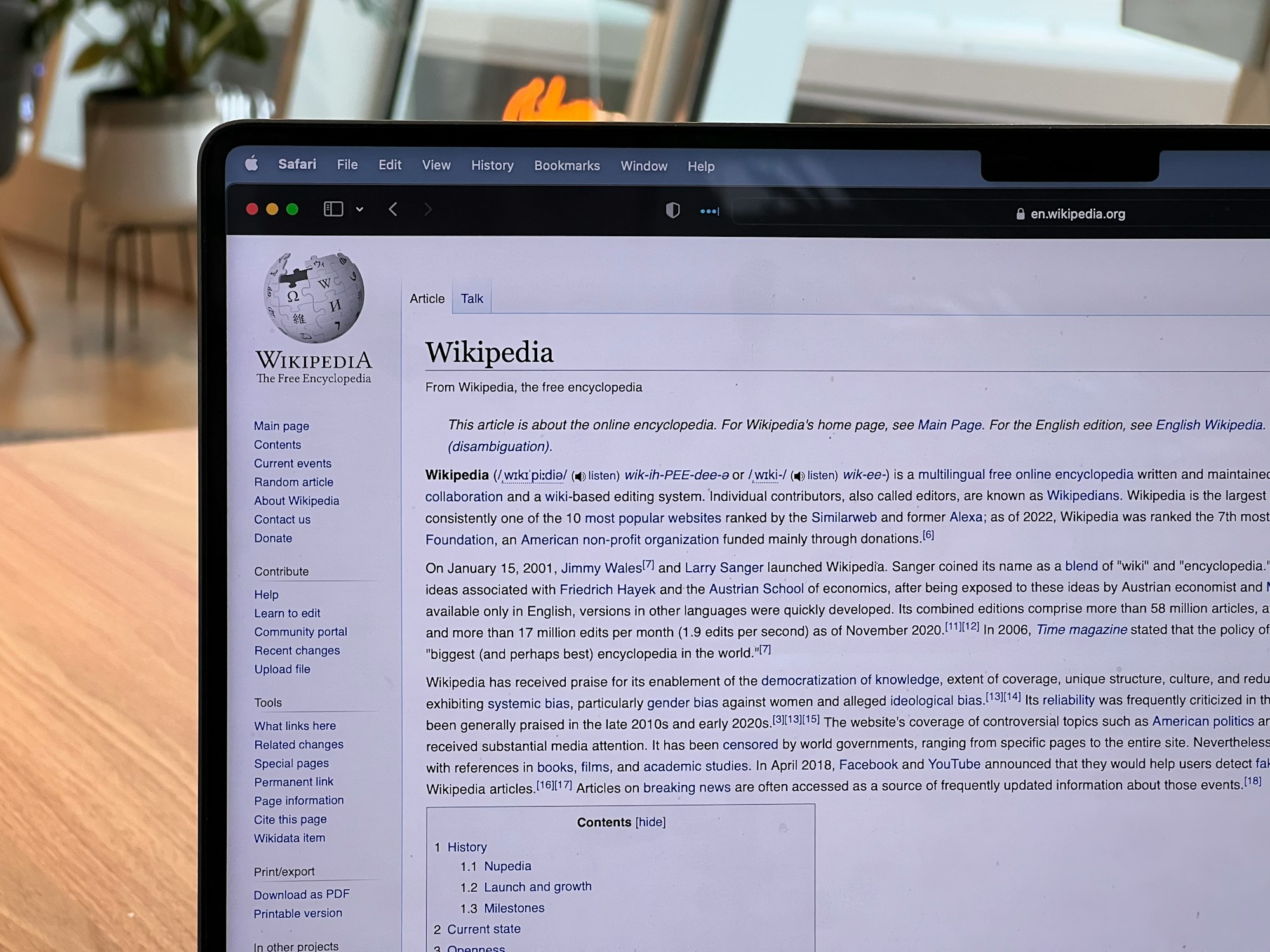
Marshall Miller warned the trend “could compromise the only site of its scale with verifiability norms, neutrality, and transparency animating information across the internet.” Should human input continue to wane, the very foundation that provides Wikipedia its unique advantage open collaboration to construct knowledge will wane.
Experts echo these concerns, pointing out that Wikipedia’s strength lies in its diverse pool of editors who bring multiple perspectives to its content.
A drop in contributions could lead to fewer updates, slower corrections, and a less representative range of viewpoints, ultimately affecting the reliability and richness of the platform’s information.
Wikipedia’s decline mirrors the wider trend taking place on the internet. With the default entry points to information becoming search platforms and AI systems, original publishers and reference pages are finding fewer users. Education sites, news outlets and blogs are all saying the same thing.
Wikipedia Seeks Tech Cooperation to Preserve the Feedback Loop in the Age of Short Video and AI Summaries
Since this is where the trend is heading, younger users are now looking to visual-first platforms such as YouTube, TikTok, and Instagram to get short explainers and summaries. Text-based materials that once occupied the center stage of internet research now get competed by short videos and AI-created snippets that provide instant answers through an equally convincing means.
Miller and his colleagues at Wikimedia are considering how to make the transition. One is to ensure that the search engines and AI-powered tools allow more explicit attribution to the informational sources and place links directly back to the pages.
That would recreate some of the “feedback loop” that once allowed traffic to go from search engines to Wikipedia.
But this is predicated on the cooperation of the technology giants who create these AI entities. Without due attribution and linking, the users will never be any wiser about where the answers come from, even where the majority of the data consists of Wikipedia’s volunteer-created articles.
The group is also asking the public and educators to continue to support Wikipedia as an accountable, transparent, and verifiable information source principles opposite the black-box manner by which most AI systems yield answers.
For now, Wikipedia remains one of the world’s most important open-access resources. But as AI tools increasingly mediate how we consume information, the site’s leadership is sounding the alarm: if users stop visiting, contributing, and donating, the world’s largest encyclopedia could face an existential challenge in the years to come.