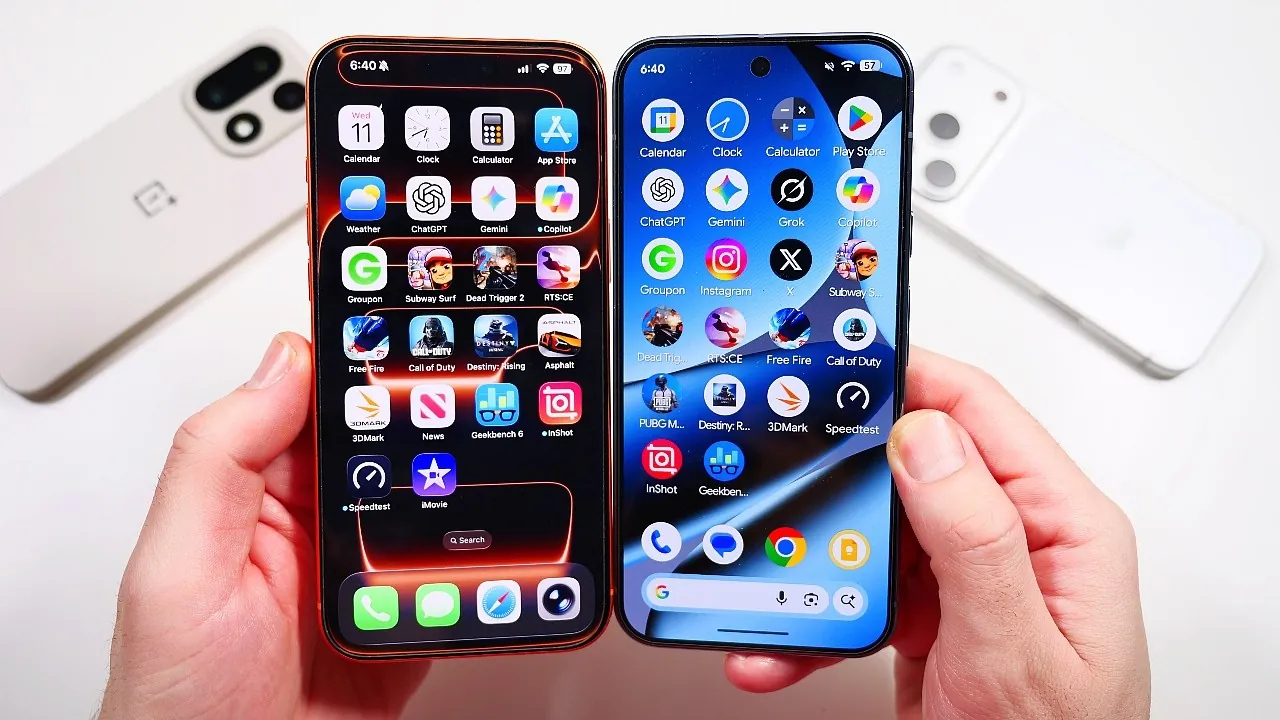
The Android vs iPhone saga is not simply an ongoing rivalry between two phone manufacturers. This saga is also a tale of the development of the smartphone as the central pillar of modern-day living. A product rivalry quickly turned into an innovation that has transformed the way people work, buy things, move around, communicate, and spend leisure time.
While the introduction of the iPhone by Apple in 2007 was revolutionary as far as consumer expectations went regarding phones, the arrival of Android not long afterwards provided an alternative. One path was one of control and exclusivity while the other was one of freedom and choice.
The start of the Android vs iPhone battle
Android vs iPhone competition really kicked off when the iPhone was launched in 2007 and Android smartphones appeared on the market in 2008. Prior to those events, the mobile phone was just a tool used for making phone calls, sending text messages, and using the internet.
Google realized the direction in which the market was moving and decided to promote Android as an operating system for multiple smartphone manufacturers. Such a decision became a turning point in the history of the industry since it allowed Android OS to be present in budget, mid-range, and premium smartphones. Meanwhile, Apple chose to limit the use of the iPhone exclusively to its products, giving users a complete ecosystem.
It is important to note that such a choice was not only technical but also business-related, shaping the future of two companies for the following twenty years. One was focused on reach while the other on control.
Two different ideas of a smartphone
Android vs iPhone became a clash between two ideas of what a phone should be. Apple believed in a closed system where everything worked together. That included the device, the software, the app store, and later services like payments, wearables, and tablets. The result was a smooth user experience and strong brand loyalty.
Google took the opposite path with Android. It let many manufacturers use and adapt the software. That made Android flexible and easier to spread across countries and price levels. It also created variety. Users could buy a basic phone or a high-end model and still stay in the Android world.
This split matters because it gave consumers a real choice. Some people wanted simplicity and polish. Others wanted customisation and lower prices. The smartphone market grew fast because both sides filled different needs.
Why Android won on scale
Android and iPhone are often seen as an epic battle that has two winners. Android has won in terms of scale whereas iPhone has won in terms of profitability. The open nature of Android allowed it to penetrate into various brands and geographies. As such, Android became the default smartphone operating system for most countries.
According to the StatCounter statistics of June 2026, Android has 69.14% of worldwide market share among mobile operating systems whereas iOS has 30.79%. This demonstrates the extent to which Android dominates in terms of sheer numbers and it is particularly successful in markets that value affordability and choice.
Moreover, the Android’s growth positively impacted Google by attracting more users of Google search, Google mail, maps and other applications. In this sense, Android is not just an operating system for phones but it was a platform for Google to reach out billions of people.
Why iPhone won on profit
Despite having the biggest share worldwide, iPhone has performed excellently when it comes to revenue. Apple has been dominating the high-end segment for many years now. They have loyal customers who pay a lot for devices, applications, and their services. This is why Apple has managed to generate significant profit from the smartphone industry.
This is perhaps the most crucial aspect of the Android vs iPhone battle since it highlights the fact that market share and profitability cannot be equated since both strategies have been proven to be effective but in different ways.
The other strategy that was employed by Apple was that of building an ecosystem which was able to retain its customers. For instance, once a person buys an iPhone, he might end up buying AirPods, an Apple Watch, an iPad, or even a Mac.
How Android vs iPhone changed business
The battle over the smartphone altered the business models within the tech sector. Before Android and iPhone, there were a lot of organizations that perceived the mobile world as a secondary channel. After the dominance of these two platforms became reality, mobile devices became the primary channel where users met brands and services.
With the appearance of the app store, the business was created from scratch. The developers started creating software solutions for millions of users without the need for selling boxes in retail stores. It meant that software development, pricing, maintenance, and marketing had to be rethought.
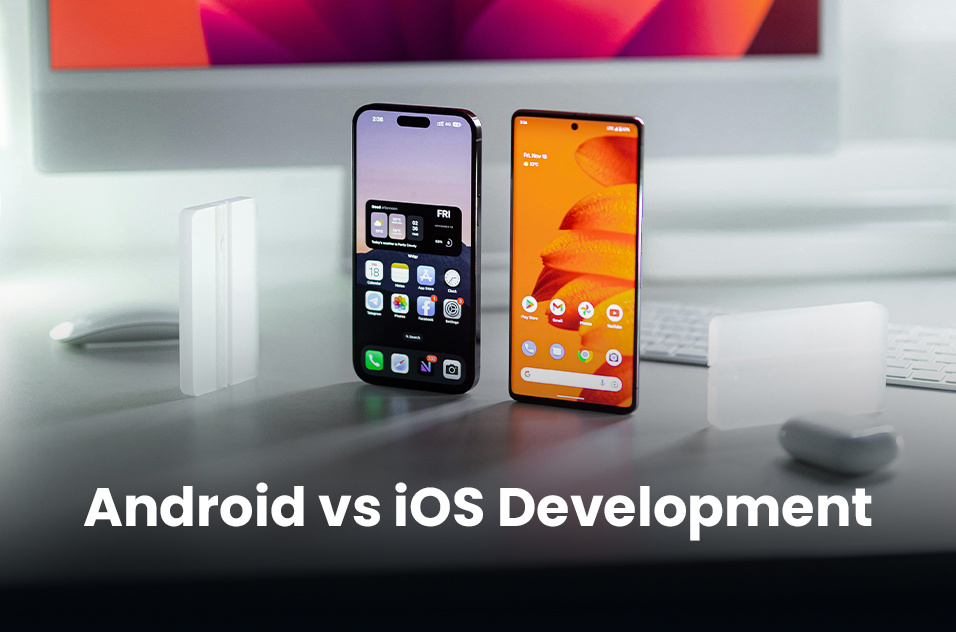
Moreover, due to the competition, the organizations had to reconsider the approach to application development. It required creating software products for different screen size, operating system, and speed of the device. In reality, the Android and iPhone set the standards for mobile software.
The rise of the app economy
Android vs iPhone did not only change phones. It created the app economy. Social media, gaming, ride-hailing, food delivery, mobile banking, and streaming all grew because smartphones made them easy to use anywhere. Phones became the main screen for daily life.
This shift changed how people spent time. Instead of waiting to use a desktop computer, users could browse, chat, pay bills, order food, and watch video from their phone. For many people, the smartphone became their first and only computer.
The app economy also changed how companies earned money. Some apps relied on ads. Others used subscriptions. Some made money through in-app purchases. The Android vs iPhone split mattered here because iPhone users often spent more, while Android gave developers a much larger total audience.
Android vs iPhone and daily life
The effect of Android vs iPhone reached far beyond the tech industry. It changed how people communicate, travel, and manage money. Messaging apps replaced SMS in many markets. Maps turned the phone into a navigation tool. Mobile wallets made payments faster and easier.
It also changed how people take photos and record memories. Phones improved so fast because the rivalry pushed camera upgrades, better chips, and stronger battery life. Each generation tried to outdo the other in areas users notice every day.
This competition made smartphones more central to social life. People use them for work calls, family chats, news, shopping, and entertainment. The result is a world where the phone is not just a device. It is a daily companion.
The cultural divide
The Android vs iPhone debate became cultural as well as technical. In many countries, iPhone became a status symbol. Android became the practical choice for value, flexibility, and wider access. That split gave the rivalry a social meaning that went beyond specs and features.
In the United States, the iPhone has strong brand power and loyalty. In many other regions, Android dominates because it offers more price points and more device types. That difference helped define how people saw each platform. Some users wanted premium polish. Others wanted freedom and choice.
This cultural layer helped the rivalry stay relevant for years. People did not only compare battery life or camera quality. They also compared identity, taste, and status.
Innovation driven by pressure
One reason Android vs iPhone changed the world is that it forced both sides to move faster. Each company kept borrowing ideas, improving them, and trying to make them feel better than the other side’s version. That pressure raised the pace of innovation across the industry.
Features that are now standard were once battlegrounds. App stores, fingerprint unlock, facial recognition, mobile payments, voice assistants, waterproof design, large displays, and advanced cameras all became areas of fierce competition. The result was a much faster product cycle than the old mobile phone market ever had.
This is one of the clearest reasons the smartphone war mattered. Without that rivalry, progress may have been slower and less focused on everyday use.
The wider tech world
Android vs iPhone also changed other parts of technology. Tablets, smartwatches, smart home devices, and wearables all had to fit into a mobile-first world. Companies that once focused on desktop products had to adapt quickly or risk becoming irrelevant.
The rivalry also shaped how software companies planned launches. Many apps now ship first on iPhone because the users may spend more, then expand to Android to reach a larger audience. That pattern affected development budgets, testing, and marketing plans.
Even hardware companies outside the phone market had to pay attention. The smartphone became the hub that connects other devices. That made phones more important than laptops for many users.
The world after the war
By 2026, the Android vs iPhone war is no longer about one side destroying the other. It is about two mature systems that still shape modern life. Android leads in global reach. iPhone leads in profit and ecosystem strength. Both remain central to the digital economy.
The real legacy of the rivalry is not just the survival of two brands. It is the fact that almost every person on earth now lives in a mobile-first world. We shop on phones, learn on phones, work on phones, and entertain ourselves on phones. That shift was made possible by the fight between Android and iPhone.
Conclusion
Android vs iPhone revolutionized the world by making the smartphone its primary instrument of the modern age. This competition affected the fields of business, culture, design, and construction and use of digital services. One technology dominated in terms of reach. The other took the lead in revenue. The combination gave rise to the mobile age of 2026.
In case you are using this for your SEO article, make sure to keep the phrase “Android vs iPhone” at the beginning, a couple of subheadings, and throughout the text.