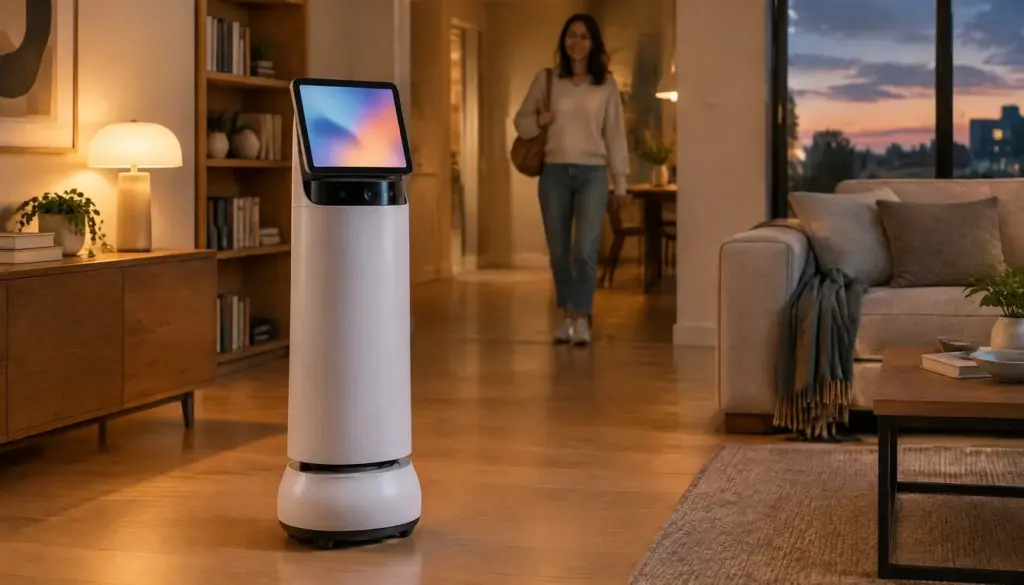
Apple is reportedly developing an AI-powered home robot designed to make everyday household interactions more convenient. The device, internally codenamed J595, could serve as a smart home companion, allowing users to make FaceTime calls, control connected lights and manage other household functions.
According to reports, Apple could market the device as the HomeView Ultra, building on its recently introduced HomeView stationary smart display. The company is targeting a launch in 2027, with an expected starting price of $1,000 or more. However, ongoing development challenges could push the launch timeline to 2028.
The project reflects Apple’s growing ambitions in artificial intelligence and smart home technology, as the company looks to expand beyond its traditional portfolio of smartphones, computers and wearable devices.

Credits: Mashable
Apple home robot has been in development since 2018
Apple’s home robotics ambitions are not entirely new. The earliest prototypes of the device reportedly date back to 2018, when former CEO Tim Cook approved the project.
Since then, Apple engineers have continued refining the hardware and software, with an emphasis on making the robot more useful than a conventional smart display. The development team is reportedly working to integrate additional artificial intelligence capabilities that could allow the device to respond more intelligently to users and their household needs.
Under new CEO John Ternus, the project has reportedly received continued backing, with engineers exploring ways to expand its functionality beyond FaceTime calls and smart home controls.
The development timeline also highlights the complexity of Apple’s robotics ambitions. Unlike stationary smart speakers, a home robot would need to combine intelligent software, responsive interfaces and potentially more advanced physical capabilities.
Apple is developing another robot to fold clothes
Alongside the home companion, Apple is reportedly exploring another robotics project focused on household chores, particularly folding clothes.
The second initiative could involve robotic arms and specialised manipulators capable of handling clothing and performing physical tasks. Such technology would represent a considerably different engineering challenge compared with the proposed FaceTime-enabled home robot.
Apple’s robotics team is reportedly relatively small, comprising approximately 10 dedicated robotics specialists. However, the software development team is significantly larger, with around 300 employees working on related technologies.
This difference in team sizes suggests that Apple is placing considerable emphasis on the artificial intelligence and software capabilities needed to make its robotic products functional and intuitive.
AI and smart home technology drive Apple’s robotics ambitions
The reported projects indicate that Apple is exploring how artificial intelligence can extend beyond digital assistants and into physical household environments.
A home robot capable of facilitating video calls, managing connected appliances and responding to everyday requests could become another entry point into Apple’s wider ecosystem. It could also strengthen the company’s position in the smart home market, where it already offers connected devices and software through its Home platform.
However, the proposed $1,000-plus price tag could make the device a premium offering, placing considerable importance on its practical capabilities.
With a potential 2027 launch still subject to development delays, Apple’s home robot remains a work in progress. If successful, the project could mark a significant step in the company’s efforts to bring AI-powered robotics into everyday consumer life.

Credits: TweakTown
Conclusion:
Apple’s reported home robotics projects signal a broader shift in the company’s approach to artificial intelligence, moving beyond software-driven experiences towards physical automation. While the FaceTime-enabled home robot could strengthen its smart home ecosystem, the proposed clothes-folding robot points to ambitions in household automation. However, developing reliable robots capable of performing everyday tasks remains a significant engineering challenge. The potential $1,000-plus price tag also raises questions about consumer demand and practical value. With a possible launch in 2027 or 2028, Apple’s ability to combine AI, robotics and user-friendly design will determine whether these products can become mainstream household companions.