Australia’s music industry is taking a major step in the growing debate over artificial intelligence and creativity by banning songs that are wholly or primarily generated by AI from the country’s official music charts. The Australian Recording Industry Association (ARIA), which oversees Australia’s major music rankings, has introduced new rules requiring chart-eligible recordings to be substantially human-made.
The new policy is expected to reshape how AI-generated music is treated within Australia’s commercial music industry. While artificial intelligence has quickly become a powerful tool for musicians, producers and creators, ARIA’s decision draws a clear distinction between AI being used as an assistant and AI effectively becoming the main creator of a song.
Under the updated rules, songs that rely on generative AI to create the entirety or primary portion of their creative elements will not be eligible for the ARIA Charts. However, artists will still be allowed to use AI as a supporting tool. Music can qualify for the charts when human creativity remains central to the songwriting, performance and production process.
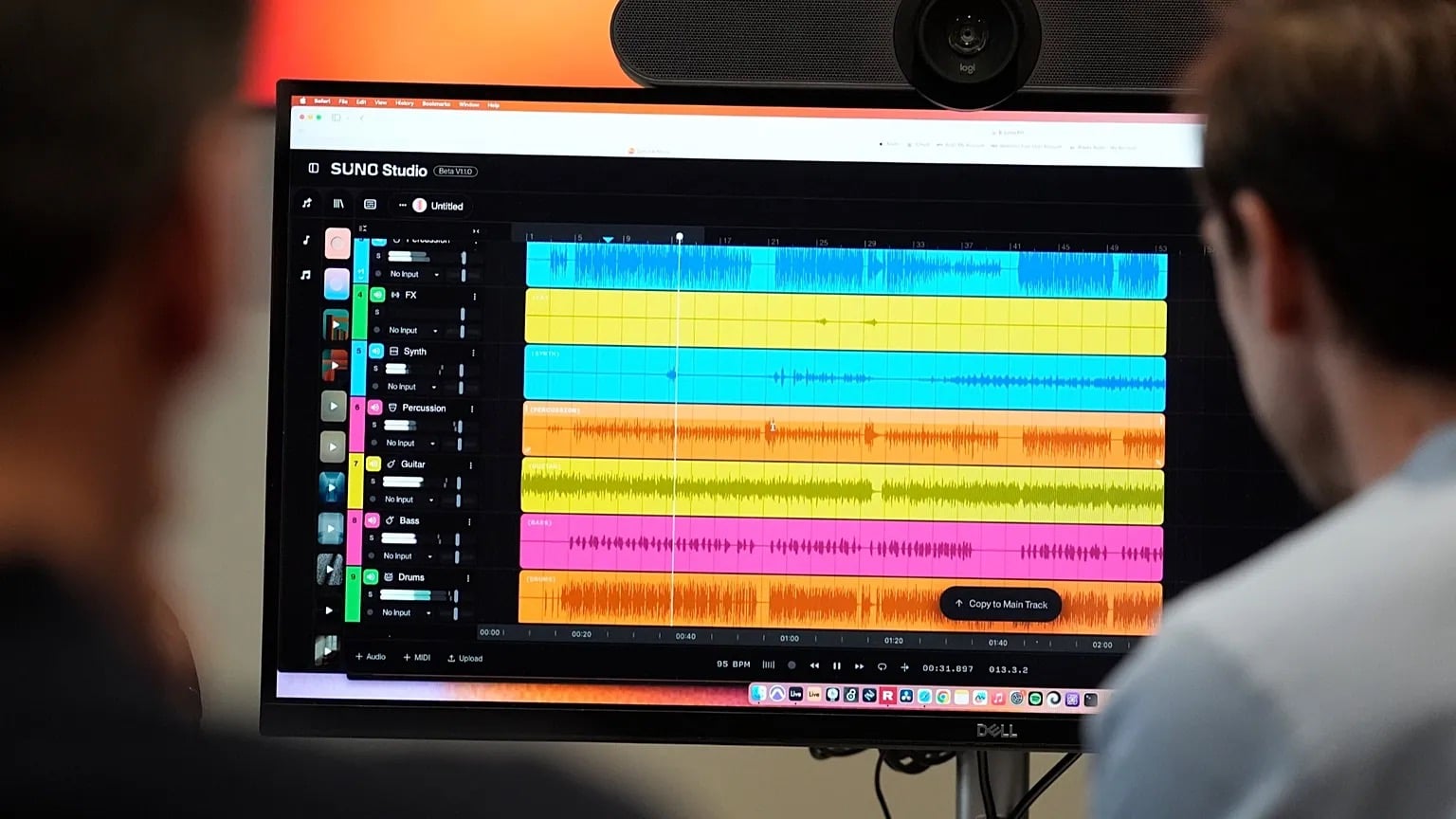
The decision comes at a time when AI-generated music is becoming increasingly difficult to distinguish from traditionally produced recordings. Generative AI platforms can now create vocals, lyrics, melodies, instrumental arrangements and production elements within minutes. This has opened new creative possibilities for musicians, but it has also raised questions about copyright, artistic ownership, transparency and the economic future of human performers.
One of the immediate catalysts for Australia’s decision was controversy surrounding an AI-assisted version of Madonna’s “Like a Prayer”. Produced by Queensland DJ and producer Josh Fawaz, the recording became a major success on Australian radio and climbed high on the ARIA charts. The track reportedly became one of the country’s most-played songs and reached the top positions of ARIA rankings.
The song attracted attention after the use of AI became public. Fawaz acknowledged that artificial intelligence had been used to create elements including vocals and drums. Its success highlighted the growing difficulty for traditional music organisations in determining whether a commercially successful recording should compete on equal terms with music created primarily by human musicians.
For ARIA, the issue is not simply whether AI appears somewhere in the production process. Modern music production already relies heavily on digital technologies, and artists frequently use software to modify vocals, improve sound quality, arrange instruments or experiment with new sounds.
Instead, the central question is how much of the creative work is actually human.
This distinction allows musicians to continue experimenting with AI without automatically losing their eligibility for the charts. An artist who uses an AI program to assist with production, generate ideas or perform a limited technical task could still qualify. But a recording in which AI creates the primary vocals, instrumental elements or other central creative components could be excluded.
The change also applies to ARIA Awards eligibility, increasing the significance of the policy. A song cannot simply achieve commercial popularity and then expect recognition through Australia’s major music awards if it fails to meet the new requirements.
ARIA has also given itself greater authority to deal with recordings that are later found to be ineligible. Under the updated rules, chart positions can be changed, recordings can be removed and awards can potentially be revoked. Artists and their representatives will have the opportunity to challenge decisions through the organisation’s dispute process.
The move reflects wider concerns within the global recording industry about the impact of generative AI. Music companies and artists have increasingly questioned how AI systems are trained, particularly when models learn from copyrighted recordings without permission. There are also concerns that AI-generated music could flood streaming services and make it harder for human musicians to gain visibility.
For emerging artists, this is particularly important. Music charts are not merely lists of popular songs. They can influence radio play, festival bookings, award nominations, label interest and an artist’s overall career trajectory. If AI-generated tracks are able to compete with human artists at enormous scale, musicians fear that genuine creative work could become harder to discover.
At the same time, the new rules are likely to generate debate over what exactly qualifies as “substantially human-made” music. The boundary between human creativity and machine assistance is becoming increasingly complicated. A producer might use AI to generate a melody, modify it extensively and then combine it with human-written lyrics and live instrumentation. Another artist might use AI-generated vocals but write and arrange the entire song themselves.
Determining where one category ends and another begins could therefore become one of the biggest challenges for the music industry.
The policy also raises questions about transparency. As AI becomes embedded in ordinary music-production software, listeners may increasingly want to know whether the voice they are hearing belongs to a real performer, whether the lyrics were written by a person and whether the instrumental arrangement was created by humans.
Australia’s approach attempts to address these concerns without completely rejecting artificial intelligence. Rather than banning musicians from using AI, ARIA is establishing a rule for official recognition: technology can assist the artist, but it should not replace the human creative contribution.
The decision could influence other countries and chart organisations as they confront similar challenges. If AI-generated songs continue to gain popularity, more music institutions may introduce their own eligibility requirements, disclosure rules or restrictions.
For now, Australia is sending a strong message about what its official charts are intended to represent. In an industry increasingly shaped by algorithms and synthetic creativity, ARIA wants its rankings to continue reflecting the work of human artists.
The debate over AI and music is far from over. Artificial intelligence will almost certainly remain part of the creative process, and its capabilities will continue to improve. Australia’s new rules, however, establish an important principle: when it comes to official chart recognition, human artistry must remain at the heart of the music.