China is quietly laying the groundwork for what could become one of the most important regulatory systems of the AI era: a nationwide digital identity program for humanoid robots.
Under a new government-backed initiative, every humanoid robot manufactured in China could soon receive a unique identification code that tracks it throughout its entire operational life. From manufacturing and sales to software updates, repairs, and eventual recycling, the robot’s journey would be digitally documented from beginning to end.
At first glance, it may sound like simple inventory management. In reality, it signals something much bigger: China is preparing for a future where humanoid robots become a permanent part of society — and it wants control mechanisms in place before that future fully arrives.

Credits: Digital Trends
A Digital “License Plate” for Robots
The initiative is part of China’s broader Humanoid Full Lifecycle Management Service Platform, overseen by the country’s Ministry of Industry and Information Technology through the Humanoid Robotics and Embodied Intelligence Standardisation committee.
The system would assign every humanoid robot:
- A unique digital identity code
- Lifecycle tracking records
- Standardised compliance documentation
That identity would stay attached to the robot through every stage of its existence, including:
- Manufacturing
- Distribution and sale
- Commercial or personal use
- Repairs and maintenance
- Software upgrades
- Recycling or disposal
In many ways, the framework resembles how cars are tracked through VIN numbers and registration databases. But unlike vehicles, humanoid robots are powered by AI systems that can learn, evolve, and operate semi-autonomously. That makes regulation significantly more complex.
Why China Is Moving So Early
Timing is everything here.
Humanoid robots are rapidly moving beyond flashy tech demos and entering real-world environments such as warehouses, factories, elder care facilities, hotels, and even security operations.
China appears determined to avoid the kind of chaotic, fragmented oversight that often follows emerging technologies. Instead of waiting for accidents or legal disputes to force regulation, Beijing is building the infrastructure now.
This strategy mirrors China’s earlier approach to industries like electric vehicles, drone technology, facial recognition systems, and digital payments. In each case, the country pushed aggressive industrial growth while simultaneously creating centralised standards and oversight systems.
The goal is not just domestic control — it is global influence.
The Bigger Goal: Setting Global Standards
One of the most significant aspects of this development is geopolitical rather than technological.
Countries that establish early standards in emerging industries often shape how those industries evolve globally. China already understands this well from its experience in 5G infrastructure, EV batteries, and renewable energy supply chains.
Humanoid robotics may be the next battleground.
If Chinese standards become widely adopted, international robotics companies could eventually be forced to align with China’s compliance frameworks to access manufacturing ecosystems, suppliers, or even global markets.
That matters because competition in humanoid robotics is accelerating quickly. Major players around the world are investing heavily in the sector, including companies like Tesla, Boston Dynamics, Figure AI, and Agility Robotics.
China wants to ensure it is not just manufacturing robots — but also defining the rules that govern them.
Why Governments Are Nervous About Humanoid Robots
Unlike traditional industrial machines, humanoid robots combine physical mobility with AI-driven decision-making and direct human interaction.
That creates entirely new categories of risk.
If a humanoid robot malfunctions, the consequences are no longer confined to software glitches. A faulty system could physically harm people, misuse data, or behave unpredictably in public environments.
This raises difficult questions regulators are increasingly trying to answer:
- Who is liable if a robot injures someone?
- How are AI software updates monitored?
- Can modified robots still meet safety standards?
- Should governments be able to identify malfunctioning units remotely?
A centralized digital identity system could eventually help authorities track accountability more effectively.
Privacy Concerns Are Inevitable
Of course, any system built around centralized digital identities raises serious concerns about surveillance and data governance.
Critics will likely question how much information humanoid robots could collect, how that data may be stored, and whether usage behavior could eventually be monitored at scale.
Those concerns become even more significant if robots enter homes, hospitals, schools, and public-facing workplaces.
The debate echoes earlier fears surrounding smart devices, facial recognition cameras, and autonomous vehicles — except humanoid robots combine AI intelligence with physical presence.
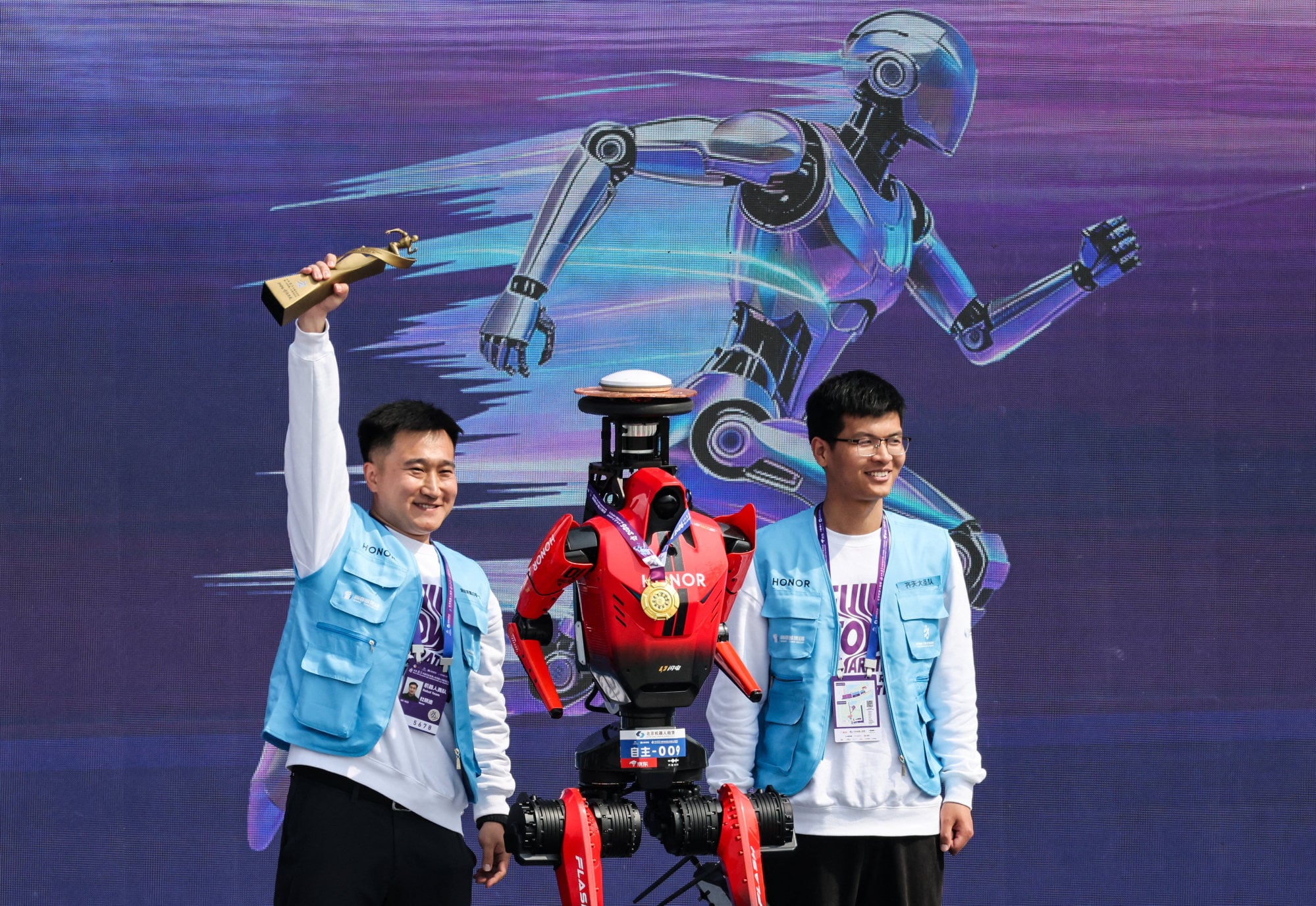
Credits: South China Morning Post
Robots Are No Longer Science Fiction
For years, humanoid robots were treated as futuristic curiosities or viral internet spectacles. That perception is changing rapidly.
As AI systems become more capable and robotics hardware becomes cheaper, governments are beginning to treat humanoid robots as critical infrastructure that requires oversight, accountability, and regulation.
China’s digital identity initiative makes one thing clear: the age of intelligent machines is no longer theoretical.
And Beijing wants to build the rulebook before the rest of the world catches up.