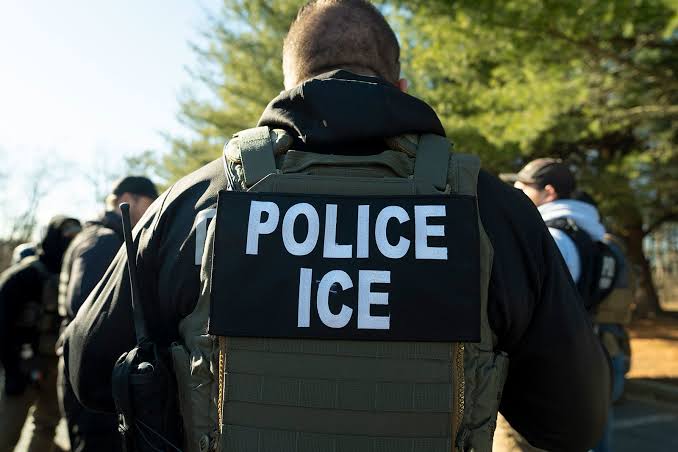
A mobile app designed to crowdsource the locations of Immigration and Customs Enforcement (ICE) officers has drawn sharp criticism and threats from the Trump administration, raising alarm among digital rights advocates and press freedom groups. The app, called ICEBlock, allows users to report sightings of ICE agents in real time, helping community members avoid areas where immigration enforcement operations may be underway.
The app was launched as ICE activity intensified in Los Angeles, sparking protests and condemnation from city leaders, including the mayor, who has called the raids “entirely unnecessary.” The political response has quickly escalated, with federal officials publicly targeting the developer and suggesting legal action against the media for covering the app’s existence.
App Becomes Target of Trump Administration
ICEBlock’s developer, Joshua Aaron, has come under intense scrutiny following coverage of the app’s growing use during ICE operations in Los Angeles. The app, available on Apple’s iOS platform, has enabled users to flag ICE activity in specific neighborhoods, giving others the opportunity to steer clear of potential raids.
The U.S. Attorney General, Pam Bondi, speaking on Fox News, confirmed that the federal government was monitoring Aaron and expressed concern over the app’s intent and consequences. While no formal charges have been filed, Bondi’s comments have been widely interpreted as a threat, prompting civil liberties groups to argue that such public targeting is a violation of free speech rights.
There has been no public evidence suggesting that ICEBlock interferes with law enforcement activities. Legal experts point out that sharing public sightings of government agents does not constitute obstruction, particularly when the information is collected and shared lawfully.
Free Speech and Press Protections in the Spotlight
The Trump administration has also extended its criticism to media outlets that have reported on ICEBlock, particularly CNN. Homeland Security Secretary Kristi Noem told the press that the Department of Justice was exploring whether coverage of the app could be grounds for prosecution. She claimed that the reporting might be encouraging individuals to avoid law enforcement efforts.
The statements were met with concern from First Amendment advocates, who emphasized that media organizations have a constitutionally protected right to report on public interest stories, including the existence and use of mobile apps. Coverage of a tool that informs people about law enforcement activity, they noted, does not equate to encouraging illegal behavior.
CNN responded by clarifying that simply reporting on an app does not constitute endorsement or wrongdoing, and legal analysts agree that such threats against the media are unlikely to hold up in court.
Administration Links App to Violence Without Evidence
The White House has also attempted to link the ICEBlock app to an alleged increase in violence against immigration officers. While federal officials claimed there had been a significant rise in threats or incidents involving ICE agents, no supporting data was provided. Moreover, they did not acknowledge that the number and visibility of ICE operations in public areas had grown substantially, which could independently account for more frequent public confrontations.
Critics argue that blaming an informational app for such developments deflects from the larger issue: the aggressive nature of recent raids, which have taken place at workplaces and in residential neighborhoods, often without clear communication or coordination with local authorities.
Local Leaders Push Back Against Federal Tactics
In Los Angeles, city officials have spoken out against the raids and the broader strategy of using federal immigration enforcement as a political tool. Mayor Karen Bass, in public remarks in June 2025, questioned the administration’s shift from targeting individuals with criminal warrants to conducting broad sweeps in workplaces and other community settings.
Her comments reflected growing frustration among local leaders, who say these operations have disrupted lives and businesses while stoking fear among immigrant communities. The mayor emphasized that many of those targeted are simply trying to earn a living, rather than posing a danger to public safety.
Demonstrations have erupted across the city in response to the raids, with activists and community members denouncing what they describe as indiscriminate enforcement. The app ICEBlock has been widely used in these neighborhoods, not to obstruct ICE agents directly, but to provide a network of alerts for vulnerable individuals.
Constitutional Questions Raised
Civil liberties groups have raised serious concerns about the Trump administration’s response to ICEBlock, calling it an attempt to suppress free speech and intimidate developers and journalists. Organizations such as the American Civil Liberties Union and the Electronic Frontier Foundation have suggested that any government effort to silence app creators or the press could have wide-reaching implications for digital rights and freedom of expression.
They argue that allowing the federal government to dictate what can or cannot be shared in public spaces—or to punish platforms or news outlets for reporting it—sets a dangerous precedent.