Air travel depends on predictability. Flight paths are mapped, timings calculated, risks assessed long before a plane leaves the ground. That system breaks down quickly when the sky itself becomes uncertain. Over the past 48 hours, the airspace above the United Arab Emirates has offered a clear example of how fast that shift can happen.
The UAE moved to restrict its airspace after intercepting a wave of missiles and drones launched from Iran, according to official notices issued to pilots. These NOTAMs, or Notices to Airmen, are usually technical updates. This time, they carried a blunt message: large parts of the country’s flight information region were only partially open, and aircraft could enter or exit only through tightly controlled routes.
The restrictions followed a brief period of calm. Just two days earlier, authorities had said precautionary measures were lifted and the airspace was clear. That window closed quickly. By Monday, air defence systems were active again, responding to incoming threats that forced airlines to change plans mid-flight.
Passengers and residents described hearing explosions across cities including Dubai and Abu Dhabi. Witness accounts spoke of bright streaks in the sky as interception systems engaged targets overhead. The UAE Ministry of Defence later confirmed that multiple missiles and drones had been neutralised before reaching their intended targets.
The numbers shared by officials point to the scale of the situation. On May 4 alone, the UAE said it intercepted ballistic missiles, cruise missiles and unmanned aerial vehicles in a single coordinated response. Since the conflict began, hundreds of such threats have been tracked and countered. While most have been stopped mid-air, some have still caused damage on the ground.
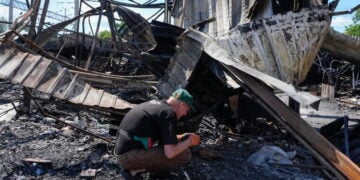
One such incident occurred in Fujairah, where a drone strike triggered a fire at an oil facility. Emergency crews contained the blaze, but not before several people were injured. Authorities issued temporary shelter advisories before lifting them once the immediate danger passed.
In aviation terms, even the possibility of debris in the air can trigger disruption. Airlines began diverting flights almost immediately. Aircraft bound for major hubs were rerouted to nearby countries, including Oman, or placed in holding patterns while crews waited for clearance. Some flights turned back entirely.
Data from flight tracking services showed planes circling over parts of Saudi Arabia or diverting toward Muscat rather than continuing into UAE airspace. For pilots, the instructions were clear: avoid risk zones, follow designated corridors, and expect delays.
The impact was most visible at Dubai International Airport, one of the busiest international transit points in the world. Incoming flights were delayed or redirected, while departures faced scheduling changes. Operations resumed after brief suspensions, but the backlog of aircraft created ripple effects across routes.
Nearby airports, including those in Abu Dhabi and Sharjah, experienced similar strain. With fewer entry points available, air traffic controllers had to manage a tighter flow of aircraft. That meant longer wait times in the air and more complex routing decisions.
Airlines responded in real time, adjusting flight paths and updating passengers as conditions changed. The situation remained fluid, shaped by both security developments and the technical limits of managing crowded airspace under restrictions.
Conflict spills into civilian air routes as risks spread across the region
What is happening over the UAE is not an isolated aviation issue. It reflects a wider pattern in which regional conflict is increasingly intersecting with civilian infrastructure. Airspace, like shipping lanes, becomes a shared zone where military activity and commercial movement collide.
The current escalation is tied to tensions involving the United States and Iran, with flashpoints across key areas such as the Strait of Hormuz. This narrow passage handles a large share of the world’s oil shipments, and it also sits beneath busy flight paths connecting Europe, Asia and the Middle East.
When missiles or drones are launched in or near such corridors, the consequences are immediate. Even intercepted threats create risk. Debris can fall, radar systems can be affected, and uncertainty spreads quickly among airlines and regulators.