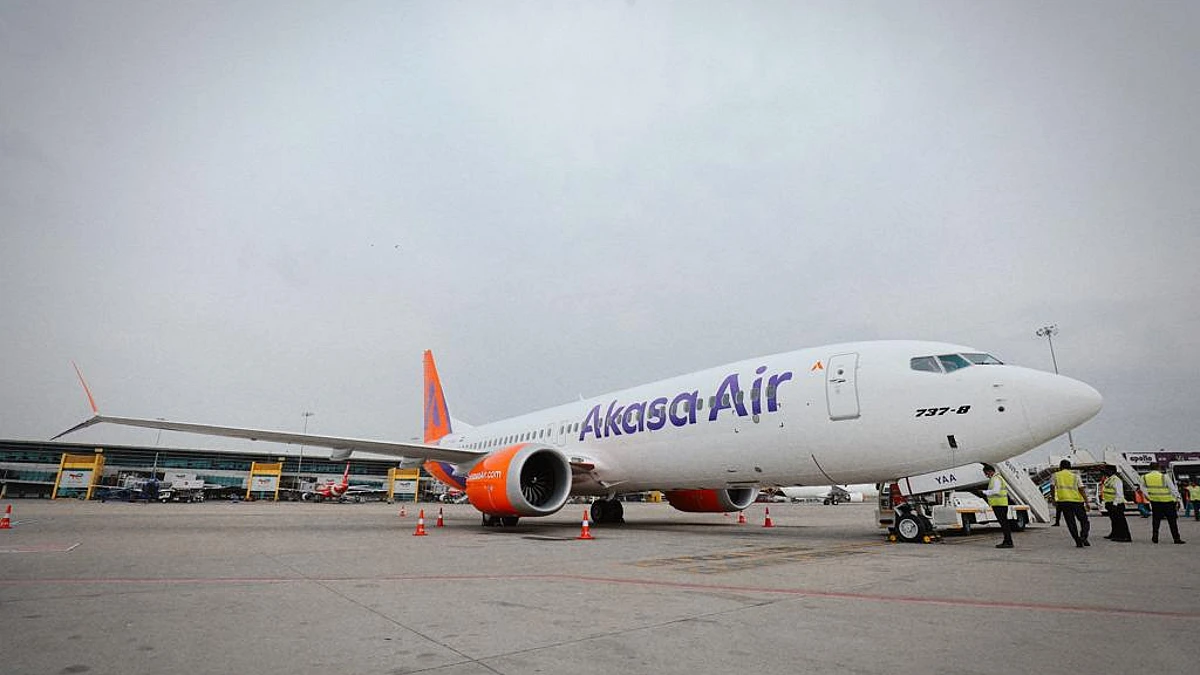
India’s youngest airline, Akasa Air, has made another strong move toward the skies. The airline recently raised about ₹1,200 crore ($125 million) in a strategic investment round, a signal that investors continue to back its bold vision even in the challenging aviation sector.
Credits: Ascendants
Key Investors Back the Akasian Dream
The funding round has brought some prominent names into what the airline calls its “Akasian family.”
-
Premji Invest – the investment arm of billionaire Azim Premji.
-
360 ONE Asset – a major Indian asset management firm.
-
Claypond Capital – the family office of Ranjan Pai.
-
Jhunjhunwala Family – continuing their support as original marquee investors.
For an airline that only took flight in 2022, this diverse mix of investors is a strong vote of confidence in its disciplined approach to growth and its long-term vision.
Aiming for the Global Stage
The new funds won’t just go into keeping planes in the air—they’re earmarked for ambitious expansion plans. Akasa has set its sights on becoming one of the world’s top 30 carriers by 2030, and the investment will be used to:
-
Grow its fleet aggressively to cover both domestic and international routes.
-
Step up expansion into Southeast Asia and beyond.
-
Enhance passenger experience with better service, reliability, and technology-driven solutions.
-
Strengthen its operational backbone with safety and infrastructure investments.
CEO Vinay Dube put it simply: “In just three years, Akasa has flown over 20 million passengers.” With a current fleet of 30 aircraft, the airline has momentum on its side.
Riding Out the Turbulence of Early Losses
Like most new airlines, Akasa Air has had to navigate financial headwinds. Its net loss widened from ₹1,670 crore in FY24 to about ₹1,983 crore in FY25, according to Business Standard. Rising fuel prices, higher airport charges, aircraft maintenance costs, and foreign exchange pressures have all contributed to these numbers.
Yet, here’s the silver lining: Akasa remains net cash positive in operations. This means that despite the losses, its day-to-day business generates enough cash to sustain operations while still pushing for growth. For investors, this is a crucial sign that the airline isn’t burning money recklessly but rather building strategically for the long haul.
Why This Funding Matters for Indian Aviation
The significance of Akasa’s latest funding goes beyond the airline itself. It underscores a larger shift happening in India’s aviation industry:
-
Investor Confidence – The continued interest from top investors signals that India’s aviation story is only getting stronger.
-
Market Competition – With IndiGo dominating and Air India undergoing a massive revival, Akasa adds a fresh competitive force, giving passengers more choices.
-
India as a Global Hub – As the government pushes for India to become an international aviation hub, Akasa’s global ambitions align perfectly with that goal.
For the sector, the entry of a strong, well-funded low-cost carrier means healthier competition, better pricing, and a more sustainable ecosystem.
A New Chapter for Low-Cost Carriers
Akasa Air is not just positioning itself as another budget airline—it’s trying to redefine the low-cost experience. By combining competitive fares with strong operational discipline, the airline hopes to stand apart in a market where profitability often seems elusive.
Backed by deep-pocketed investors and a leadership team that emphasizes safety, technology, and customer experience, Akasa is building a foundation that could very well turn it into one of India’s aviation success stories.

Credits: Hindustan Times
The Road Ahead
The journey won’t be easy. The airline still faces external risks like fuel price volatility, forex challenges, and regulatory changes. But if it maintains its growth trajectory while keeping financial discipline, Akasa could emerge as one of the biggest success stories in global low-cost aviation.
For now, the message is clear: Akasa Air is here not just to fly, but to soar.