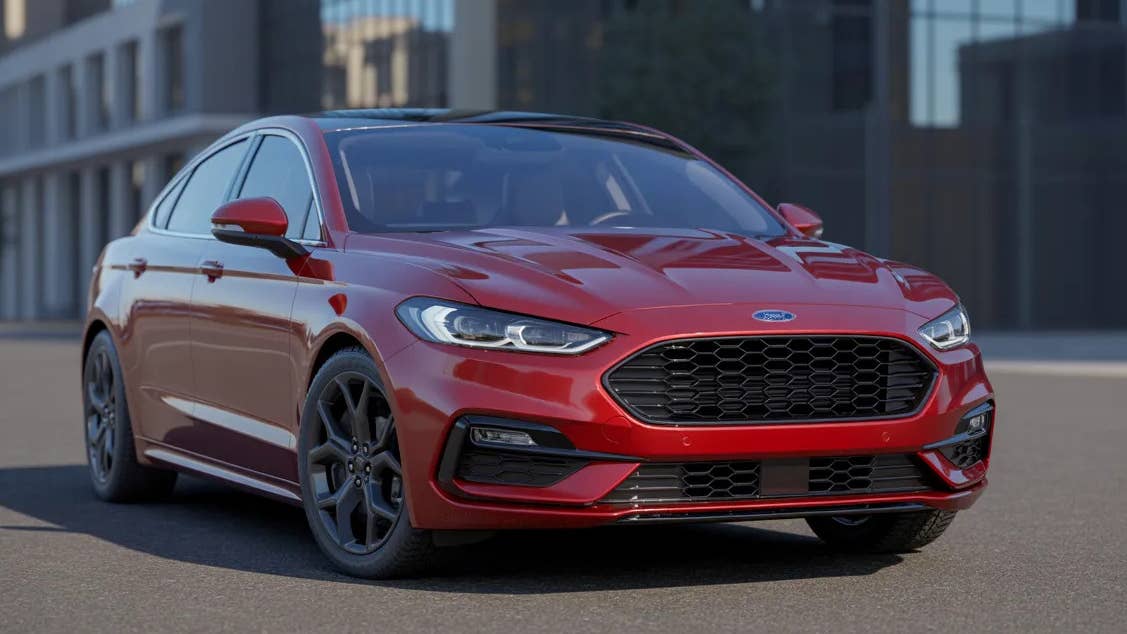
For years, Ford’s decision to walk away from sedans was seen as one of the boldest moves in the American auto industry. While competitors continued selling family cars, Ford doubled down on trucks, SUVs, and crossovers.
Six years later, the company says it has no regrets.
Yet beneath that confidence, there are signs that Ford may not have completely shut the door on passenger cars.
Speaking recently with Automotive News, Andrew Frick, who leads Ford’s Blue and Model E business divisions, made it clear that the company stands by its decision to discontinue models like the Focus, Fusion, and Fiesta. But he also acknowledged that Ford continues to evaluate opportunities outside its current lineup.
That has reignited speculation about whether a Ford sedan could one day return to American showrooms.
The Decision That Changed Ford’s Direction
When Ford phased out its sedans after the 2019 model year, many enthusiasts were disappointed. The Fusion had built a loyal following, the Focus remained popular globally, and the Fiesta had long been one of the brand’s most recognizable small cars.
From a business perspective, however, Ford saw a different reality.
The company was spending billions competing in segments where rivals such as Toyota and Honda consistently held the upper hand. Instead of fighting for a smaller slice of the sedan market, Ford redirected those resources into products where it believed it could dominate.
That gamble led to vehicles like the Bronco, Bronco Sport, Maverick, and expanded Raptor lineup.
Looking back, Ford believes the strategy worked exactly as intended.
According to Frick, those investments allowed the company to create products that resonated more strongly with buyers and delivered better returns.
Why Sedans Became a Tough Business
Even at its peak, Ford’s sedan business struggled to match the success of its Japanese competitors.
Take the Fusion. In 2014, the midsize sedan delivered its strongest sales year ever, crossing the 300,000-unit mark. Impressive as that sounds, it still lagged well behind segment leaders such as the Toyota Camry and Honda Accord.
Meanwhile, Ford’s F-Series trucks continued to generate massive sales numbers and stronger profits.
The economics were difficult to ignore.
Sedans generally sell at lower price points than SUVs and trucks, leaving manufacturers with thinner margins. Developing an all-new generation of cars requires enormous investment, and recovering those costs becomes increasingly challenging when demand is shifting elsewhere.
A Different Market Than Before
The market Ford exited in 2019 isn’t the same market that exists today.
Vehicle prices have climbed dramatically over the past few years, making affordability a growing concern for many buyers. At the same time, some consumers are beginning to reconsider whether they need large SUVs for everyday driving.
That changing landscape has sparked fresh conversations across the industry about the role of sedans.
Earlier this year, Ford CEO Jim Farley described the sedan segment as “very vibrant.” While he admitted profitability remains a challenge, his comments suggested Ford is still paying attention to developments in the category.
Could a Mustang Sedan Be the Answer?
If Ford does decide to re-enter the sedan market, don’t expect another Fusion.
Frick hinted that any future passenger car would likely be developed from an existing vehicle family rather than as an entirely new standalone model. More interestingly, he pointed to opportunities within the Mustang brand.
That remark has fueled speculation about a four-door Mustang-inspired vehicle, something that has been rumored for years but never officially materialized.
Such a model would allow Ford to leverage one of its strongest automotive nameplates while offering buyers a more practical alternative to the traditional coupe.
For now, though, it remains just that: speculation.
Trucks and SUVs Still Come First
Despite the renewed discussion around sedans, Ford’s priorities haven’t changed.
The company remains focused on expanding its truck, SUV, performance, and electric vehicle businesses. Achieving stronger profitability remains a key objective, and higher-margin vehicles continue to lead that strategy.
Still, the fact that Ford executives are once again talking about sedans is notable in itself.
A few years ago, the conversation seemed over.
Today, it sounds like Ford is at least willing to listen.