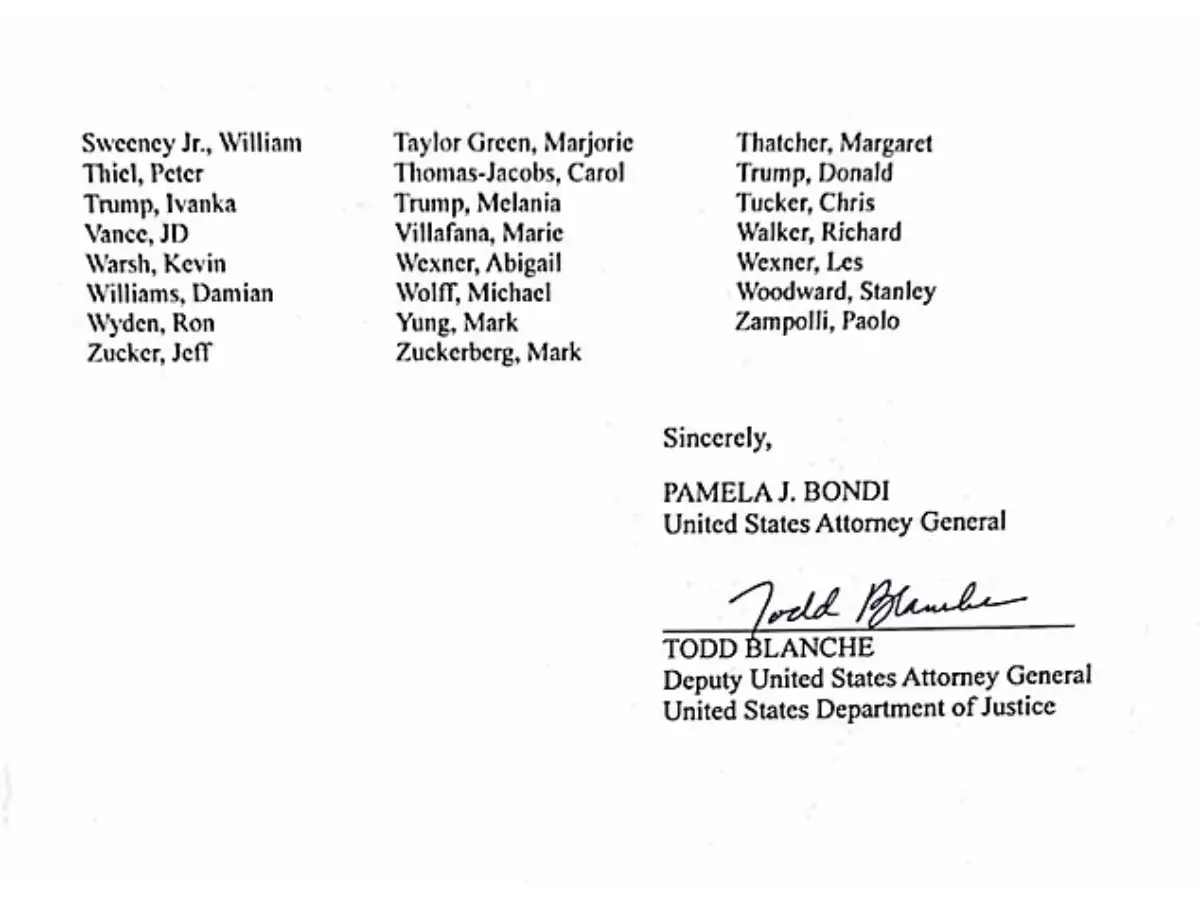
The U.S. Department of Justice said it has released all records in its possession related to Jeffrey Epstein under the Epstein Files Transparency Act, but the move has set off a political storm over the way the material was presented and the decision to publish a list of more than 300 prominent names whose connection to the case varies widely in substance and context.
In a letter to Congress, Attorney General Pam Bondi wrote that the department had complied with the statute’s requirement to disclose “all records, documents, communications and investigative materials” tied to Epstein and his longtime associate, Ghislaine Maxwell. The department also included a roster of individuals described as government officials or “politically exposed persons” whose names appear at least once in the files.
The release runs into millions of pages and covers a broad span of material, from internal Justice Department emails and investigative memoranda to references in contact books and email chains. Bondi stated that no record was withheld or redacted on the basis of embarrassment or political sensitivity, though she acknowledged that some omissions may have occurred because of the volume and speed of the disclosure. Portions of the records were redacted to protect victims’ identities and other law enforcement interests.
What has drawn criticism is not only the breadth of the release but the way the list of names was presented. The roster includes figures from politics, business, entertainment and royalty, among them current and former U.S. presidents, members of Congress, technology executives and musicians. It also includes cultural figures who died decades ago. The department has stressed that the appearance of a name does not imply wrongdoing, and that some names appear in contexts such as media clippings or third-party references unrelated to criminal conduct.
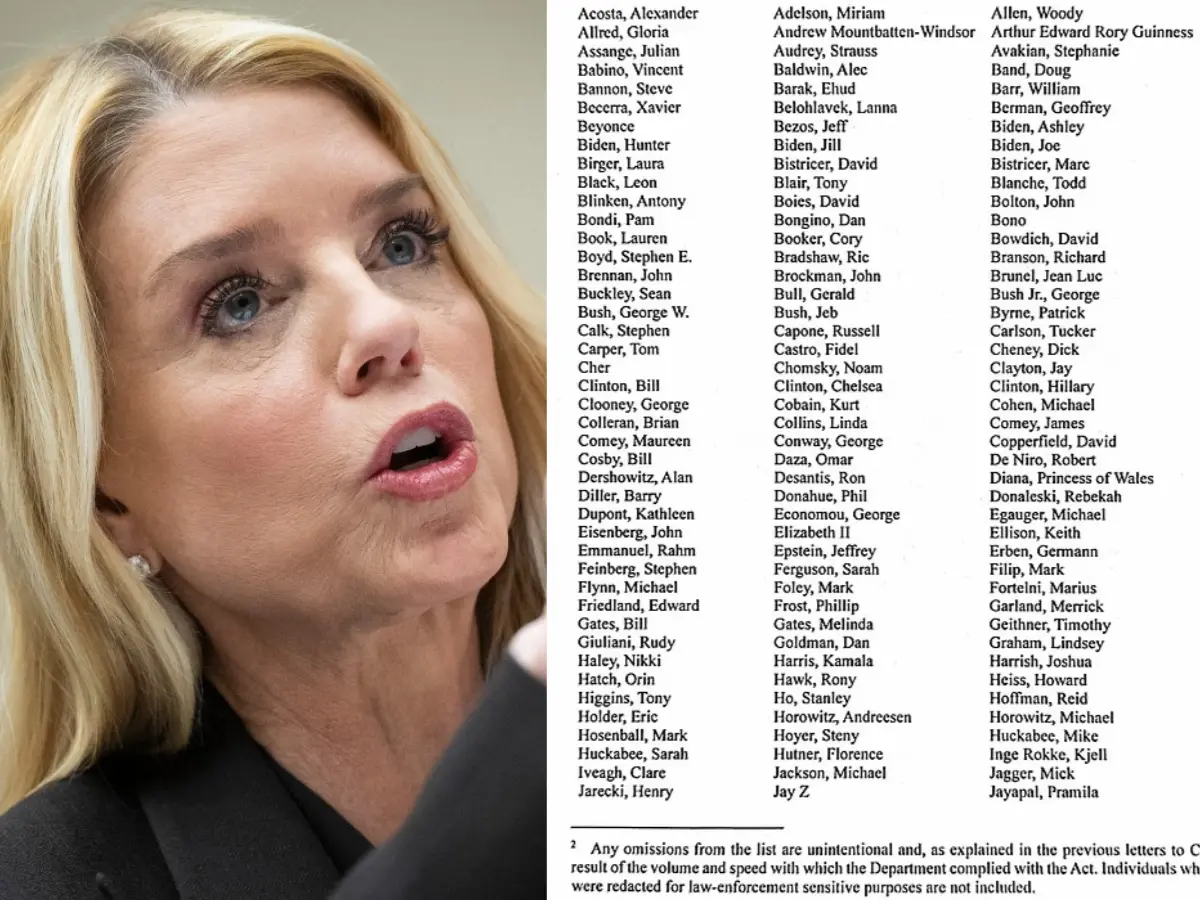
Lawmakers from both parties have questioned whether publishing such a list without a detailed context risks confusing the public. Representative Ro Khanna accused the department of blurring distinctions between documented associations and incidental mentions. Representative Thomas Massie said the redaction process lacked consistency and raised concerns about accountability within the department.
The dispute has revived long-standing tensions over how the federal government handled Epstein’s case. Epstein died in federal custody in 2019 while awaiting trial on sex trafficking charges. His earlier 2007 non-prosecution agreement in Florida, negotiated by federal prosecutors, allowed him to avoid federal charges in exchange for pleading guilty to state offences. A 2020 internal review found that the U.S. attorney at the time exercised poor judgment but did not commit professional misconduct. Those findings did little to quiet public anger, which has persisted across political lines.
The latest release also comes against a wider push for disclosure after lawmakers argued that prior redactions were excessive. The Justice Department recently unredacted additional names in a 2019 FBI document after pressure from members of Congress who had reviewed the material in camera. Among those identified were business executive Les Wexner, Epstein’s former assistant Lesley Groff, and French modelling agent Jean-Luc Brunel. Each has denied criminal wrongdoing. Brunel was arrested in France and later died in custody; authorities ruled his death a suicide.
Deputy Attorney General Todd Blanche said the department was “hiding nothing,” noting that some individuals had already been referenced in prior disclosures. Yet the criticism suggests that disclosure alone may not settle disputes about fairness and clarity. When thousands of pages are released at once, even careful redactions can be interpreted in competing ways.
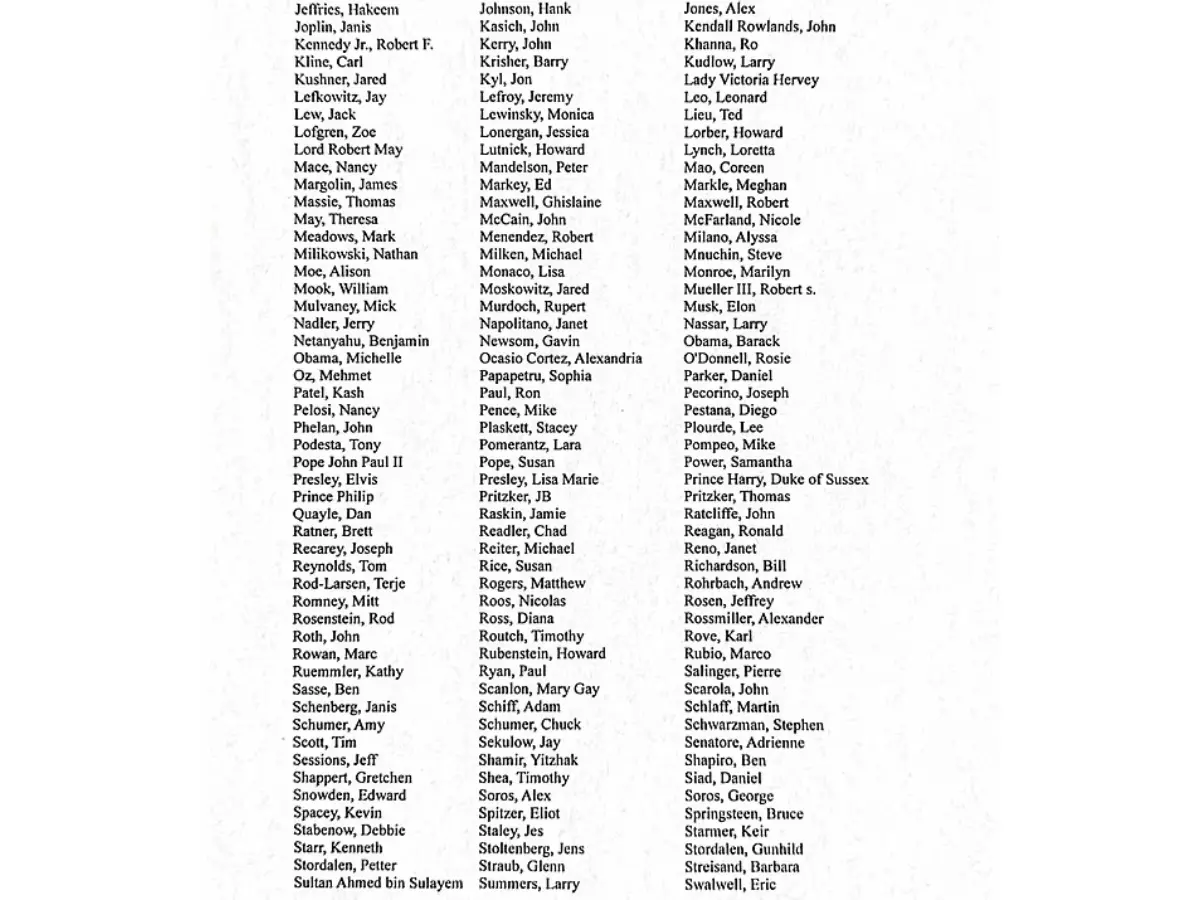
The political stakes are high. The Epstein files touch on individuals across parties and across countries, including members of the British royal family and senior officials in foreign governments. The inclusion of names such as Donald Trump, Barack Obama, and other former and current officeholders underscores the breadth of Epstein’s social network. It also heightens the risk that the disclosures will be used as ammunition in partisan disputes, regardless of whether any wrongdoing is alleged.
There is also a legal dimension. Under U.S. law, individuals who are not charged with crimes generally retain privacy protections, and agencies must balance disclosure mandates with those safeguards. A source familiar with the process said some email addresses and identities were redacted because they belonged to victims or individuals not charged with any offence. That tension, between public demand for disclosure and statutory privacy limits, has shaped the redaction process from the outset.
The controversy raises a broader question about how transparency laws should function in high-profile criminal cases. Congress passed the transparency measure amid pressure from voters who believed that powerful associates of Epstein had escaped scrutiny. The act compels disclosure of materials in the department’s possession but does not require the government to interpret or annotate every reference. In practice, that means the public receives raw records that may lack context.
For some observers, that is a feature rather than a flaw. They argue that full disclosure allows independent review and prevents selective release. Others contend that without careful explanation, releasing names without describing the circumstances of their appearance can damage reputations and obscure more than it clarifies. In this case, the inclusion of cultural icons who had no known link to Epstein has intensified that concern.
The release also brings renewed focus to the question that has lingered since Epstein’s death: whether others should have faced charges. Former FBI Director Kash Patel testified last year that investigators found no credible information showing that Epstein trafficked minors to other individuals. A draft indictment disclosed recently alleged a conspiracy involving unnamed defendants between 2001 and 2005, but those individuals have not been publicly identified. The Justice Department has not detailed why further charges were not brought.
This lack of prosecutorial action continues to feed suspicion among critics who believe the investigation left unanswered questions. The department’s position has been that it lacked sufficient grounds to charge others. Without public access to the full evidentiary record, however, that conclusion remains contested in the court of public opinion.
The timing of the release is also notable. It arrives in an election year and in a political climate already marked by distrust of federal institutions. Surveys over the past decade have shown declining confidence in law enforcement agencies and the justice system. A disclosure of this scale, even if procedurally complete, risks deepening that mistrust if it is seen as either incomplete or politically shaped.