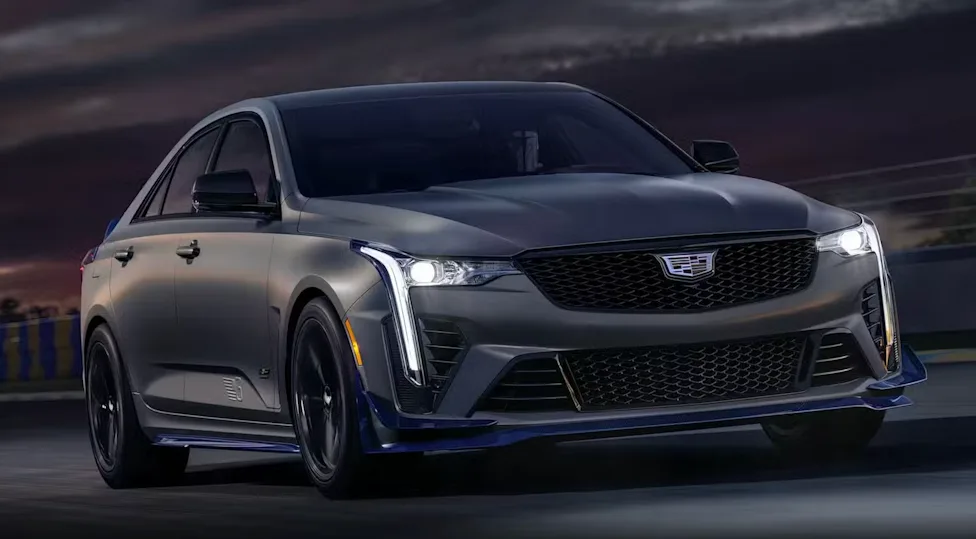
General Motors is reshaping its luxury vehicle strategy by bringing a new generation of gasoline-powered Cadillac models to market, signaling a more balanced approach between internal combustion engines and electric vehicles.
Speaking during the company’s second-quarter earnings call, GM Chair and CEO Mary Barra confirmed that the automaker will begin launching the next wave of Cadillac ICE (internal combustion engine) vehicles from spring 2027, with rollouts continuing through 2028.
The upcoming lineup will include an all-new Cadillac CT5 sedan, a redesigned XT5 midsize SUV, and a successor to the discontinued XT6 three-row SUV. Rather than replacing Cadillac’s electric offerings, these models will expand the brand’s portfolio, giving buyers more choices as consumer demand continues to vary across different powertrains.
Cadillac moves away from an all-electric deadline
The announcement marks a notable shift in Cadillac’s long-term roadmap.
Just a few years ago, Cadillac had positioned itself to become an all-electric luxury brand before the end of the decade. However, slower-than-expected EV adoption across several markets has prompted GM to rethink that timeline.
Instead of phasing out gasoline-powered vehicles entirely, Cadillac will now continue offering both combustion-engine and electric models side by side. The move reflects a broader industry trend, with several automakers adjusting electrification plans to match changing customer preferences and infrastructure readiness.
While Cadillac’s electric lineup, including the Lyriq, Optiq, Vistiq, Escalade IQ, and Celestiq, remains central to the brand’s future, GM believes traditional powertrains will continue to play an important role for years to come.
Slower EV demand drives strategic changes
The revised strategy comes after General Motors faced mounting financial pressure linked to its electric vehicle business.
The company has reported nearly $10.9 billion in EV-related charges since the second half of last year. Those costs have been driven by weaker-than-anticipated electric vehicle demand, investments in battery production, and policy changes in the United States that have softened emissions regulations while reducing government support for EV adoption.
These developments have encouraged GM to maintain a diversified product portfolio rather than accelerating a complete transition to electric vehicles.
Industry analysts note that many consumers continue to value gasoline-powered SUVs and sedans, particularly in regions where charging infrastructure remains limited or where long-distance travel is common.
Manufacturing plans also shift
GM’s updated strategy extends beyond product planning.
The automaker also confirmed plans to increase domestic manufacturing capacity by expanding production of its full-size SUVs at a Michigan facility beginning next year. The plant had originally been earmarked for electric vehicle production but will now support additional assembly of gasoline-powered vehicles.
Currently, GM’s flagship full-size SUVs—including the Cadillac Escalade, Chevrolet Tahoe, Chevrolet Suburban, GMC Yukon, and Yukon XL—are produced exclusively at the company’s Arlington Assembly plant in Texas.
Adding another production location is expected to improve manufacturing flexibility, increase output, and reduce supply constraints for some of GM’s most profitable vehicles.
The decision also aligns with the company’s broader efforts to strengthen U.S.-based manufacturing while adapting production to current market demand.
A balanced approach for the years ahead
GM’s latest announcement highlights a growing shift across the automotive industry, where manufacturers are increasingly pursuing a multi-powertrain strategy instead of committing exclusively to electric vehicles.
While the company continues investing heavily in EV technology and battery innovation, it is also acknowledging that customer demand for gasoline-powered vehicles remains strong in several segments.
For Cadillac, the upcoming launches represent an effort to preserve its presence in the premium sedan and SUV markets while giving buyers greater flexibility in choosing the powertrain that best suits their needs.
As the global automotive market continues to evolve, General Motors appears focused on balancing long-term electrification goals with present-day consumer demand, ensuring its luxury brand remains competitive regardless of how quickly the transition to electric mobility unfolds.