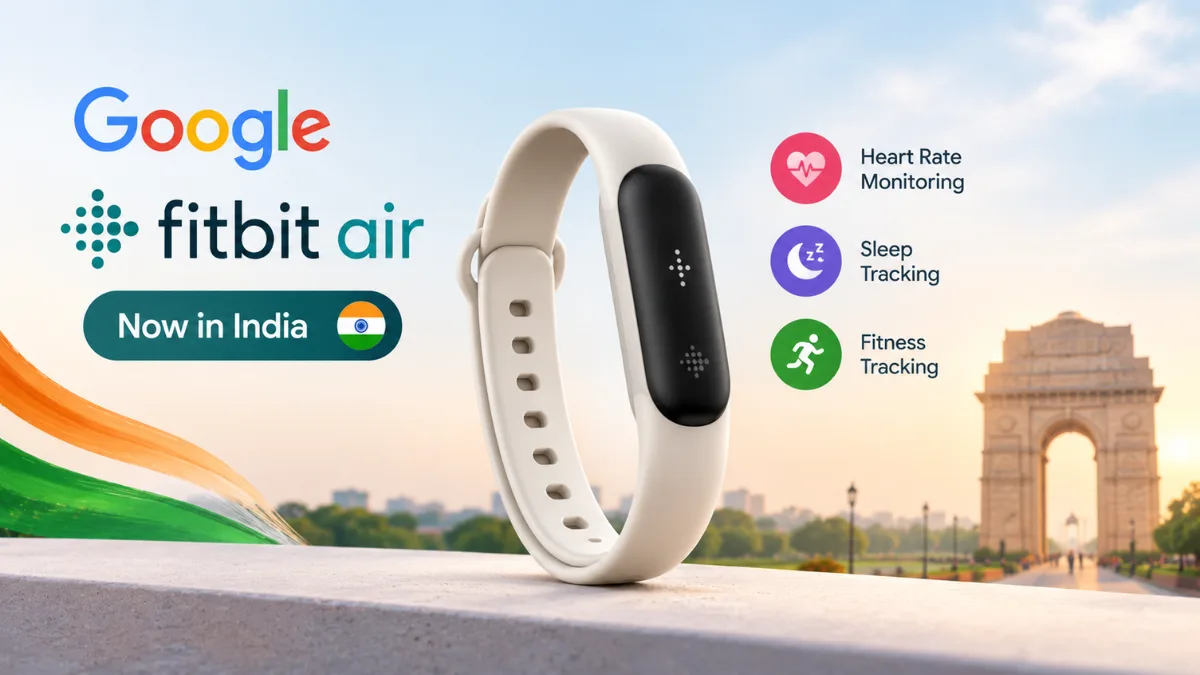
Google has officially brought the Fitbit Air to India, several months after the screenless fitness tracker made its debut in the US. Priced at ₹13,999, the device will go on sale from October 2 through the Google Store and the company’s retail partners across the country.
Available in four colours — Obsidian, Berry, Lavender and Fog — the Fitbit Air takes a different approach to wearable technology. There is no display, no physical button and nothing to swipe through. Instead, the tracker quietly collects health and fitness data while the Google Health app on a connected smartphone handles the rest.
Credits: The Economic Times
Google Fitbit Air India Price and Availability
The Fitbit Air is priced at ₹13,999 in India and comes with a three-month trial of Google Health Premium. The subscription unlocks the complete Google Health Coach experience, including personalised insights based on the health data collected by the tracker.
Once the three-month trial ends, users will need to pay for the subscription to continue accessing the premium features.
Google had confirmed the India launch of the Fitbit Air during its Pixel 11 event in August, although it did not reveal the price at the time. Sales will begin on October 2 through the Google Store and authorised retail partners.
The company describes the Fitbit Air as its smallest tracker yet. Designed in the shape of a small pebble, the device clips into an interchangeable wristband and is intended to remain largely invisible during everyday use.
Fitbit Air Health and Sleep Tracking Features
The Fitbit Air packs a range of sensors designed to continuously monitor key health metrics. These include 24/7 heart-rate tracking, heart rhythm monitoring with Afib alerts, blood oxygen saturation (SpO2), resting heart rate and heart-rate variability (HRV).
Rather than presenting all these numbers on a tiny screen, the Fitbit Air sends the information to the Google Health app. Google Health Coach then turns the collected data into personalised suggestions and insights, giving users a simpler way to understand changes in their health and activity.
Sleep tracking is another major focus. The tracker records sleep duration and different sleep stages overnight, making it particularly useful for people who do not want to wear a smartwatch to bed.
Google is also positioning the Fitbit Air as a companion to the Pixel Watch. Users can wear their Pixel Watch during the day for notifications and other smartwatch functions, then switch to the lighter Fitbit Air at night to continue tracking their sleep.
Fitbit Air Battery Life and Bands
The Fitbit Air is rated to deliver up to seven days of battery life on a single charge. Google says that just five minutes of charging can provide enough power for a full day of use.
That quick top-up could be particularly useful for a device designed to remain on the wrist around the clock, including during sleep.
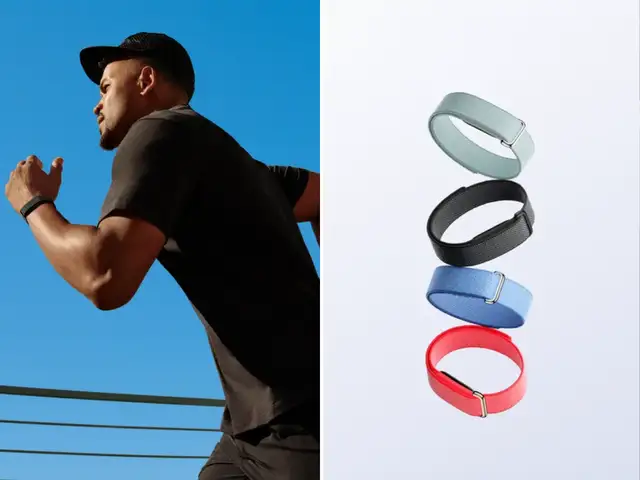
The standard package includes a Performance Loop band made from recycled material. It is micro-adjustable for a more precise fit. Google also offers an Active Band aimed at workouts, along with an Elevated Modern Band for users looking for a more bracelet-like appearance.

Credits: The Economic Times
Fitbit Air vs Noise, Amazfit and Whoop
The Fitbit Air enters an increasingly competitive screenless fitness tracker market in India.
Noise’s REP Band is priced at ₹9,999 and offers heart-rate, HRV, sleep and SpO2 tracking without requiring a subscription. Amazfit’s Helio Strap is even cheaper at ₹8,999 and promises up to 10 days of battery life, with its health data handled through the Zepp app.
Whoop, which helped popularise screenless fitness tracking, is not officially available in India. Unofficial units can cost close to ₹28,000 and also require a yearly subscription.
At ₹13,999, the Fitbit Air therefore sits at the higher end of the officially available options. Its three-month premium trial gives buyers a chance to experience Google’s health ecosystem before paying for the subscription.
The bigger selling point, however, could be its integration with Google’s wider ecosystem. For Pixel Watch users in particular, the Fitbit Air offers a way to continue collecting health and sleep data without keeping a smartwatch on the wrist 24/7.