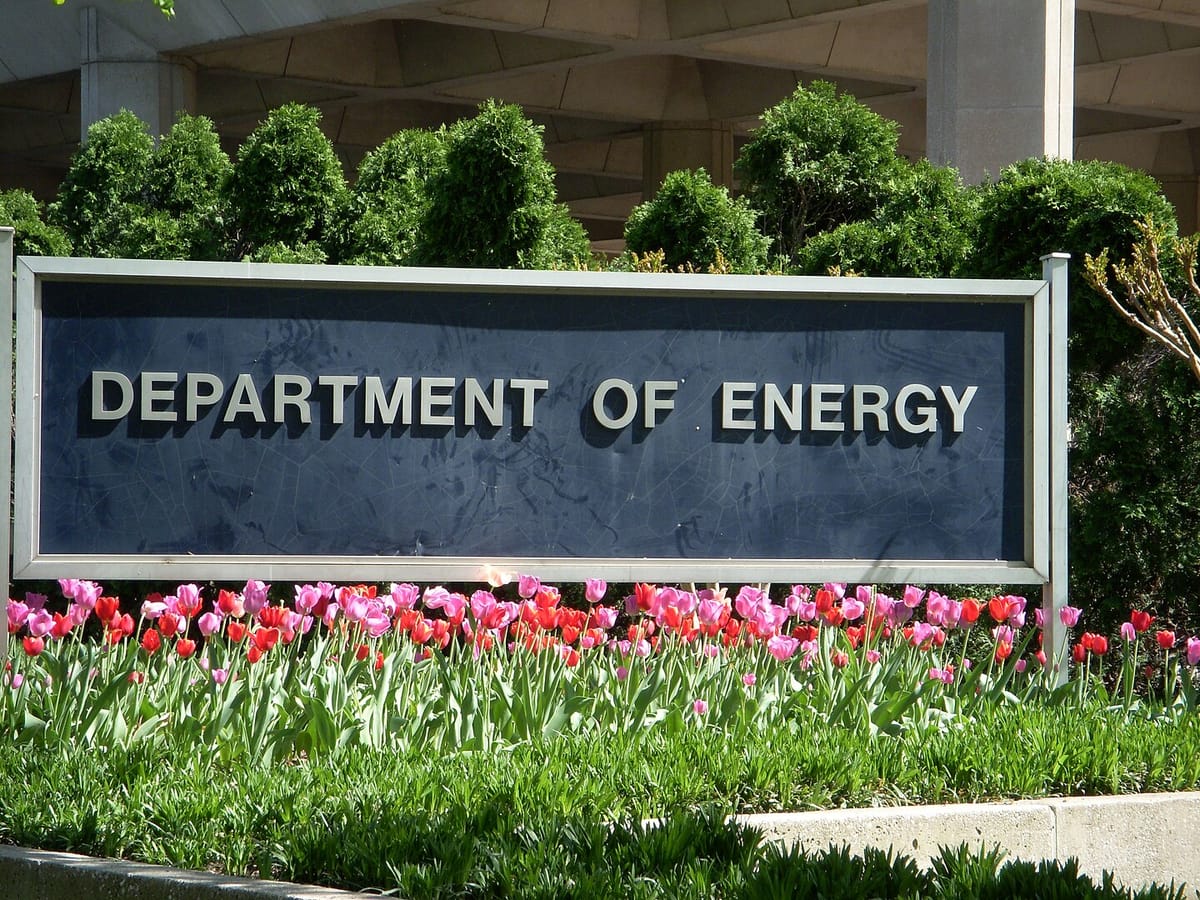
A senior Department of Energy staffer with thirty years’ service and security codes for nuclear-weapons secrets was stripped for life of his security clearance after he endeavored to store a humongous stash of pornography in government computers, all in the service of educating an AI in the production of “robot pornography.”
The surreal episode, which occurred in March 2023 but only gained widespread attention in the October 13-15, 2025, editions of reports from 404 Media, PC Gamer, and Zero Hedge, has become one of the most unusual security intrusions in workplace history.
“Distinguished Professional” Caught Storing Porn on DOE PC
On March 23, 2023, the employee, a “distinguished professional” in DOE investigation records, decided to store his own stash of pornography in his government-issued PC. His plan? Make use of some 187,000 explicit images he’d gathered in the course of 25 to 30 years as training files for an AI picture maker capable of generating fake robot adult content.
The employee put the entire archive onto an internal, but unclassified, DOE network system. The system wasn’t classified itself, but the government continually monitored the network with very stringent policies for use. Six months after the upload, a routine scan for the network revealed the collection of photos and caused the DOE agents to initiate an immediate investigation.
When he was caught by DOE investigators, the worker apologized for having posted the material but explained he “did not think it was very wrong” because the system was unclassified. He wasn’t very forthcoming in his response to the investigation. He labeled DOE investigators as “spies” and compared himself with the “Spanish Inquisition” in his responses, investigation records say.
The employee’s defiance didn’t help his case. During his security clearance appeal, he shifted tactics and cited depression and social isolation as driving factors behind his AI experimentation. He claimed that creating synthetic images of humanoid robots served as a “coping mechanism” during a particularly difficult depressive period, and that he had simply been “playing with AI tools” to pass the time.
Nuclear Data Engineer Loses Clearance Over AI ‘Robot Porn’ on Government Servers
Despite his psychological defense, the DOE rejected his appeal outright. Officials ruled that his actions demonstrated profoundly poor judgment and posed a potential national security risk. The decision was clear: permanent revocation of security clearance and complete loss of access to nuclear data systems.
The ruling effectively ended the career of an individual who served for thirty years, handling some of the nation’s most secure information. The DOE’s position was resolute, running government infrastructure for personal business, especially work involving explicit content and AI generation, was an intolerable violation of faith and procedure.
The report of the crime went viral across tech forums and social networks. Reddit forums like /r/StableDiffusion and /r/BetterOffline saw sarcastic and amazed comments. Some users sarcastically called the upload of the “187,000 photos of robot porn” onto the government’s servers, and others debated whether the crime was worth the sentence.
DOE Employee’s Generative AI Blunder Sparks Major US Government Security and Ethics Debate
Apart from the humor, the incident prompted some serious debates regarding AI ethics and security in highly protected government workplaces. The objective cited by the employee to train a generative AI model is indicative of growing security challenges that security mechanisms have failed to quite capture.
With the increasing ease and capabilities of AI tools, the risks for misuse in high-security workplaces are multiplying exponentially.
This episode must be a harsh reminder that even unclassified government systems have strict usage policies and there’s a reason behind them. The DOE employee’s blunder wasn’t merely a matter of the kind of content it was about grossly misunderstanding the level of trust and responsibility in security clearance.
The case brought renewed attention to the use of insider-security protections among U.S. research agencies. How many other government workers are operating with government assets for personal, unapproved projects? What are the consequences when such projects involve developing technologies like AI when policies in place were not equipped with mechanisms for it?
This incident so far represents probably the most bizarre cybersecurity breach in 2025, a parable about judgment, boundaries, and the ever-more convoluted convergence of AI technology and corporate and national security ethics.