The Union government has given a significant push to India’s growing space-tech ecosystem by injecting ₹211 crore under the ‘Fund of Funds for Startups’ (FFS) scheme. Announcing the move, Union Commerce and Industry Minister Piyush Goyal said the government is backing “bold ideas” of homegrown innovators, ensuring that Bharat takes new strides in the global space race.
In a post on X, Goyal emphasized that this initiative will not just encourage cutting-edge technologies but also strengthen India’s position as a rising space power. “Guided by PM Narendra Modi’s vision, our focus is on innovation, self-reliance, and youth-driven entrepreneurship to leverage space not only for exploration, but also for transformation,” he wrote.
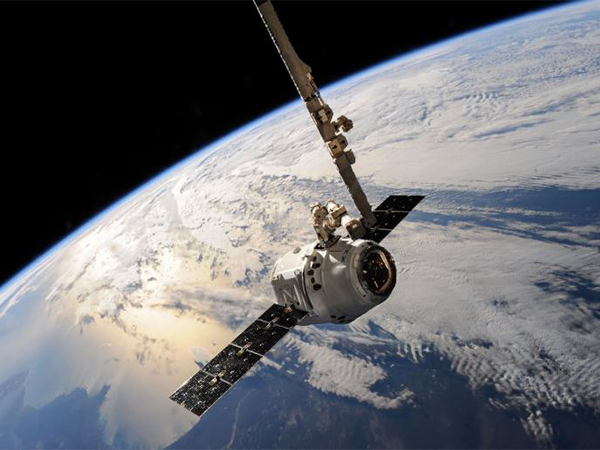
Credits: ANI News
Startups Taking Flight
The minister highlighted that India’s space-tech startups are now scripting a new chapter of self-reliance. From satellite development to launch vehicles, these companies are entering areas once dominated exclusively by state-run ISRO.
One such example, Ethereal X, has already begun contributing to national space achievements while symbolizing India’s growing independence in this high-tech frontier. Goyal noted that such efforts reflect the success of Startup India’s broader mission—encouraging young entrepreneurs to dream big and take India global.
Startup India’s Triple Support Pillar
The ₹211 crore boost is part of a wider framework under the Startup India initiative, which rests on three flagship schemes:
-
Fund of Funds for Startups (FFS): Provides capital support via SEBI-registered Alternative Investment Funds (AIFs), managed by SIDBI. These AIFs, in turn, invest in innovative startups. Importantly, they are required to invest at least twice the amount received from FFS, ensuring greater leverage.
-
Startup India Seed Fund Scheme (SISFS): Focuses on early-stage capital for proof of concept, product trials, and market entry.
-
Credit Guarantee Scheme for Startups (CGSS): Ensures financial institutions extend loans to startups with reduced risk exposure.
As of 30 June 2025, FFS has already made net commitments of ₹9,994 crore to 141 AIFs, catalyzing large-scale private investments into the ecosystem.
Modi’s National Space Day Message
Coinciding with the announcement, Prime Minister Narendra Modi addressed the nation on National Space Day 2025 via video message. He reminded citizens that there was once a time when futuristic sectors like space were “bound by numerous restrictions.” Those barriers, he said, have now been removed, giving the private sector a wide berth to innovate.
Highlighting India’s progress, the PM noted that over 350 space-tech startups are actively innovating and contributing to national achievements. He shared several landmark developments in the pipeline:
-
First PSLV rocket built by the private sector to be launched soon.
-
India’s first private communication satellite currently under development.
-
Earth Observation Satellite Constellation being prepared under a Public-Private Partnership model.
“These efforts are creating vast opportunities for India’s youth,” Modi remarked, reinforcing his government’s commitment to fostering innovation.
A Budget That Matches Ambition
India’s space budget has also mirrored this expansion in vision. From ₹5,615 crore in FY 2013-14 to ₹13,416 crore in FY 2025-26, the allocation has nearly tripled over a decade. This financial backing underlines the government’s resolve to strengthen India’s presence in the global space economy.
India’s Space Startups: Engines of Global Growth
The entry of startups into the space-tech ecosystem is transforming India’s positioning globally. No longer limited to scientific missions, space-tech is now unlocking opportunities across communications, navigation, climate monitoring, and even national security.
By combining government support with private innovation, India is steadily building a model that not only empowers young entrepreneurs but also makes the country a hub for space-tech exports, collaborations, and global leadership.

Credits: Economic Times
Conclusion
With a ₹211 crore push under the FFS scheme and a rapidly evolving policy environment, India’s space-tech ecosystem is ready to leap into a new era. The combined vision of government, startups, and private investors is turning India into a self-reliant, globally recognized space power. As new rockets, satellites, and constellations take shape, the country’s space dream is no longer just about exploration—it is about transformation.