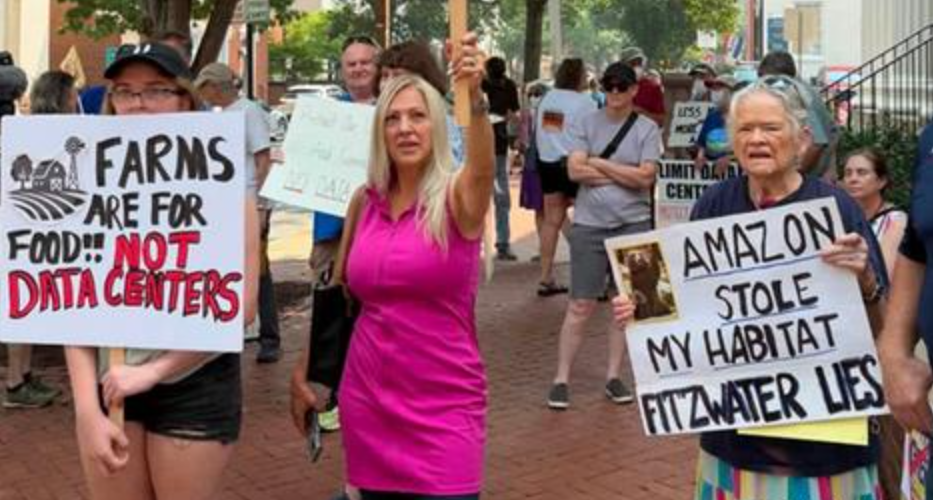
The physical infrastructure required to power the global artificial intelligence boom is colliding directly with local communities across the United States. As technology giants rush to construct gigawatt-scale computing facilities, the immense environmental, financial, and acoustic footprint of these developments is no longer going unnoticed. Across rural towns and suburban neighborhoods, everyday residents are organizing to protect their local resources. A growing movement of US citizens ramping up pressure on data centers has transformed local zoning board meetings into high-stakes battles over energy equity, public transparency, and environmental protection.
Driven by concerns over surging residential utility bills, depleted municipal aquifers, and 24/7 industrial noise, grassroots coalitions are challenging the rapid expansion of hyperscale facilities. From Virginia’s “Data Center Alley” to rural communities in Georgia, Arizona, and the Pacific Northwest, residents are demanding that local governments halt non-transparent approvals, revoke corporate tax abatements, and enforce strict environmental impact assessments before new construction begins.
1. Grid Inflation and Utility Rate Hikes: The Financial Burden on Residents
At the heart of the nationwide pushback is the growing realization that local residents are often forced to subsidize the immense power demands of multi-billion-dollar technology companies. Modern AI data centers require staggering amounts of electricity frequently consuming between 100 megawatts to over a gigawatt of continuous power per facility.
To accommodate these massive electrical loads, utility providers must construct new high-voltage transmission lines, substation infrastructure, and natural gas power generation facilities. However, rather than assigning these infrastructure costs exclusively to tech developers, public utility commissions across multiple states have approved rate increases that distribute the financial burden across residential ratepayers.
- Rate Inflation: In major data center hubs, local utility bills for average households have increased significantly over the past two years to fund regional grid upgrades.
- Grid Reliability Risks: Local communities are increasingly worried about rolling blackouts during peak summer heatwaves as industrial computing facilities draw continuous power from fragile electrical grids.
2. Water Depletion and Acoustic Pollution: Environmental Impacts
Beyond the power grid, the physical operations of hyperscale computing facilities are creating severe environmental and health challenges for neighboring communities. Primary Community Concerns Across Rural & Suburban Hubs, Electrical Load & Rate Inflation (Surging residential power bills), Municipal Aquifer Depletion (Millions of gallons used for cooling daily), Low-Frequency Humming (24/7 noise from massive cooling chillers), Stealth Zoning Approvals (Use of non-disclosure agreements by local officials). In drought-prone regions, evaporative cooling systems inside data centers draw millions of gallons of potable water daily from municipal supplies and local aquifers, threatening agricultural irrigation and private residential wells. Furthermore, the continuous, low-frequency hum generated by industrial cooling fans and backup diesel generators has led to widespread complaints regarding sleep deprivation, chronic stress, and declining property values in nearby residential neighborhoods.
3. Structural Comparison: Stealth Approvals vs. Community Mobilization
The movement highlights a major political shift in how local governments manage land use and economic development agreements with major technology firms.
The Shift in Local Infrastructure Governance
| Governance Aspect | Legacy “Stealth Approval” Framework | Modern Grassroots Pushback Paradigm |
| Zoning Approvals | Confidential negotiations using non-disclosure agreements | Demands for full public hearings & open environmental impact reviews |
| Tax Incentives | Long-term property & sales tax abatements granted easily | Opposition to corporate subsidies for high-resource facilities |
| Grid Oversight | Utilities expand capacity with costs passed to ratepayers | Citizen lawsuits demanding tech firms pay for dedicated power builds |
| Municipal Action | Fast-tracked building permits to attract development | Emergency local zoning moratoriums & legislative construction pauses |
Reclaiming Community Sovereignty
The nationwide movement of US citizens ramping up pressure on data centers marks a turning point in the conversation surrounding artificial intelligence and public infrastructure. While society embraces the benefits of digital tools, local communities are asserting that technological growth cannot come at the expense of local drinking water, affordable utility rates, and democratic transparency.
By organizing grassroots coalitions, filing class-action lawsuits, and pushing for municipal moratoriums, residents are forcing both local governments and tech conglomerates to rethink their expansion strategies. Moving forward, the development of next-generation digital infrastructure will require genuine transparency, sustainable energy planning, and active respect for the communities that host it.