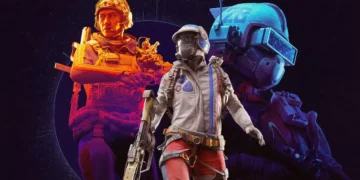
When Halo 5: Guardians hit Xbox One back in 2015, expectations were sky-high. This wasn’t just another sequel; it was the next chapter in one of gaming’s most beloved universes. 343 Industries had the tough job of carrying Bungie’s legacy while carving out its own identity for Halo. The result? A game that dared to experiment, delivered thrilling multiplayer moments, but also left fans arguing for years after.
The Story That Surprised Everyone
Microsoft’s marketing team knew how to build hype. The “Hunt the Truth” campaign teased a dramatic face-off between two Spartans: Master Chief, the hero everyone knew, and newcomer Jameson Locke, the soldier sent to bring him in. Fans expected an emotional, cinematic duel that would shake the franchise to its core.
But when players fired up the game, things unfolded differently. Most of the campaign had you playing as Locke, with Chief appearing in fewer missions than expected. It wasn’t a bad story far from it. It explored loyalty, leadership, and the blurred lines between right and wrong. It just wasn’t the story people thought they were getting.
Still, Halo 5’s campaign deserves some credit. The levels were bigger, the environments more open, and the visuals were stunning for their time. It felt like a new kind of Halo—less linear, more tactical, and designed for co-op teamwork.
Multiplayer: Fast, Fluid, and Fierce
If the campaign caused debate, the multiplayer quickly reminded everyone why Halo still reigns in the shooter world. Halo 5’s gameplay was lightning fast, smooth, and refreshingly modern. The new clamber move basically letting players vault over ledges and walls made firefights more vertical and unpredictable.
Then came Warzone, a 24-player mode that mixed the chaos of PvP with the unpredictability of AI enemies and bosses. It was massive, ambitious, and often spectacular. The only downside was the introduction of REQ packs, which let players spend real money for in-game unlocks. It didn’t ruin the mode, but it left a sour taste for some fans.
Outside of Warzone, Arena mode kept things classic. Tight maps, balanced weapons, and that signature Halo rhythm made it one of the best competitive experiences on Xbox at the time.
The Split-Screen Controversy
One decision, however, hit a nerve Halo 5 dropped split-screen co-op. For a series built on couch co-op memories, that felt personal. Microsoft claimed fewer people were using local multiplayer, but the backlash was instant. Fans made it clear: Halo without split-screen didn’t feel like Halo.
The criticism worked. 343 later promised that all future Halo titles, including Halo Infinite, would bring split-screen back. Sometimes, lessons stick the hard way.
Looking Back
Nearly a decade later, Halo 5: Guardians stands as one of the franchise’s boldest experiments. It stumbled in some areas but also pushed Halo into new territory—faster movement, larger battles, and a wider vision of what the universe could be.
It might not be everyone’s favorite, but it’s hard to deny that Halo 5 shaped the series’ future. It’s the kind of game that reminds you: evolution always comes with a little chaos.