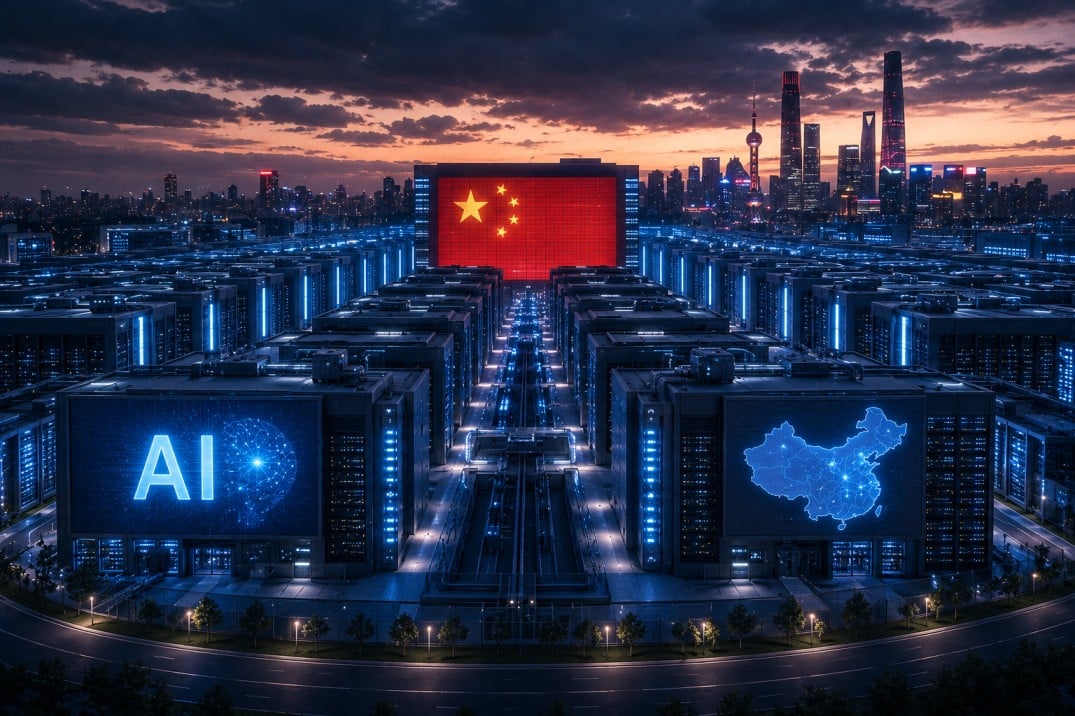
China is preparing one of its largest technology spending programmes in recent years, with plans reportedly taking shape for a nationwide network of artificial intelligence data centres that could cost around 2 trillion yuan, or roughly $295 billion, over the next five years. The proposal, still under discussion among government agencies, offers a glimpse into how Beijing intends to strengthen its position in one of the most closely watched technological contests of the decade.
The reported blueprint centres on a simple objective. China wants more computing power, more domestic technology and greater control over the systems that support artificial intelligence development. While attention often focuses on chatbots, AI assistants and consumer applications, the real contest increasingly revolves around the physical foundations that make those products possible. Data centres, processors, networking equipment and electricity supply have become just as important as the software itself.
According to reports, authorities including the National Development and Reform Commission are working on plans to create a nationwide network of interconnected computing hubs. Major state-owned telecommunications companies, including China Mobile and China Telecom, are expected to play a central role in operating and connecting those facilities.
The scale of the proposed spending highlights how seriously Beijing views artificial intelligence. Over the past two years, Chinese policymakers have repeatedly identified AI as one of the technologies most likely to shape economic growth, industrial productivity and national competitiveness. The latest proposal suggests that the focus is moving from policy statements to large-scale construction projects.
Building Computing Capacity While Reducing Dependence on Foreign Technology
The reported programme arrives at a time when access to advanced computing hardware has become one of the most contested issues in technology policy.
Washington has imposed restrictions on exports of advanced semiconductor technology to China, arguing that such measures are necessary for national security. Those restrictions have affected Chinese access to some of the most powerful processors produced by American companies, particularly those used for training and operating advanced AI systems.
As a result, Chinese policymakers have increasingly directed attention towards domestic alternatives.
Under the reported plan, at least 80 per cent of the technology used in the new data centre network would come from local suppliers. That would place companies such as Huawei in a stronger position while reducing reliance on foreign firms including Nvidia and AMD.
The proposal reflects a broader policy direction that has become more visible across several industries. Rather than depending on imported technology for critical systems, China has sought to strengthen domestic manufacturing and research capabilities. Artificial intelligence has become one of the clearest examples of that effort.
Last year, reports indicated that authorities had already instructed state-backed data centre projects to use domestically produced AI chips where possible. The latest discussions appear to extend that approach across a much larger network.
For Beijing, the issue is not simply about replacing foreign suppliers. Access to processors has become a question of long-term economic planning. Training advanced AI systems requires enormous computing resources, and those resources depend heavily on specialised chips. Any restrictions affecting supply can slow development efforts and increase costs.
By building more domestic computing capacity and encouraging wider adoption of local hardware, policymakers appear to be trying to reduce those risks.
The proposed spending programme also reflects growing recognition that artificial intelligence requires much more than software engineers and research laboratories. Every new AI model depends on huge amounts of computing power. Data centres have become the factories of the AI age, consuming electricity, housing processors and supporting the calculations that power machine learning systems.
A Growing Contest Over Computing Power
China’s reported plan arrives during a period of heavy spending on AI facilities around the world.
Technology companies in the United States are expected to commit hundreds of billions of dollars this year to AI-related projects. Much of that spending is directed towards data centres, specialised processors and supporting facilities needed to run increasingly complex systems.
The competition is often described as a race for better AI models, but industry executives frequently point to computing power as one of the most important constraints on future development. Training advanced systems requires thousands of processors working together for extended periods, creating demand for larger and more capable computing facilities.
China’s proposed programme suggests policymakers share that assessment.
The country has already made AI a central part of its latest five-year development plan, which also highlights technologies such as quantum computing and humanoid robotics. The reported data centre blueprint would provide the computing capacity needed to support those ambitions.
There are also economic considerations. Large-scale construction of computing facilities creates demand for equipment manufacturers, telecommunications providers and electricity producers. It may also encourage companies developing AI software to build and train systems domestically rather than seeking computing resources elsewhere.
Questions remain about how the programme would be financed, how quickly facilities could be built and how much demand currently exists for additional computing capacity. Reports indicate that discussions remain at an early stage and details could still change before any formal announcement is made.
Even so, the reported size of the proposal has attracted attention because it highlights how governments are increasingly treating artificial intelligence as a matter of national policy rather than simply a commercial opportunity.