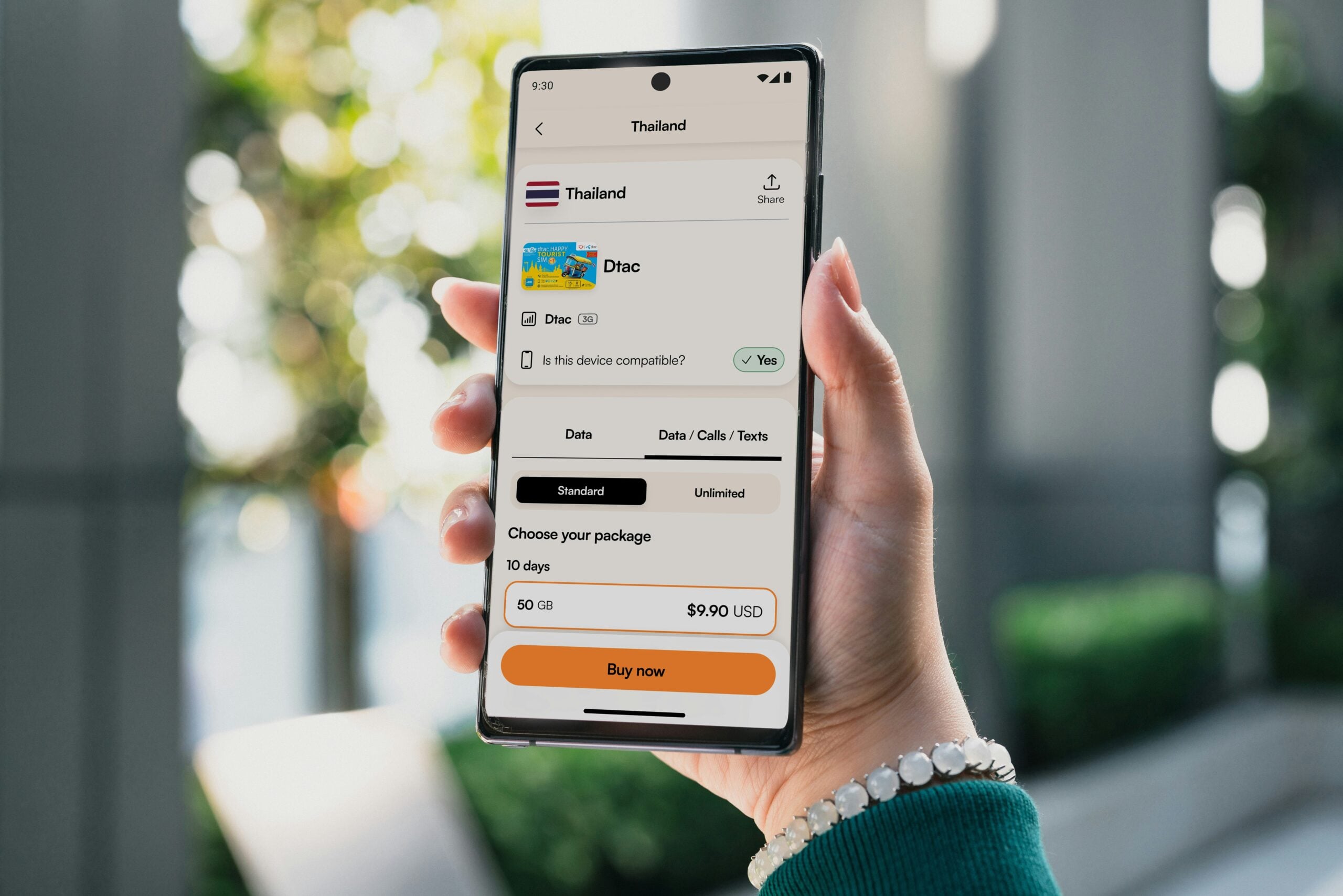
International travel has become increasingly digital. From mobile boarding passes and app-based hotel check-ins to navigation and instant translation, smartphones now handle many tasks that once required printed documents or physical services. Staying connected is following the same path, with eSIM technology giving travellers a simpler way to access mobile data when crossing borders.
For years, international connectivity often meant choosing between expensive roaming, searching for a local SIM card after landing, or relying heavily on hotel and café Wi-Fi. The eSIM changes that process by allowing compatible smartphones to download a mobile plan digitally. This means travellers can prepare their connectivity before departure rather than making it a problem to solve after arrival.
For travellers looking for a digital-first way to manage overseas connectivity, learn more about SimJuno to see how eSIM services can fit into international travel plans. The concept is straightforward: instead of physically replacing a SIM card, users can install a compatible digital profile and manage their mobile data directly from their device.
Why eSIMs Matter More in 2026
The growth of eSIM technology reflects a wider shift toward software-based connectivity. A recent Forbes report on the rapid expansion of travel eSIM services noted that Airalo had reached more than 20 million travellers across over 200 countries, illustrating the growing scale of digital connectivity for international travel.
For consumers, the appeal is largely practical. A traveller can research a plan, purchase it online, install the eSIM, and prepare the phone before boarding a flight. Once at the destination, the appropriate mobile-data line can be selected without opening the phone or handling a tiny physical card.
This approach is particularly relevant as international travel becomes more connected and mobile-dependent. Travellers increasingly use smartphones for maps, ride-hailing, restaurant reservations, digital payments, messaging, work communications, and travel updates.
How eSIM Technology Works
An eSIM is an embedded SIM component built into a compatible smartphone or other connected device. Rather than inserting a removable plastic card, users download a mobile network profile electronically.
The basic process generally involves:
- Checking whether the smartphone supports eSIM technology
- Selecting a plan suitable for the destination
- Purchasing the plan digitally
- Installing the eSIM profile
- Following the provider’s activation instructions
- Selecting the eSIM for mobile data when appropriate
The exact activation process can vary between providers and devices, so travellers should always follow the instructions supplied with their chosen plan.
eSIM vs. Traditional SIM Cards
The difference between an eSIM and a physical SIM is not necessarily about what the technology does, but how the connection is managed.
| Feature | Physical SIM | eSIM |
| Physical card required | Yes | No |
| Installation | Manual | Digital |
| Can be prepared before travel | Sometimes | Often |
| Swapping cards between trips | Required | Usually unnecessary |
| Risk of losing the card | Yes | No physical card |
| Multiple profiles | Device-dependent | Supported on many devices |
| Useful for dual-SIM setups | Yes | Yes |
This flexibility can make eSIMs particularly useful for people who travel frequently or visit multiple destinations during a single trip.
Preparing Connectivity Before Departure
One of the biggest advantages of eSIM technology is that connectivity can be considered part of pre-trip planning. Instead of waiting until landing to locate a mobile shop or airport kiosk, travellers can research their options while still at home.
Before purchasing an eSIM, travellers should check several factors:
Device Compatibility
Not every smartphone supports eSIM functionality. Checking the manufacturer’s specifications before purchasing a plan can prevent activation problems later.
Network Coverage
Coverage varies between plans and destinations. A plan designed for one country may not be appropriate for a multi-country itinerary, while regional plans may cover several destinations under one package.
Data Requirements
Travellers should estimate how much data they are likely to use. Navigation, messaging, email, social media, video streaming, and remote work can all affect consumption.
Activation Requirements
Some eSIMs can be installed before departure but only become active after connecting to a supported network at the destination. Understanding this distinction can help travellers avoid accidentally starting a plan too early.
Making Multi-Country Travel Easier
Travelling through several countries can make traditional SIM management inconvenient. A traveller may otherwise need to purchase, replace, and store different physical SIM cards throughout the journey.
An eSIM can reduce that friction by allowing compatible devices to store or manage multiple digital profiles. Depending on the smartphone and service provider, travellers may be able to change their preferred mobile-data profile as they move between destinations.
This is especially relevant for European trips, Southeast Asian itineraries, business travel, and other journeys where several countries can be visited within a short period.
Staying Connected When Plans Change
Travel rarely goes exactly according to schedule. Flights can be delayed, accommodation can change, and travellers may decide to extend their stay or visit another destination.
Reliable mobile connectivity becomes particularly valuable when plans change unexpectedly. A Forbes guide to handling flight disruptions with digital travel tools identifies eSIM connectivity as one option for getting online quickly after arriving in another country.
Having connectivity available can make it easier to check alternative flights, contact accommodation providers, access maps, communicate with family, or find transportation without immediately searching for public Wi-Fi.
eSIMs and the Connected Traveller
The rise of eSIMs also reflects a wider transformation in how consumers interact with telecommunications. Connectivity is increasingly becoming something that can be purchased, activated, and managed through software rather than through physical retail channels.
For entrepreneurs, remote workers, and international businesses, this can have implications beyond holidays. Employees travelling overseas may need reliable data for email, collaboration platforms, cloud services, video calls, and customer communications.
A separate Forbes analysis of eSIM technology and global mobility describes eSIM as part of a broader shift toward software-driven connectivity, including remote provisioning and more flexible management across borders.
What Travellers Should Check Before Using an eSIM
While eSIMs can simplify international connectivity, travellers should still do a few checks before departure:
- Confirm that the smartphone supports eSIM.
- Make sure the device is unlocked if required.
- Check coverage in every planned destination.
- Review the amount of included data.
- Understand when the plan begins its validity period.
- Follow the provider’s installation instructions.
- Keep access to Wi-Fi available during the initial setup if required.
- Check which SIM is selected for mobile data after arriving.
These simple preparations can reduce avoidable connectivity problems during a trip.
A More Digital Approach to International Connectivity
The move from physical SIM cards toward embedded connectivity is part of a larger technology trend. As smartphones become increasingly software-driven, services that once required physical components or retail visits can increasingly be configured digitally.
For international travellers in 2026, that means mobile connectivity can be planned alongside flights, accommodation, travel insurance, and other digital travel essentials. eSIM technology does not remove every connectivity challenge, but it can make the process of getting online abroad more flexible, portable, and convenient.
For travellers who depend on their smartphones throughout a journey, that shift can turn international connectivity from an arrival-day task into something that is prepared well before the trip begins.