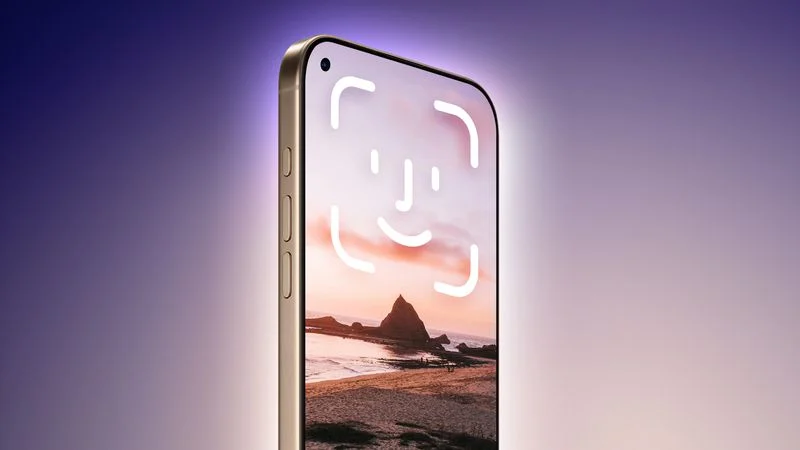
As the tech world anticipates the inauguration of the iPhone 17 Pro later this year, whispers about its successorthe iPhone 18 Pro are already beginning to swirl. And if the most recent reports are to be believed, Apple could be preparing to take a bold step that’s been years in the making: fully integrating Face ID beneath the screen.
According to Ross Young, a respected analyst and vice president at Counterpoint Research, the long-awaited innovation might finally arrive with the iPhone 18 Pro models in 2026.
Young shared his insights from the SID Business Conference, where Michael Helander, CEO of display technology firm OTI Lumionics, confirmed that phones with under-panel Face ID using their materials are expected to hit the market by 2026. This statement, though subtle, carries significant weight, it implies that Apple, OTI’s high-profile partner, is likely among the first to bring the technology to consumers.
And this isn’t just a one-off prediction. Earlier this month, The Information’s Wayne Ma independently reported similar claims: that the iPhone 18 Pro would replace the now-familiar Dynamic Island with a single, small hole in the screen to house the front-facing camera. The rest of the sensors required for Face ID would live invisibly beneath the display, bringing in a new aesthetic era for the iPhone.
To understand the importance of this shift, it’s worth revisiting how the iPhone has evolved in recent years. The iconic notch first appeared with the iPhone X in 2017, dividing fans and critics alike. Then came the pill-shaped cutout along with the cleverly named Dynamic Island in the iPhone 14 Pro, which blended hardware with software in a way only Apple could.
The Dynamic Island was still a compromise. It occupied precious screen real estate, and while many patrons came to appreciate its functionality, few would argue against the allure of a clean, full-screen display.
The iPhone 18 Pro’s rumored under-screen Face ID would be Apple’s attempt to finally solve this long-standing design challenge. And if done right, it could mark one of the most visually dramatic changes to the iPhone in nearly a decade.
The Tech That Makes It Possible
Under-display sensors are not a brand-new concept. Some Android manufacturers have experimented with under-screen fingerprint scanners and even selfie cameras, with mixed results. Blurry images, poor low-light performance, and visible smudges have plagued earlier implementations.
But Apple’s approach, as usual, appears to be more measured. Instead of rushing out the feature, the company is reportedly partnering with materials innovators like OTI Lumionics, who are developing advanced cathode patterning and transparent OLED layers to ensure Face ID works reliably even when hidden behind the screen.
For Apple, function always matters just as much as form. Any compromise on Face ID’s security or responsiveness would be unacceptable. That’s likely why the company has taken its time and why, if the iPhone 18 Pro does debut this tech, it’ll probably be a polished, mature version of what others have only experimented with.
What It Means for the iPhone Experience
So what does this mean for the average iPhone user?
On a visual level, it means a screen with fewer distractions one that finally delivers the full, immersive experience Apple has long promised. With just a small camera hole (think of it as an echo of the notch, rather than a full-fledged sibling), the front of the phone could look cleaner than ever.
On a practical level, the absence of a Dynamic Island raises questions. Will Apple eliminate the feature entirely, or will it evolve into something purely software-based, floating dynamically wherever needed on the screen? That remains to be seen, and Apple’s software team no doubt has some creative solutions in the works.
Of course, we’re still more than a year away from the expected September 2026 release of the iPhone 18 Pro. Apple hasn’t confirmed anything officially, and plans especially ones this technically ambitious can always change.
Still, as rumors solidify and insiders begin speaking more openly, the pieces are falling into place. Apple’s dedication to innovation, especially in display technology, has been consistent. From Retina displays to ProMotion to Ceramic Shield, each iPhone generation has pushed visual and interactive boundaries
Under-screen Face ID won’t just make the device sleeker, it could signal the beginning of a new design era, one where hardware invisibly enhances the user experience rather than interrupting it.
Until then, all eyes remain on Cupertino. Because when Apple finally hides Face ID under the screen, it might just reveal its most beautiful iPhone yet.