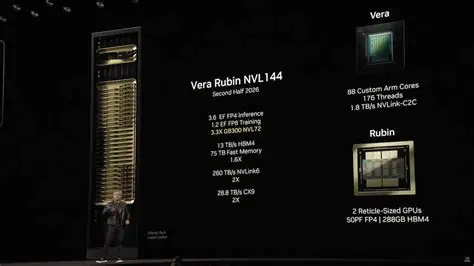
NVIDIA is all over the news right now! They are making a fresh push into China’s highly competitive artificial intelligence market despite ongoing U.S. export restrictions! These restrictions have restricted the company’s ability to sell some of its most advanced AI chips in the country. Apparently, the tech giant has begun promoting its upcoming Vera central processing unit (CPU) to Chinese customers ahead of its expected launch later this year.
The move highlights Nvidia’s determination to maintain its presence in one of the world’s largest technology markets, where demand for AI infrastructure continues to grow rapidly. This can be a great move, both for Nvidia and the people learning from it. Vera is designed to power next-generation AI systems and could play a key role in data centers running advanced AI applications. Such a bold step amidst a huge geopolitical tension is being debated, while it still remains a significant move from Nvidia.
What Is the Vera CPU and How Does It Work?
The Vera CPU is Nvidia’s next-generation data center processor designed to work alongside the company’s powerful AI chips. Unlike graphics processing units (GPUs), which handle huge parallel computing tasks required for training and running AI models, a CPU acts as the system’s central coordinator, as is commonly known. It manages data flow, handles operating system functions, and ensures that different components of a server work together efficiently without creating a lag, giving a smooth working experience.
Built on Nvidia’s custom ARM-based architecture, Vera is expected to deliver significant performance improvements over the company’s earlier Grace CPU. This is to be noted! It is specifically designed for AI-focused data centers, where speed, efficiency, and seamless communication between processors are the primary requirements, making people move faster than ever. By pairing Vera with Nvidia’s advanced AI accelerators, companies can process large AI workloads more effectively. The processor is all about supporting the growing demand for generative and agentic AI applications, which require gigantic computing power. For Nvidia, Vera represents an important step toward offering complete AI computing platforms rather than just some chips they designed and developed.
The Risks
These are unexplored waters right now! While the Vera CPU offers Nvidia a new opportunity in China, it also comes with significant risks, as is true for any new launch. The biggest challenge is the uncertain regulatory environment. Future U.S. export controls could affect how Nvidia markets or ships advanced computing products to Chinese customers. At the same time, Chinese companies are increasingly investing in domestic chipmakers, reducing their reliance on foreign technology. Competition from local firms could make it harder for Nvidia to gain market share, making that a possibility. There is also the risk that geopolitical tensions between the U.S. and China could disrupt business plans. If these factors intensify, Vera’s commercial success in China may face serious obstacles, while the idea itself is a great success.