In one of the largest-ever foreign investment waves in India’s automobile sector, Japanese automakers Toyota, Honda, and Suzuki are collectively steering nearly $11 billion into the country. The move signals a historic shift, positioning India not just as a manufacturing hub but as a strategic alternative to China, as global automakers look to diversify supply chains and cut dependence on Beijing.
India’s appeal lies in its winning trio — low production costs, a highly skilled workforce, and a government eager to attract manufacturing investments. Together, these factors are turbocharging the nation’s emergence as a serious global auto powerhouse.
Credits: trak.in
Suzuki Leads the Pack with a Massive $8 Billion Commitment
No stranger to Indian roads, Suzuki — through its local unit Maruti Suzuki, which already commands over 40% of the country’s car market — is leading the charge. The Japanese auto major plans to pour $8 billion to ramp up production to 4 million vehicles annually.
More than just expanding output, Suzuki’s ambition is clear: it wants to turn India into its global export base. “We would like to grow India as Suzuki’s global production hub,” said company president Toshihiro Suzuki. With strong domestic dominance and rising overseas shipments, Maruti Suzuki is positioned as the spearhead of Japan’s automotive globalization from Indian soil.
Toyota Drives Ahead with Hybrid Expansion and New Plant
Meanwhile, Toyota is gearing up for its own India acceleration. The carmaker plans to invest $3 billion to expand its hybrid component supply chain and set up a new manufacturing plant in Maharashtra.
The company also has ambitious plans to launch 15 new or updated models by 2030, hoping to increase its market share from 8% to 10%. With its fresh investments, Toyota’s production capacity in India will cross 1 million vehicles a year, underscoring the company’s long-term faith in the country’s growth story.
Industry experts note that Toyota’s push aligns with India’s own green mobility ambitions, as hybrids and cleaner technologies form a key bridge toward a full-electric future.
Honda Plugs into India’s Electric Future
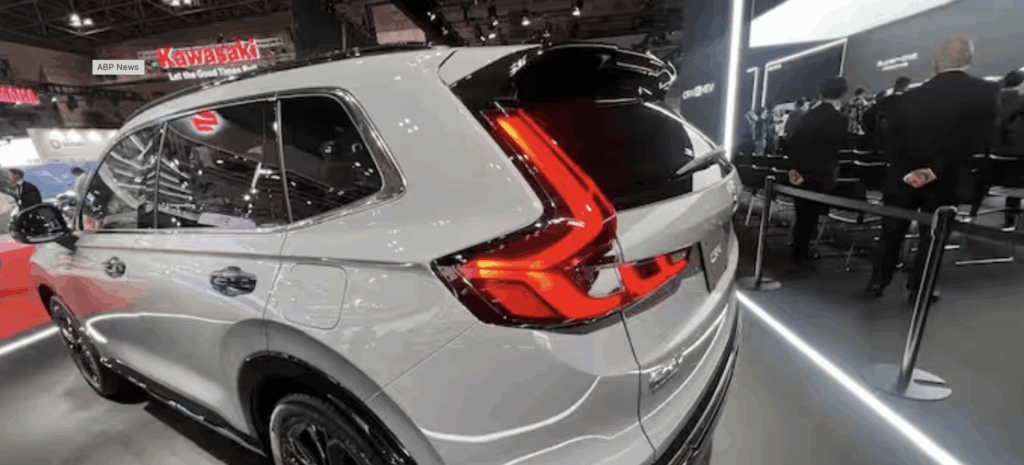
Not wanting to be left behind, Honda is also betting big on India’s electric future. The company plans to make India the export base for its upcoming “Zero Series” of electric vehicles, the first of which will roll out in 2027.
Honda’s global CEO Toshihiro Mibe highlighted India’s growing importance, noting that the country now ranks among Honda’s top three markets globally, alongside the U.S. and Japan. The automaker’s India operations are set to play a central role in its global EV strategy, marking a major step toward electrification.
India Over China: A Strategic Shift in Global Auto Investments
This massive investment surge also reflects a strategic pivot away from China. According to market data, Japan’s investment in India’s transport sector has surged sevenfold since 2021, reaching 294 billion yen ($2 billion) last year — while funding to China dropped by over 80% in the same period.
Analysts say the shift is no coincidence. China’s brutal EV price wars and shrinking profit margins have made it a tougher environment for foreign players. As Julie Boote of Pelham Smithers Associates puts it, “India offers better margins and fewer competitive pressures than China.”
Policy Push and Production Boom
The Modi government’s Make in India initiative, coupled with incentives for clean mobility and manufacturing, has played a pivotal role in attracting Japanese investments. Additionally, India’s tightened restrictions on Chinese investments have created a more favorable climate for Japanese and Western automakers seeking stability and market access.
Last fiscal year alone, India’s auto industry produced 5 million passenger cars, with exports up by 15% — a clear sign of the sector’s growing global competitiveness.

Credits: Mint
A New Auto Era for India
With Suzuki, Toyota, and Honda together revving up investments, India is entering a new phase in its automotive evolution — one that merges local innovation with Japanese precision.
As global automakers chase new markets, India is fast emerging not just as a destination for assembly lines, but as a strategic hub shaping the future of mobility.
The road ahead is promising — and for India, this $11 billion bet might just be the ignition spark that propels it into the driver’s seat of the global automobile industry.