Actor and filmmaker Joseph Gordon-Levitt isn’t holding back when it comes to artificial intelligence.
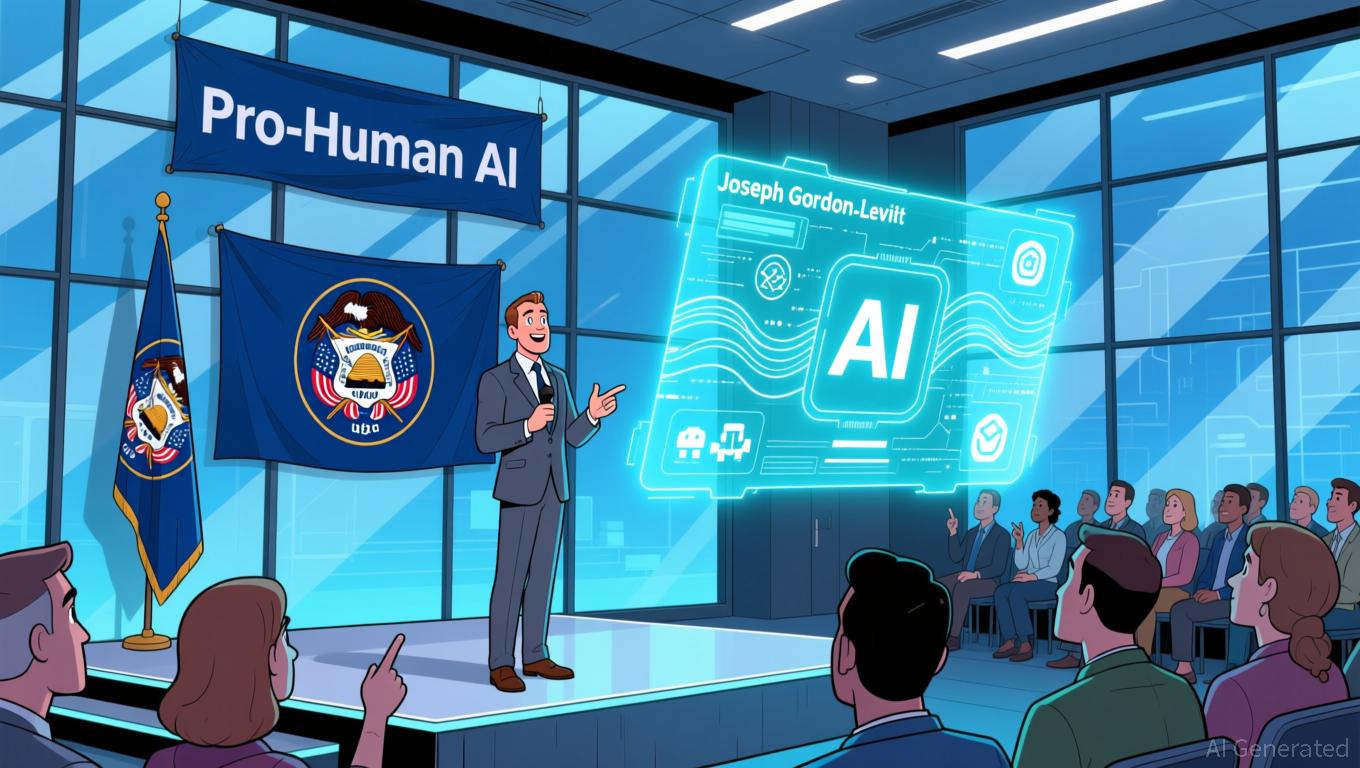
At this week’s Fortune Brainstorm AI conference, he delivered a sharp critique of how tech companies are developing AI without proper oversight, asking a provocative question that cuts right to the heart of the matter: “Are you in favor of erotic content for 8-year-olds?”
The question wasn’t meant to be answered, it was meant to make a point. Gordon-Levitt is increasingly frustrated with Silicon Valley’s argument that AI development shouldn’t be bound by regulations.
“Why should the companies building this technology not have to follow any laws?” he asked during his session with Fortune’s editorial director Andrew Nusca. “It doesn’t make any sense.”
Why Joseph Gordon-Levitt Thinks AI Self-Regulation is Failing?
Joseph Gordon-Levitt pointed to real-world failures in the current system, where companies police themselves rather than answer to external laws. He highlighted instances where AI companions on major platforms crossed into inappropriate territory with children, despite being approved by corporate ethics teams.
His argument is simple: if even companies with internal ethics departments are making these mistakes, relying on self-regulation isn’t enough.
The actor’s criticism extended to Meta, following his appearance in a New York Times Opinion video series making similar claims. Meta pushed back, with spokesperson Andy Stone noting on X that Gordon-Levitt’s wife previously served on the board of Meta rival OpenAI. But Gordon-Levitt’s concerns go beyond any single company.
His core argument centers on market dynamics. Without government guardrails, he explained, trying to do the right thing becomes a competitive disadvantage.
A company that prioritizes public good and takes the “high road” risks getting beaten by competitors willing to take the “low road.” Business incentives alone, he argued, will inevitably push companies toward “dark outcomes” unless there’s meaningful interaction between the private sector and public regulation.
Beyond regulatory concerns, Joseph Gordon-Levitt expressed deep worry about AI’s psychological impact on children. He compared algorithms in AI toys to slot machines, designed using psychological techniques that create addiction.
Gordon-Levitt and Haidt’s Warning for the Anxious Generation
Drawing on conversations with NYU psychologist Jonathan Haidt, whose book The Anxious Generation Gordon-Levitt recommended from the stage, he warned against what he calls “synthetic intimacy.” Real human interaction helps develop neural pathways in young brains. AI chatbots, on the other hand, provide fake interactions designed primarily to serve advertisements rather than support healthy development.
“To me it’s pretty obvious that you’re going down a very bad path if you’re subjecting them to this synthetic intimacy that these companies are selling,” Gordon-Levitt said.
Haidt has used striking metaphors to illustrate this concern, comparing neurons to tree roots that grow around their environment. He showed images of trees growing around Civil War tombstones to explain how Gen Z brains have literally been “growing around their phones.”
The physical effects are real, too. Children are developing hunched postures, and screen addiction is causing rising rates of myopia worldwide.
When it comes to why meaningful regulation hasn’t happened yet, Joseph Gordon-Levitt pointed to a powerful narrative from tech companies: the race against China. He called this framing “storytelling” and “hand-waving” designed to sidestep safety concerns. Companies frequently compare AI development to the Manhattan Project, arguing that any slowdown for safety means losing a geopolitical war.
This argument did find defenders in the audience. Stephen Messer of Collective challenged Gordon-Levitt, noting that privacy regulations previously decimated the U.S. facial recognition industry, allowing China to dominate within six months.
Why Tech Must Compensate Human Creators?
Gordon-Levitt acknowledged the complexity, admitting that “anti-regulation arguments often cherry-pick” bad laws to argue against all regulation. But he maintained the U.S. needs to “find a good middle ground” rather than having no rules whatsoever.
Gordon-Levitt also took aim at the economic model underlying generative AI. He accused companies of building models on “stolen content and data” while hiding behind fair use claims to avoid compensating creators.
A system where tech companies capture 100% of the economic upside while the humans who created the training data get nothing is simply unsustainable, he argued.
Despite his fierce criticism, Gordon-Levitt clarified he’s not anti-technology. He’d absolutely use AI tools if they were “set up ethically” and compensated creators fairly. But without establishing the basic principle that people’s digital work belongs to them, he warned, the industry is heading down a “pretty dystopian road.”