• Send Us A Tip
  • Calling all Tech Writers
  • Advertise
Wednesday, August 12, 2026
  • Login
TechStory
  • News
  • Crypto
  • Gadgets
  • Memes
  • Gaming
  • Cars
  • AI
  • Startups
  • Markets
  • How to
No Result
View All Result
  • News
  • Crypto
  • Gadgets
  • Memes
  • Gaming
  • Cars
  • AI
  • Startups
  • Markets
  • How to
No Result
View All Result
TechStory
No Result
View All Result
Home Tech

Judge Greenlights ‘New York Times’ Copyright Lawsuit Against OpenAI

by Sneha Singh
March 30, 2025
in Tech
Reading Time: 3 mins read
0
Judge Greenlights 'New York Times' Copyright Lawsuit Against OpenAI
TwitterWhatsappLinkedin

Federal Judge Sidney Stein has ruled that The New York Times can move forward with its copyright lawsuit against OpenAI, rejecting the AI company’s request to dismiss the case. 

You might also like

microSD Duplication Is Becoming More Than Just Copying Data

OpenAI Completes $7 Billion Secondary Share Sale at $852 Billion Valuation

Google Co-Founder Sergey Brin Spends Over $100 Million Fighting California’s Billionaire Tax Proposal

Although it restricted some of the suit’s scope, Judge Stein allowed the central copyright infringement allegations to proceed, vowing a full opinion would be forthcoming “expeditiously.”

The case is founded on allegations that OpenAI plagiarized The New York Times’ work for free or without authorization to train ChatGPT, the widely used AI chatbot. 

Publishers vs. OpenAI: Fair Use in the AI Age Goes to Trial

The Times and other publishers like The New York Daily News and the Center for Investigative Reporting argue that OpenAI illegally harvested massive amounts of their content from the web.

Steven Lieberman, the attorney for the news publishers, welcomed the decision, stating, “We welcome the opportunity to demonstrate to a jury the facts about how OpenAI and Microsoft are wildly profiting from plagiarizing the original work of newspapers across the nation.”
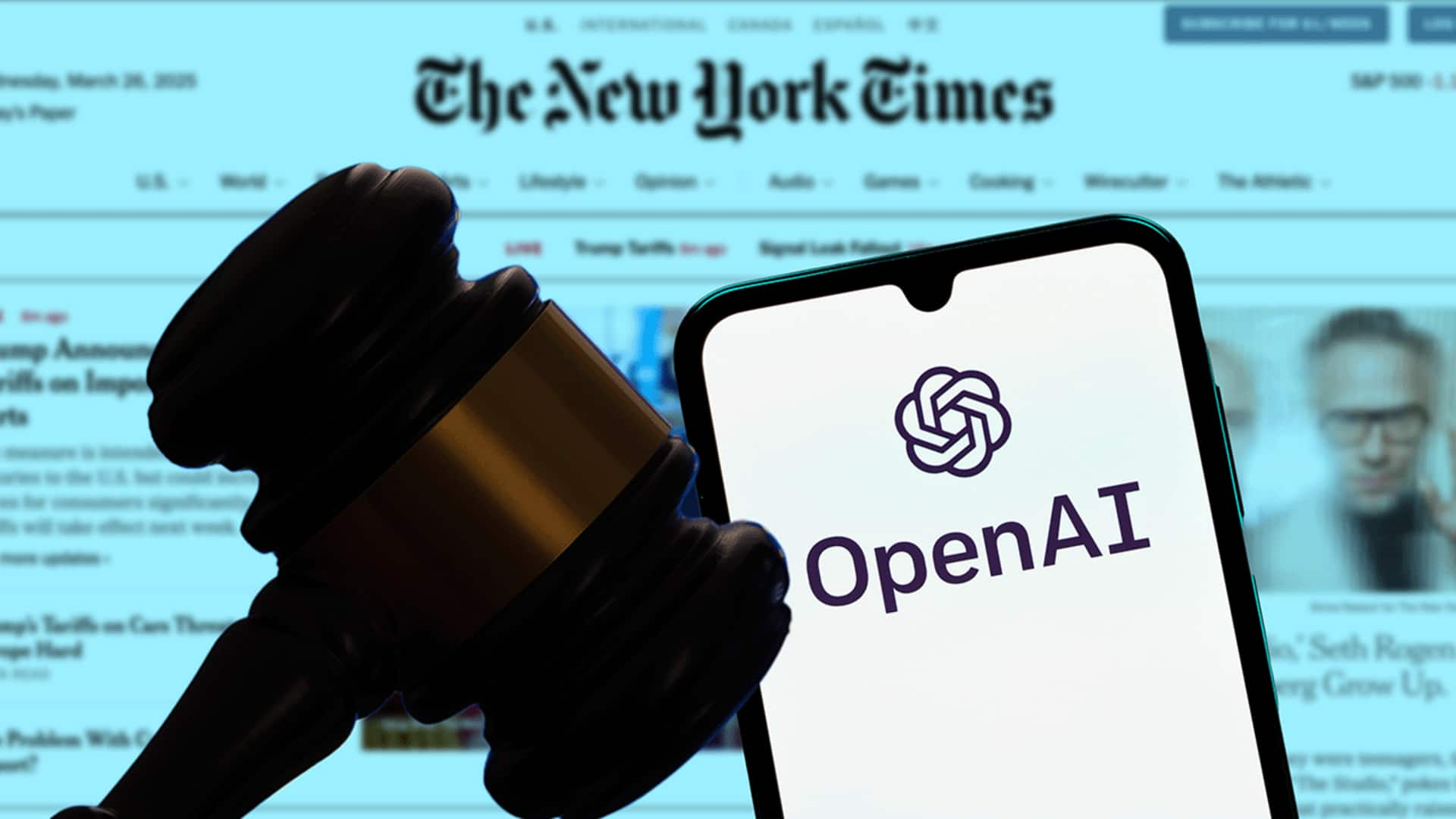
US judge allows NYT's copyright lawsuit against OpenAI to proceed
Credits: News Bytes

The New York Times believes its material is among the largest sources of copyrighted content used to build ChatGPT.

Its attorneys believe such utilization constitutes a violation of copyright and threatens the news business model by potentially reducing direct traffic to news websites.

OpenAI spokesperson Jason Deutrom responded that the company “looks forward to making it clear that we construct our AI models from publicly available data, rooted in fair use, and empowering innovation.” 

OpenAI claims its data collection falls under the “fair use” doctrine, which allows for limited use of copyrighted work without a license for research and commentary.

With the judge’s ruling, the case will proceed to trial, although no trial date has been set. Litigation will include private evidence gathering, executive depositions, and public pretrial hearings in an attempt to settle evidentiary disputes and other issues.

This court battle has profound implications for journalism and the creation of artificial intelligence. Publishers worry that AI chatbots that can summarize news stories would siphon off website traffic and ad revenue that many news outlets use to stay afloat. 

The AI industry has typically proceeded on the assumption that transforming web content into chatbot responses is a protected activity.

But the law is still in doubt. Already, courts have determined that fair use has to be “transformative” or at least comment on the original material. The Times contends that OpenAI’s reproduction of their reporting fails to meet these standards when ChatGPT merely replicates their reporting.

Content Creators vs. AI: Market Substitution at the Heart of Legal Dispute

A second central legal question is “market substitution” – whether chatbot answers really substitute for reading news sites or whether they serve up alternative markets. If courts find that AI chatbots do substitute for real news reading, this would be helpful to the publishers’ argument.

At a January New York hearing, lawyers for publishers claimed that ChatGPT would replicate Times articles word for word when presented with germane questions. 

OpenAI lawyers rebutted that publishers had been manipulating prompts in a manner intended to get the chatbot to replicate content, not characteristic of user interaction or system architecture.

The suit not only sues OpenAI but also Microsoft, which has heavily invested in the AI company. Although the case at hand targets these two firms specifically, the outcome could have an impact on how other AI companies approach content scraping and model training.

The verdict comes at a time when so many content creators, from writers to artists, have been wondering how their content is being used to train AI tools without pay or even credit. The ultimate court verdict may set important precedents in how AI companies train their models and how they are obliged legally to treat content creators in various industries.


 

Tags: AI ChatbotsArtificial IntelligenceChatGPTcopyright caseOpenAI
Tweet55SendShare15
Previous Post

OpenAI Nears $40 Billion SoftBank Funding Deal

Next Post

BluSmart Mobility Faces Leadership Shake-Up Amid Financial Crisis and Restructuring Efforts

Sneha Singh

Sneha is a skilled writer with a passion for uncovering the latest stories and breaking news. She has written for a variety of publications, covering topics ranging from politics and business to entertainment and sports.

Recommended For You

microSD Duplication Is Becoming More Than Just Copying Data

by Rohan Mathawan
August 12, 2026
0
microSD Duplication Is Becoming More Than Just Copying Data

For many companies, duplicating a microSD card sounds like a straightforward process: create a master card, copy the contents to multiple cards and ship them with the product....

Read more

OpenAI Completes $7 Billion Secondary Share Sale at $852 Billion Valuation

by Shailja Jha
August 11, 2026
0
OpenAI Completes $7 Billion Secondary Share Sale at $852 Billion Valuation

OpenAI has completed a massive $7 billion secondary share sale that values the artificial intelligence company at approximately $852 billion, marking another extraordinary milestone in the rapid rise...

Read more

Google Co-Founder Sergey Brin Spends Over $100 Million Fighting California’s Billionaire Tax Proposal

by Shailja Jha
August 11, 2026
0
Google Co-Founder Sergey Brin Spends Over $100 Million Fighting California’s Billionaire Tax Proposal

Google co-founder Sergey Brin has spent more than $100 million fighting California’s proposed billionaire tax, turning a personal financial battle into one of the biggest political spending campaigns...

Read more
Next Post
BluSmart Mobility Faces Leadership Shake-Up Amid Financial Crisis and Restructuring Efforts

BluSmart Mobility Faces Leadership Shake-Up Amid Financial Crisis and Restructuring Efforts

Please login to join discussion

Techstory

Tech and Business News from around the world. Follow along for latest in the world of Tech, AI, Crypto, EVs, Business Personalities and more.
reach us at info@techstory.in

Advertise With Us

Reach out at - info@techstory.in

Aviator Game India 2026

BROWSE BY TAG

#Crypto #howto 2024 acquisition AI amazon Apple Artificial Intelligence bitcoin Business China cryptocurrency e-commerce electric vehicles Elon Musk Ethereum facebook funding Gaming Google India Instagram Investment ios iPhone IPO Market Markets Meta Microsoft News OpenAI samsung Social Media SpaceX startup startups tech technology Tesla TikTok trend trending twitter US

© 2025 Techstory.in

No Result
View All Result
  • News
  • Crypto
  • Gadgets
  • Memes
  • Gaming
  • Cars
  • AI
  • Startups
  • Markets
  • How to

© 2025 Techstory.in

Welcome Back!

Login to your account below

Forgotten Password?

Retrieve your password

Please enter your username or email address to reset your password.

Log In
Are you sure want to unlock this post?
Unlock left : 0
Are you sure want to cancel subscription?