It has been three years since ChatGPT shook the world of artificial intelligence, and now the company that owns ChatGPT is facing very serious questions about its future. OpenAI, which was once the undisputed leader in the world of consumer AI, is now struggling with rising costs, competition, and a business model that may just be its undoing.
The issue is that OpenAI is burning through cash at an unprecedented rate and falling behind its competitors who have more money and a more stable income stream.
The figures are mind-boggling. OpenAI, Deutsche Bank estimates, could rack up losses of $143 billion in negative cash flow before turning a profit, the biggest startup losses of all time. Some analysts worry that the true cost could exceed $200 billion by 2030.
The firm is said to shell out $15 million a day alone on its text-to-video AI model Sora, which translates to around $5 billion a year in losses for that product alone. Even Bill Peebles, the chief engineer of Sora, admitted that the “economics are currently completely unsustainable.”
This level of outlay would not be so alarming if OpenAI had the same financial safety net as its rivals. Unlike Google, which has been a tech giant for years and only recently launched its successful Gemini chatbot following the success of ChatGPT, OpenAI has no diversified business to fall back on and generate steady cash flow. The firm, which is a decade old, is sustained almost entirely by investor capital and must find a way to generate a steady income stream as soon as possible.
This may be why OpenAI recently revealed that it plans to add advertising to ChatGPT, a move that CEO Sam Altman has stated would never happen.
Why OpenAI is Fighting for Its Life and Its Mission
Perhaps more troubling than the financial struggles is OpenAI’s slipping market position. ChatGPT traffic declined in November, marking the second month-over-month drop of 2025. Meanwhile, Google’s Gemini has surged to 650 million monthly active users.
“The company that was supposed to build AGI can’t keep its chatbot competitive,” wrote George Noble, a former Fidelity manager, referring to OpenAI’s stated mission of developing artificial general intelligence that could be “generally smarter than humans.”
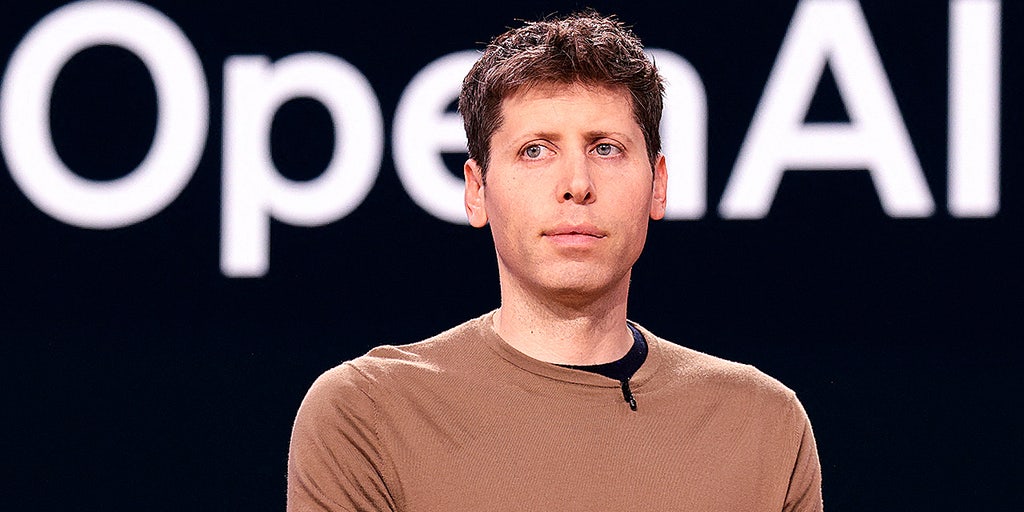
Sebastian Mallaby, senior fellow at the Council on Foreign Relations, put it bluntly in a New York Times opinion piece: “My bet is that over the next 18 months, OpenAI runs out of money.”
Beyond immediate financial concerns lies a deeper challenge facing the entire AI industry. Critics argue that improvements in AI capabilities are becoming exponentially more expensive while delivering only marginal gains.
“It’s going to cost 5x the energy and money to make these models 2x better,” Noble explained. “The low-hanging fruit is gone. Every incremental improvement now requires exponentially more compute, more data centers, more power.”
This raises a critical question: Can AI’s utility increase fast enough to justify skyrocketing costs? Many observers believe the industry has hit a point of diminishing returns, where each generation of models requires massive investment but delivers less impressive improvements.
Sam Altman’s Warning and OpenAI’s Race Against Time
Interestingly, Sam Altman himself has acknowledged the precarious situation. “When bubbles happen, smart people get overexcited about a kernel of truth,” he said recently. “Someone is going to lose a phenomenal amount of money. We don’t know who, and a lot of people are going to make a phenomenal amount of money.”
For OpenAI to survive, it needs to generate roughly $200 billion in annual revenue by the decade’s end, a 15-fold increase from current levels, all while costs continue climbing and competition intensifies.
OpenAI may try to shift its focus to optimising its resources for making ChatGPT more competitive, but this would also mean sacrificing other initiatives. The company is also facing increasing legal disputes and regulatory pressures, which could further drain its resources.
Noble’s counsel to AI startups is grim: “If I were running an AI startup with good traction right now, I’d be looking for an exit. Sell into the hype before the music stops.”
Whether OpenAI can overcome these issues is a question that remains to be seen. One thing is certain, however: the company that ignited the AI revolution is now struggling to stay alive in the market it itself created.