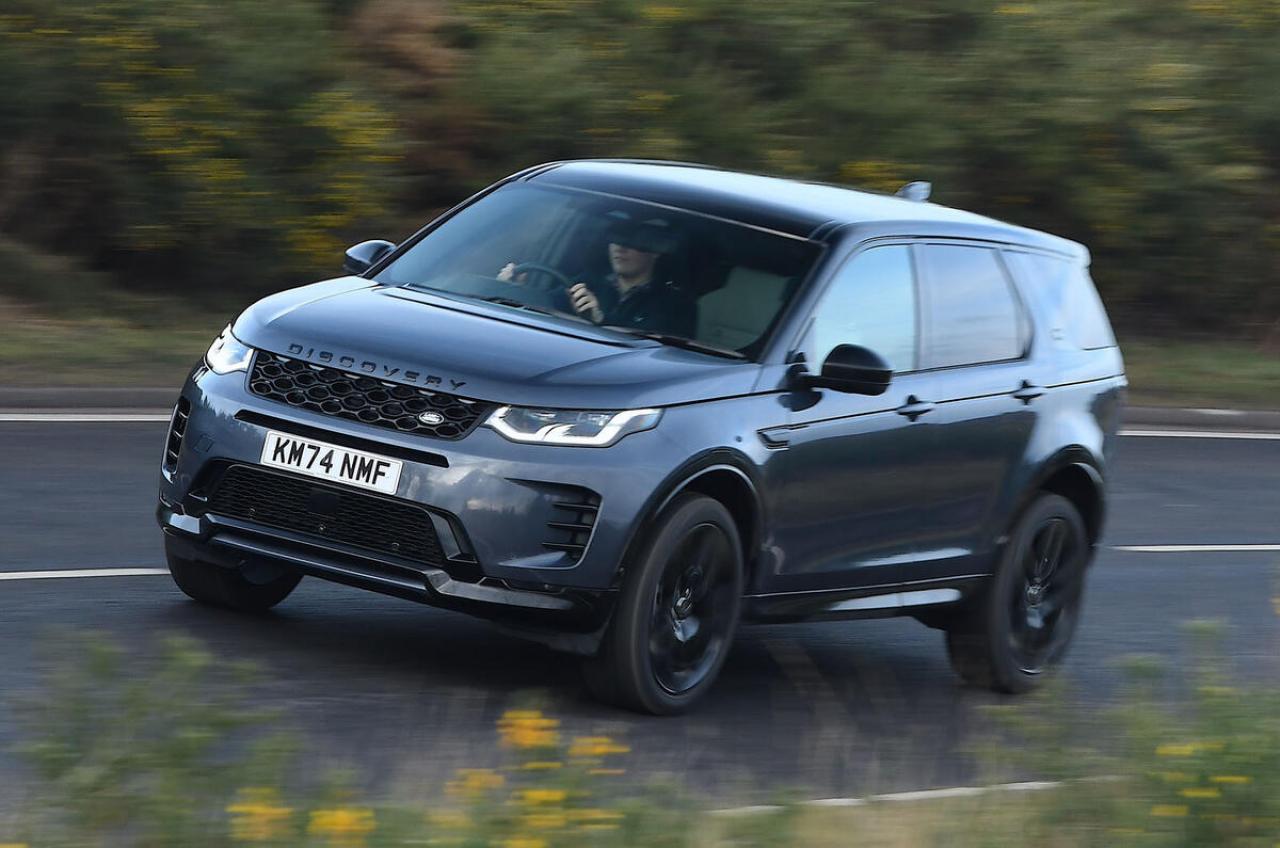
The Land Rover Discovery Sport is nearing the end of its journey. Jaguar Land Rover (JLR) has confirmed that production of the popular SUV will conclude in December 2026, bringing an end to one of the longest-serving models in the company’s lineup.
After more than a decade on sale, the Discovery Sport will gradually disappear from global markets as JLR shifts its focus toward a new generation of electric and premium vehicles. While customers in the UK can still configure the SUV for now, factory orders have already been closed in several European countries, including Germany, France, and Spain.
The decision marks the end of a model that once played a crucial role in Land Rover’s global success.
A Strong Seller That Defined an Era
Introduced in 2015 as the replacement for the Freelander, the Discovery Sport quickly became one of Land Rover’s most successful vehicles. Its blend of practicality, premium styling, seven-seat versatility, and genuine off-road capability made it attractive to families looking for more than a conventional crossover.
The SUV reached its commercial peak in 2016 when global sales exceeded 122,000 units, making it JLR’s best-selling model that year.
Although competition in the premium SUV segment intensified over the years, the Discovery Sport remained relevant thanks to a comprehensive update introduced in 2019. The facelift brought a revised platform, improved cabin technology, new powertrains, and modern styling, helping the model stay competitive despite its age.
However, market trends eventually caught up. By 2025, annual sales had fallen to less than one-tenth of their 2016 peak, making it the slowest-selling vehicle in JLR’s portfolio.
Safety Rules Accelerate the Exit
One of the biggest reasons behind the Discovery Sport’s retirement is Europe’s updated General Safety Regulation 2 (GSR2), which introduced stricter safety requirements for new vehicles.
The aging Discovery Sport was not engineered to support several of the mandatory driver assistance and safety technologies now required in European markets. Retrofitting these systems into an 11-year-old platform would have required significant engineering investment, an expense that becomes difficult to justify for a model nearing the end of its lifecycle.
Rather than redesigning the SUV once again, JLR has chosen to phase it out.
A similar strategy has already been seen elsewhere in the industry, with Porsche discontinuing the first-generation Macan in Europe after facing comparable regulatory challenges.
What Happens to the Evoque?
The Discovery Sport’s retirement naturally raises questions about the future of the closely related Range Rover Evoque. Both SUVs are produced at JLR’s Halewood manufacturing facility and share key engineering foundations.
For now, however, the Evoque appears safe.
JLR recently refreshed the luxury compact SUV and has continued introducing special edition variants to maintain customer interest. Company executives have indicated that the Evoque will remain part of the lineup while the brand prioritizes launching new electric flagships, including the Range Rover Electric and the upcoming Range Rover Sport Electric.
The strategy allows JLR to maintain a presence in the entry-level premium SUV segment without committing immediate resources to a complete replacement.
New Models Are Waiting in the Wings
The Discovery Sport’s departure is also part of a much broader transformation taking place inside JLR.
The company is investing heavily in its next-generation Electric Modular Architecture (EMA), which will underpin several future models. Among the first is the sleek Range Rover GT, expected to become one of the brand’s most technologically advanced vehicles.
Another important addition is the upcoming Defender Sport, a smaller and more accessible version of the Defender. Industry observers expect it to occupy much of the space currently served by both the Discovery Sport and, eventually, the Evoque.
Rather than offering multiple similarly sized SUVs, JLR appears to be simplifying its portfolio around stronger and more distinctive product identities.
End of a Familiar Nameplate
The Discovery Sport leaves behind an impressive legacy. For many buyers, it represented an accessible entry into the Land Rover family without sacrificing the brand’s signature capability or premium appeal.
Its retirement also signals a changing automotive landscape, where tightening regulations, electrification, and shifting customer expectations are forcing manufacturers to rethink even their most successful nameplates.
As production comes to an end in late 2026, the Discovery Sport will be remembered as one of Land Rover’s defining SUVs of the past decade—a model that successfully bridged traditional off-road heritage with the demands of modern family motoring before making way for the company’s electric future.