Satya Nadella has quietly but amazingly returned to the personal blogging space, launching “sn scratchpad” and using it to articulate his musings on where the industry of artificial intelligence is headed. The first post, “Looking Ahead to 2026,” from the Microsoft CEO dropped around December 28, 2025, and it is already generating buzz across the tech industry for its candid take on AI’s growing pains and its potential to reshape how we work and live.
It feels like deliberate timing. In 2026, AI has reached an inflection point, really. The technology has moved beyond proof-of-concept demos and into real-world scrutiny. Nadella doesn’t skirt what’s perhaps the most important issue right now:
“AI slop” the term that seems to have become a stand-in for the low-quality and often unhelpful content generated by AI, just deluging the internet. He’s not smitten with debating whether AI output is sophisticated enough; instead, he wants the industry to get past that conversation entirely and start talking about what really matters.
How Microsoft is Redefining the Human-AI Paradigm?
One of the most thought-provoking suggestions in this post is the need for a new understanding of the role of AI in our world.
Nadella relates the familiar “bicycles for the mind” concept, the term was coined by Apple Maven Steve Jobs when describing computers, but proposes we have something more useful in this new world of AI assistance in our lives.
This is not merely semantic wordplay. Nadella continues that we must develop “a new ‘theory of the mind’ that integrates the fact that the human is the user of the cognitive amplifier.”
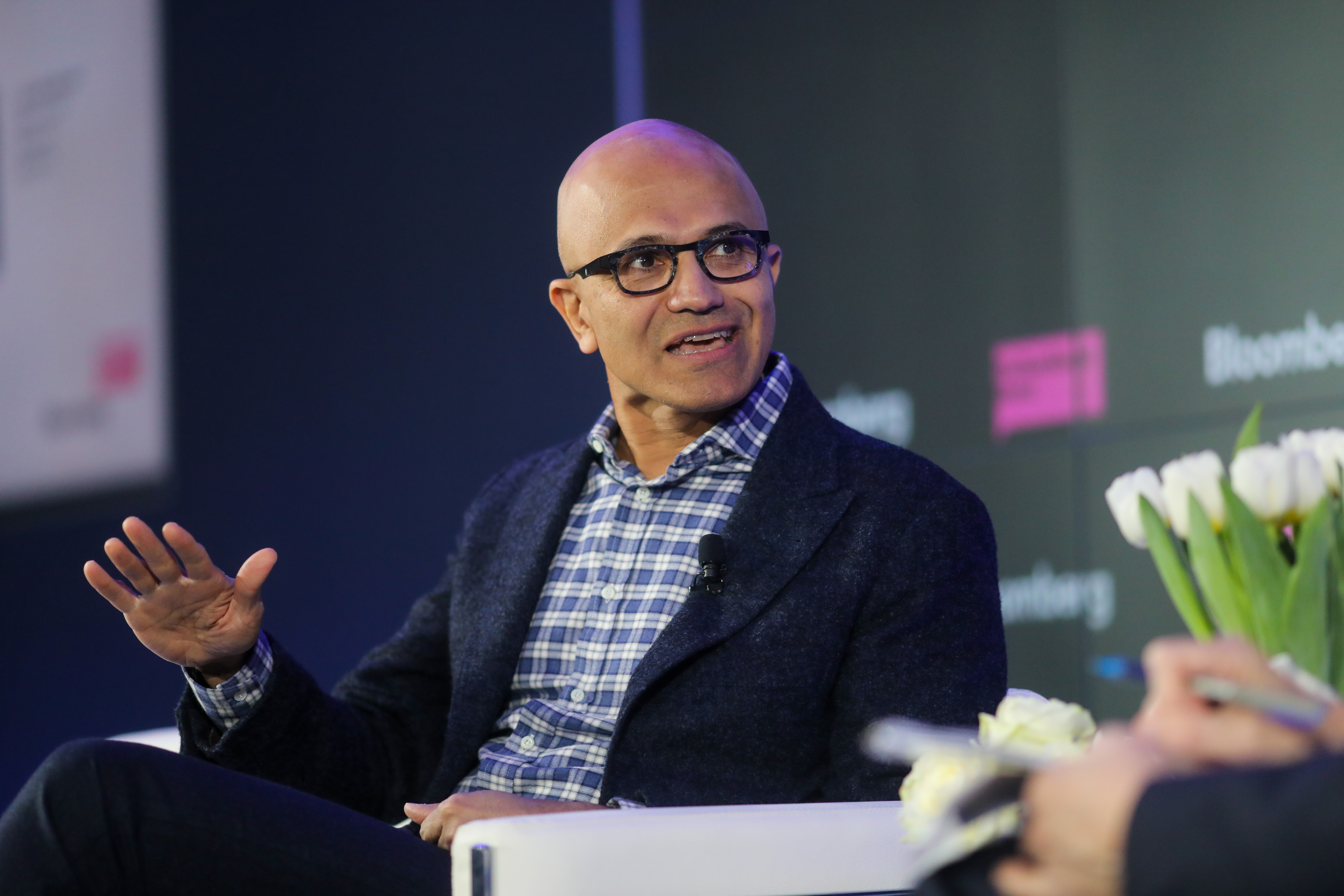
This is a paradigm that recognizes AI as the tool that enables and extends our thinking rather than the thing that does the thinking for us.
Nadella’s vision for the future of AI is a far cry from today’s obsession with ever more massive language models.
Today, while the past few years have been spent playing a game of one-upmanship among vendors racing to create increasingly massive and powerful language models, Nadella is talking up multi-agent systems, the use of AI designed so that multiple specialized agents are given appropriate rights and privileges and are able to use tools safely.
This is in part due to what can be gleaned from the first wave of real-world deployment of AI. When it comes to real-world tasks, single, monolithic systems are limited. On the other hand, there are multiple-agent systems that are capable of taking apart a problem, remembering the context of time, and engaging with tools and sources of data in the way that humans do.
The Pragmatic AI Philosophy of Satya Nadella
One of the most interesting aspects of Nadella’s blogging on this topic is his focus on what he terms “societal permission.” This is more than just regulatory compliance and corporate social responsibility.
Nadella is asserting that the AI industry must earn the right to use these techs to achieve positive results on the planet.
This is encouraging pragmatism. Rather than urging the public to take on faith the belief that AI will somehow provide benefits in the future, Nadella is urging the industry to demonstrate its credentials through its decisions on the deployment of AI.
Get problems sorted out in fields such as medical provision, climate change, educational underachievement, and the industry’s performance on those problems can be measured.
The moment snscratchpad.com went live marks the comeback to personal blogging for Nadella after years of posting through official Microsoft outlets. There is a strange satisfaction to a technology CEO starting a personal blog in the year 2025.
This is a nostalgic throwback to the days of the early 2000s blogging scene.
Why 2026 Is the Year AI Gets Real?
Nadella further reiterated the message in the post on LinkedIn when he emphasized that the success in the year 2026 will not be based on the creation of the largest model, but on how AI is integrated in everyday life.
This post has elicited mixed reactions from the industry, ranging from excitement to the worry that the performance in AI cannot live up to this ambition, especially in the wake of the major investments in Copilot AI.
As we move into 2026, Nadella’s thoughts on AI are very useful for learning how to think about progress here. The measure of whether or not AI systems are becoming smarter is no longer enough. The question is, are they becoming more useful, trustworthy, and human-centric? It’s a dialogue that needs to be had and needs to be taken beyond those in the technology sector.