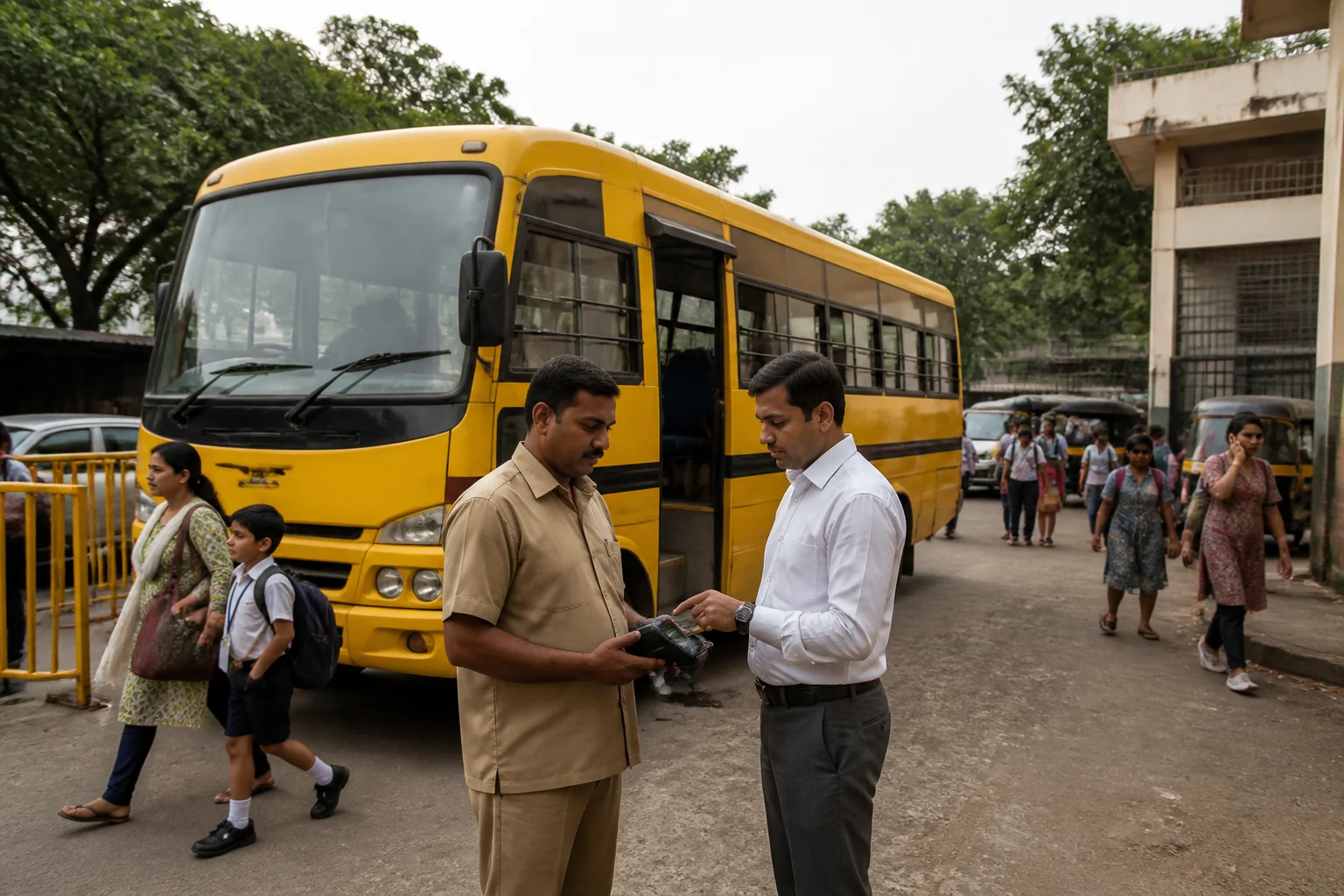
Mumbai’s School Bus Owners Association (SBOA) has announced that it will stop accepting Unified Payments Interface (UPI) payments for school bus fees after October 15, citing concerns over proposed transaction charges. The decision could affect parents who routinely use digital payments to pay transportation fees for their children.
The association has advised parents to switch to alternative payment methods, including cheques and other banking options, as it prepares to discontinue UPI payments. The move comes amid concerns over the potential financial burden of transaction charges on school bus operators, particularly when parents pay fees several months in advance.

Credits: Mid-Day
School bus operators raise concerns over UPI charges
The SBOA’s decision follows an announcement attributed to the Union Finance Ministry regarding charges on UPI transactions exceeding Rs 2,000. According to the association, advance payments for school transportation frequently cross this threshold, making digital transactions a concern for operators.
Anil Gard, president of the SBOA, said the responsibility for paying transaction charges would fall on merchants receiving payments. This means school bus drivers and transportation companies could face additional expenses when parents pay their fees through UPI.
“The cost of the transaction is to be paid by the merchant receiving the payment,” Gard said, explaining why operators were considering alternative payment methods.
He added that six-month advance payments generally exceed Rs 2,000, making the proposed charges particularly relevant to school transportation businesses.
For operators handling payments from numerous families, even relatively small transaction fees could add to their operating expenses. The association’s position reflects concerns about the cumulative cost of accepting digital payments, especially when transportation fees are collected in advance rather than monthly.
Why advance school bus fees are at the centre of the dispute
School transportation payments often follow schedules that differ from everyday consumer transactions. Parents may pay several months’ worth of bus fees at once, resulting in payments that are significantly higher than the Rs 2,000 threshold cited by the association.
These larger payments are central to the operators’ concerns. According to Gard, the typical six-month advance fee exceeds the specified limit, potentially exposing bus operators to additional charges when parents use UPI.
The proposed shift could also change how families manage school-related expenses. UPI has become a convenient option for many households because it allows payments directly from bank accounts without requiring physical cash or cheques.
Moving away from this system could mean that parents need to plan their payments differently, particularly if they are accustomed to completing transportation fee transactions through mobile payment applications.
However, the association’s announcement does not necessarily mean that all school transportation providers in Mumbai will follow the same approach. The decision outlined by the SBOA concerns its own payment policy, and the extent of its impact will depend on the operators and families affected.
Association issues circular outlining alternative payment methods
In a circular addressed to parents, the SBOA announced the change in its payment policy and advised families to use alternative methods for paying school bus fees.
According to the circular, bus fees would henceforth be accepted through cheques or credit cards. Gard also referred to NetBanking transfers as a possible alternative, indicating that operators are considering banking-based payment methods instead of UPI.
Parents may therefore need to confirm the accepted payment options with their respective bus operators before making their next payment. Those who usually pay six months of fees in advance may also need to check whether their preferred method is available and whether any additional conditions apply.
The October 15 deadline gives parents a limited window to make payments through the existing digital payment arrangement, according to the association’s announcement.
The change could be particularly relevant for families who rely on UPI for recurring household expenses and prefer to avoid the paperwork or processing time associated with other payment methods.

Credits: Urban Acres
What parents should know before October 15
Parents using school bus services associated with the SBOA should check the latest instructions issued by their operators and confirm the available payment channels. They should also retain payment receipts and verify the applicable fee amount before completing a transaction.
The reported announcement has raised questions about how transaction charges could affect the use of digital payments for school transportation. However, the precise scope of the proposed charges, their implementation and their applicability to individual transactions should be verified through official government or banking communications.
For now, the SBOA’s announcement signals a potential shift in how some Mumbai families pay school bus fees. Whether the move remains limited to the association’s members or prompts a broader response from other transportation operators will become clearer as the October 15 deadline approaches.