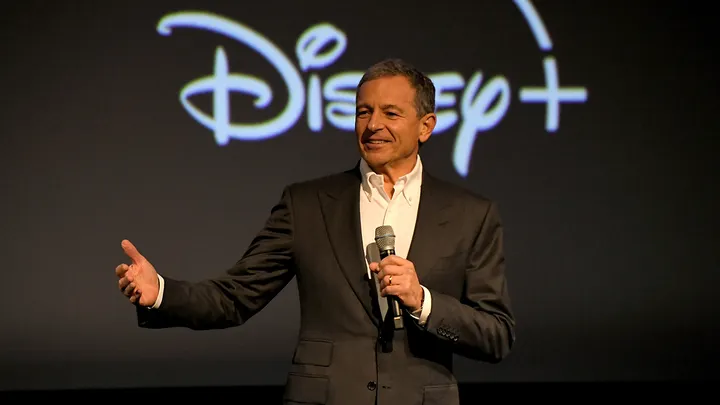
Tesla’s CEO Elon Musk, who happens to be the owner of X (previously called Twitter) and a well-known billionaire, has openly demanded the dismissal of Disney’s Chief Executive Officer, Bob Iger. This bold call for action comes in the wake of Disney’s decision to withdraw advertisements from Musk’s platform (X), a move that has sparked significant debate and attention.
Musk took to social media, a platform where he is notoriously vocal, to express his dissatisfaction with Iger’s decision. Musk, who is no stranger to using his influential status to confront critics, did not mince words in his condemnation of Iger, stating emphatically, that Iger should be promptly dismissed and that Walt Disney would disapprove of the direction Iger is taking the company. This statement reflects Musk’s deep disapproval of the direction in which he perceives Iger is taking Disney.
Furthermore, Musk’s criticism of Iger is rooted in a broader context. Disney, along with several other major corporations, ceased advertising on X last month following Musk’s endorsement of an anti-Semitic conspiracy theory favored by white supremacists. Although Musk offered a tacit apology for his post, he simultaneously delivered a profanity-laced message to companies that have chosen to avoid advertising on his platform.
At the New York Times DealBook Summit, Musk directed his ire specifically at Iger, criticizing the Disney CEO for the decision to stop advertising on X and citing Musk himself as the reason. Iger, in response, explained that the association of Disney with Elon Musk and X was gaining negativity for the company.
This incident is part of a larger trend observed on X since Musk assumed control in late 2022. His leadership decisions have led to an increase in hate speech, misinformation, and conspiracy theories on the platform. Musk himself has contributed to this toxicity, including promoting the false and dangerous Pizzagate conspiracy theory. The lack of major advertising partners due to these issues has severely impacted X’s finances, as the platform heavily relies on advertising revenue.
Addressing the ongoing advertising boycott during the DealBook Summit, Musk openly acknowledged that this situation is likely to lead to the downfall of his company, suggesting that the advertising boycott will prove fatal. Despite these financial challenges, Musk has not assumed personal responsibility for the situation, opting to shift blame onto advertisers and indicating that they will bear responsibility for X’s potential downfall..
As per The New York Times, the escalating advertiser boycott is projected to result in a roughly $75 million decline in X’s ad sales this year, impacting the company’s hopeful outlook of achieving profitability in the first quarter of 2024. Elon Musk revealed that, excluding additional earnings from subscriptions and data licensing, X’s ad revenue has fell by 50% year over year, potentially reducing the 2023 ad revenue to $2 billion. Despite Musk’s efforts to cut costs, X’s annual expenditures still range from $2 billion to $2.8 billion. According to the report, X’s route to profitability was complicated by its overly optimistic revenue expectations, which were unstable even before the recent ad boycott.
In conclusion, the clash between Musk and Iger represents a significant moment in the intersection of social media, corporate responsibility, and public discourse. As the situation continues to evolve, it remains to be seen how this conflict will impact the future of both X and Disney, and what repercussions it may have for the broader media and technology landscape.