Elon Musk’s artificial intelligence venture xAI is securing up to $20 billion in a groundbreaking financing arrangement led by Nvidia, marking what analysts believe could be a turning point in how technology companies fund their race for AI dominance.
The deal stands out not just for its size, but for its innovative structure. Rather than a traditional investment, the arrangement combines roughly $7.5–$8 billion in equity with up to $12.5 billion in debt, all centered around a unique hardware leasing model that could serve as a blueprint for the industry’s future.
How xAI Secures Nvidia GPUs and De-Risks Investment?
At the heart of this arrangement is a special purpose vehicle (SPV) that will purchase Nvidia’s powerful graphics processors—the chips that have become the gold standard for training advanced AI models.
These GPUs will then be leased to xAI over a five-year period, with Nvidia potentially taking a direct equity stake of up to $2 billion in the company.
This setup is attracting major institutional investors like Apollo Global Management and Diameter Capital Partners because it fundamentally changes the risk equation.
Instead of betting solely on xAI’s business prospects, investors can recover their money through rental payments backed by tangible hardware assets. If things go south, they’re left holding valuable computing equipment rather than empty promises.
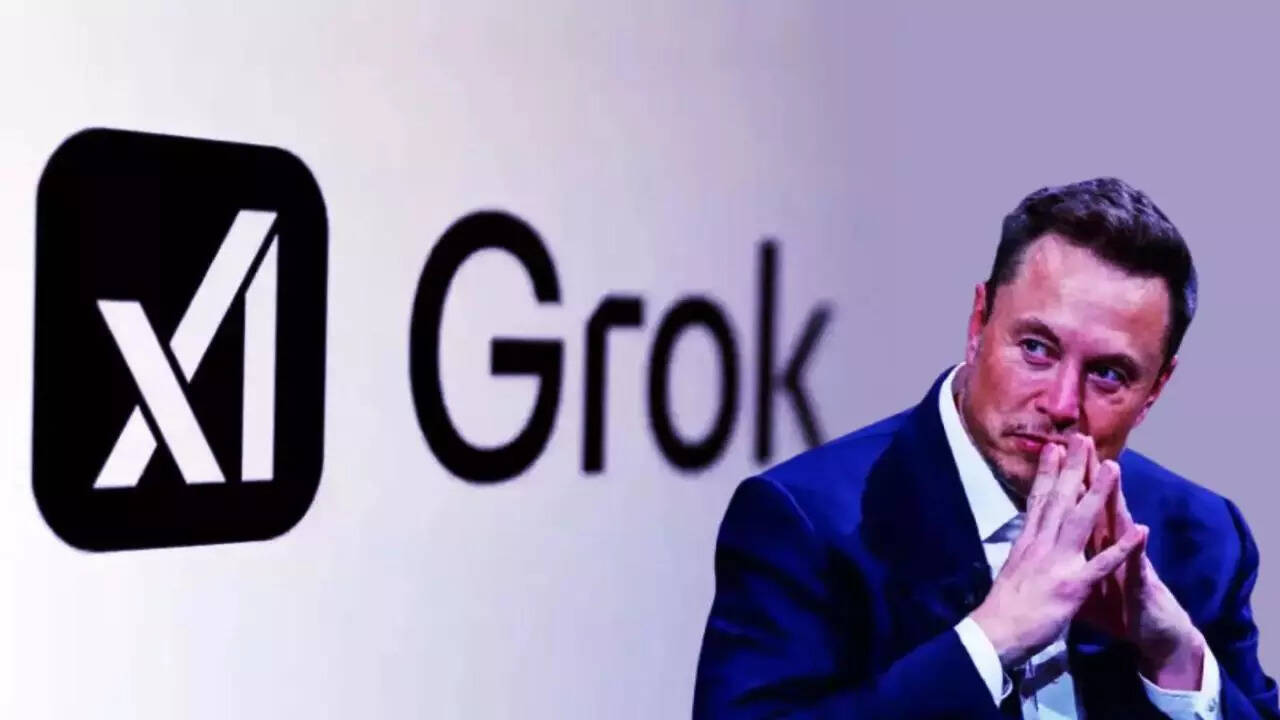
“It’s a clever way to secure both capital and critical resources at the same time,” explains one industry analyst. “In an environment where GPU supply is tight and AI infrastructure demands are soaring, xAI gets guaranteed access to the chips it needs while investors get asset-backed security.”
The implications of this deal extend far beyond xAI’s balance sheet. For starters, it solves one of the biggest headaches facing AI companies today: securing enough computing power. Nvidia’s GPUs are in such high demand that some companies wait months for delivery. By tying financing directly to hardware acquisition, xAI jumps to the front of the line.
The model also offers a template for other companies struggling to fund massive AI infrastructure buildouts without overleveraging themselves. Traditional debt can weigh down a company’s balance sheet, while giving up equity dilutes ownership. This hybrid approach provides a middle path that could prove especially attractive as AI projects grow more capital-intensive.
xAI Secures Mega-Funding to Rival OpenAI, Nvidia’s Strategic Revenue Shift
Wall Street is taking notice. The structure creates predictable revenue streams from hardware leases while offering downside protection through physical assets—exactly the kind of risk-reward profile that appeals to institutional investors looking to participate in the AI boom without excessive exposure.
Nvidia, for its part, is signaling that these types of investments will become a core part of its strategy going forward. The chip giant is leveraging its financial muscle to accelerate AI adoption, essentially helping customers deploy its products faster while securing new revenue channels beyond traditional chip sales.
xAI launched in 2023 with a team of elite researchers poached from OpenAI, Google DeepMind, and Google Brain. The company’s flagship product, Grok, is an advanced chatbot integrated into X (formerly Twitter) that aims to compete directly with ChatGPT and similar tools.
The new capital will fund the expansion of xAI’s Colossus 2 data center in Memphis and accelerate the development of Grok’s capabilities. But xAI isn’t alone in raising massive sums. OpenAI pulled in $40 billion earlier this year, highlighting just how much money is flooding into AI development.
How a Strategic Hardware Deal is Reshaping Industry Economics?
As model complexity and infrastructure requirements grow exponentially, companies are getting creative about financing. The days of relying solely on venture capital or corporate coffers are giving way to sophisticated financial engineering that blurs the lines between equipment financing, strategic partnerships, and traditional investment.
Industry observers expect competitors like OpenAI, Google, and Meta to watch this deal closely. If it proves successful, similar arrangements could proliferate quickly, intensifying competition not just for AI talent and technology, but for capital and computing resources.
The xAI-Nvidia arrangement represents a potential inflection point in AI industry economics. By demonstrating how hardware acquisition, financing, and risk management can be bundled into a single structure, it may well establish a new playbook for funding the next generation of AI infrastructure.
For an industry already moving at breakneck speed, this deal could accelerate things even further not just by funding one company’s ambitions, but by creating a replicable model that unlocks billions more in AI investment across the sector.