The practice of using consumer data to deliver personalized ads and targeted discounts has defined retail strategy for over a decade. However, as grocery stores integrate artificial intelligence and predictive algorithms into their pricing strategies, consumer advocates and state regulators warn that data tracking is no longer used simply to offer savings it is being weaponized to extract maximum profit. In a major legislative response, New Jersey has become one of the first states in the nation to restrict retailers from using personal information to dictate what individual shoppers pay for basic necessities.
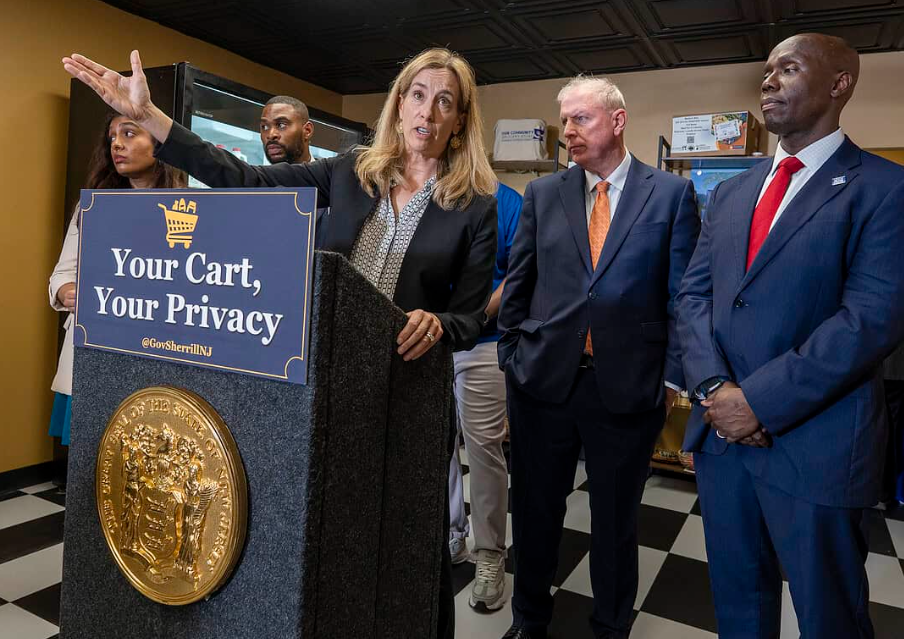
Gov. Mikie Sherrill signed the Fair Price Protection Act into law during a press conference at Our Community Grocery Store in Newark, surrounded by state lawmakers and consumer rights advocates. The legislation explicitly bans grocery stores from engaging in “surveillance pricing” a data-driven model where algorithms analyze a customer’s digital history, location, biometrics, and browsing habits to predict the absolute maximum price they are willing to pay for an item.
1. What Is “Surveillance Pricing”?
Traditional grocery pricing relies on static costs set across an entire store or chain, supplemented by storewide promotions or loyalty program discounts. Dynamic pricing, by contrast, adjusts prices based on broader supply and demand factors such as surge pricing during peak hours.
The Fair Price Protection Act targets a far more intrusive mechanism: individualized surveillance pricing. Under this model, an algorithm might observe that a shopper frequently buys a specific brand of baby formula, lives in a zip code with few competing markets, and searches for urgent grocery deliveries. The system then adjusts the price upward for that specific user, exploiting their lack of alternatives or immediate need.
“Surveillance pricing weaponizes your data against you,” Gov. Mikie Sherrill stated. “Companies figure out where you live, where you shop, and even what you’re Googling, and they use that data to calculate specific, often higher, prices for items you need without your knowledge.”
2. Key Provisions of the Fair Price Protection Act
The new law introduces strict guardrails around grocery pricing technologies, consumer data usage, and enforcement mechanisms:
| Policy Area | Statutory Regulation & Requirement |
| Prohibited Data Inputs | Banned from using digital browsing history, location metrics, biometric information, or genetic data to calculate customized prices. |
| Electronic Shelf Labels (ESLs) | Imposes a one-year pause on electronic shelf displays while state regulators analyze whether real-time price updates contribute to unfair consumer practices. |
| Dynamic Pricing Exception | Demand-based dynamic pricing (such as general price changes based on time or inventory) remains legal, provided it does not rely on personal tracking. |
| Loyalty Program Shield | Explicitly permits traditional sales, coupons, and uniform customer loyalty discounts, provided they are offered equally across member tiers. |
| Enforcement & Penalties | Enforced under the New Jersey Consumer Fraud Act. Violators face fines up to $10,000 for a first offense and $20,000 for subsequent violations, alongside civil lawsuit liability. |
3. Debate: Industry Pushback vs. Consumer Protection
The legislation passed following intense debate between business groups and working-family advocates regarding the operational impact of data restrictions. Michele Siekerka, President and CEO of the New Jersey Business & Industry Association (NJBIA), criticized the bill, arguing that lawmakers presented a false choice between protecting consumers and operational efficiency. Siekerka warned that compliance costs and data limits could unintentionally force grocers to eliminate popular loyalty programs, coupons, and customer-specific discounts.
Conversely, Antoinette Miles, Director of the New Jersey Working Families Party, hailed the law as a vital defense against corporate greed during an ongoing affordability crisis. Miles argued that unchecked tracking algorithms allow corporations to inflate profit margins by quietly charging higher prices to working families who have fewer shopping alternatives.
A Growing Trend in State-Level Tech Governance
The Fair Price Protection Act, which formally takes effect on August 1, 2027, positions New Jersey at the forefront of state-level algorithmic regulation. The law follows another recent state measure banning AI-powered rent-setting software used by landlords, reflecting a broader effort by state lawmakers to curb data exploitation in housing and food markets.
As federal regulators continue to study the impact of AI pricing tools, New Jersey’s legislation provides a concrete legal template for other states seeking to ensure that the digital evolution of retail does not come at the expense of basic consumer fairness.