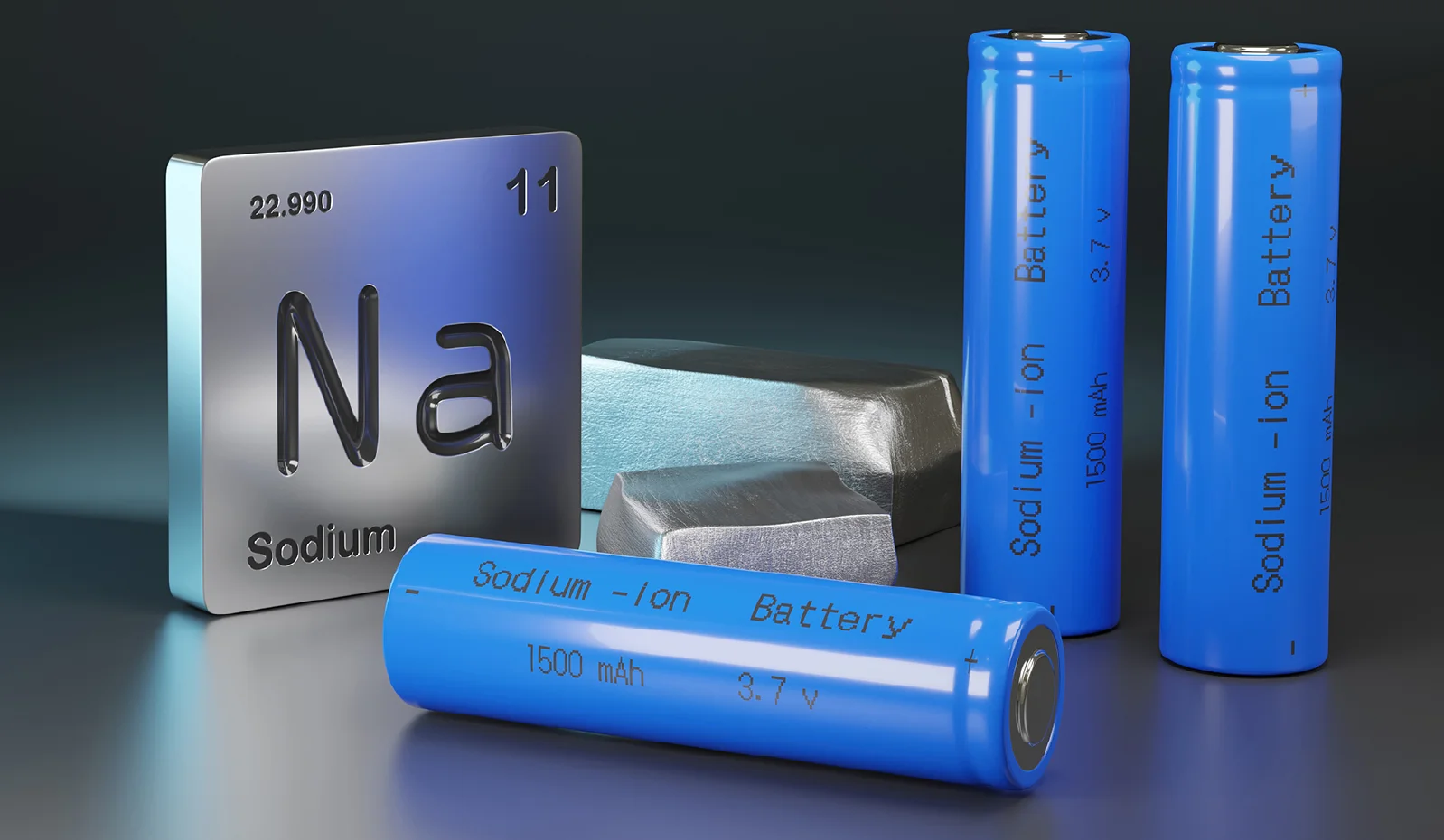
Chinese scientists have come up with a revolutionary sodium metal battery (SMB), which will provide a boost to the way electric vehicles and other electronic devices get powered in the future. The new battery technology is capable of charging from zero to full in as little as four minutes, while still retaining good levels of efficiency over the years.
The findings were reported in the journal Nano-Micro Letters and deal with one of the main issues that plagued sodium metal batteries for a long time now.
What Is a Sodium Metal Battery?
While in lithium-ion and sodium-ion batteries graphite/hard carbon is used as the anode material, in a sodium metal battery, metallic sodium is used as the anode material.
This makes a huge difference since sodium metal is capable of storing more energy and allowing for very quick charging. Sodium is also much more available than lithium and cobalt, which makes it cost-effective.
In addition, sodium metal batteries are less prone to thermal runaway that leads to battery fires as compared to lithium-ion batteries.
All of these features make the development of SMBs highly attractive. Nevertheless, there is one problem that prevents their usage on a wide scale.
The Dendrite Problem
One of the major problems that has been holding back the development of sodium metal batteries is the growth of dendrites.
Dendrites are microscopic needles that develop when sodium ions accumulate unevenly on the surface of the battery’s sodium anode as it is being charged. They keep growing until they span across the entire battery from one end to another, causing a short circuit.
The problem is made even worse by the nature of sodium due to its high reactivity with the electrolyte. During regular charging, a thin film called the solid electrolyte interface (SEI) is formed around the anode. In sodium batteries, this film breaks easily, exposing the underlying surface to dendrites.
It has been preventing the implementation of sodium metal batteries up until now.
A New Gel Electrolyte Offers a Solution
According to the Chinese research team, they have managed to come up with a method of preventing dendrite growth.
Unlike in the traditional liquid electrolyte, the researchers made an advanced quasi-solid gel electrolyte, named Sn-FB QSE.
This gel generates a quasi-solid state inside which makes it easier for sodium ions to migrate evenly when charging the battery. It also makes the battery tough and resistant to dendrite growth.
Consequently, this battery becomes more stable even when charging is done at very high speed.
Fast Charging With Long Life
The researchers have tested the battery for charging and discharging more than 6,000 hours. In all that time, no signs of dendrite formation resulting in short circuits were observed.
Upon charging from 0 to 100 percent in four minutes, the battery had an energy capacity of 80.1 milliampere-hours per gram (mAh/g).
The team tested the battery also on the slower charging rate. At the rate of 20-minute full charging, the battery had 90 percent of its initial capacity even after 2,000 charge-discharge cycles.
This kind of longevity is comparable to the target of modern Li-ion batteries while providing much faster charging.
Why This Matters for Electric Vehicles
Fast charging is one of the largest problems facing electric vehicles.
While there are some top-end electric vehicles which have the ability to perform ultra fast charging, the fact is that they will need a costly charging station, which will have extremely high power capacity.
The vast majority of the electric vehicles available today will require more time than this for recharging.
Having an electric vehicle battery which charges quickly and safely in a matter of minutes will be useful.
Transport vehicles, delivery vehicles, and commuting vehicles will especially gain from this.
Could It Replace Lithium-Ion Batteries?
Not yet.
Although the findings are promising, the technology is yet to overcome certain hurdles before it enters the market.
It needs to demonstrate its efficiency in different temperatures and environments. There are huge variations in temperature experienced by equipment like smartphones and electric cars that can influence the gel-like electrolyte.
It also requires an efficient production process to allow mass production and guarantee safety.
It would take time before companies decide to introduce the new batteries as replacements for the current lithium-ion models.
The Future of Sodium Metal Batteries
Sodium metal batteries feature many appealing characteristics. These include the use of inexpensive materials, fast charging capabilities, fewer risks of catching fire, and performance that will be good enough not to depend on such rare elements as lithium and cobalt.
If further research makes these batteries stable enough and it becomes possible to mass produce them, sodium metal batteries will become one of the leading battery technologies in the near future.
As of now, sodium metal batteries are still only in development. Nevertheless, this particular advance is one of the most convincing proofs that this technology has a chance to enter our everyday lives in the near future.